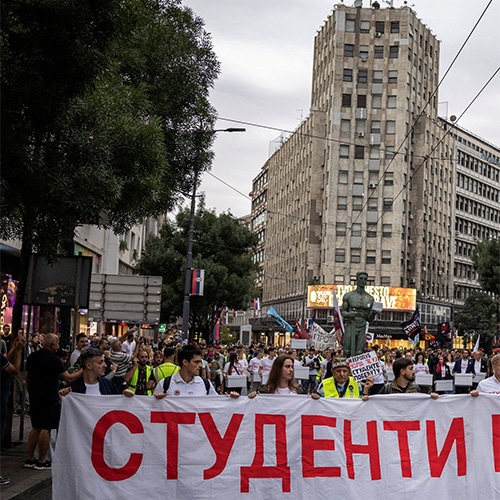
Serbia has witnessed a political earthquake as longtime leader Aleksandar Vučić conceded defeat in the October 25 parliamentary elections. His Serbian Progressive Party lost to a student-led opposition movement following nearly two years of protests against corruption, authoritarianism and alleged digital repression.
The election represents a dramatic reversal for Vučić, who dominated Serbian politics for more than a decade. Public anger intensified after a deadly railway station collapse in Novi Sad in 2024, triggering nationwide demonstrations demanding government accountability and institutional reforms.
Digital surveillance became another major controversy. Investigations by Citizen Lab, Amnesty International and Serbia's SHARE Foundation documented spyware attacks targeting students, opposition figures, activists and other government critics, raising serious questions about political intimidation and democratic freedoms.
Citizen Lab confirmed that Pegasus spyware infected the phone of University of Belgrade Rector Vladan Đokić, a prominent supporter of student protests. Researchers also documented attacks against student activists and warnings indicating possible surveillance of prosecutors investigating alleged corruption.
Amnesty International previously reported the alleged misuse of Cellebrite forensic technology to extract information from detained activists' devices. SHARE Foundation separately documented at least 14 individuals targeted with advanced spyware during 2026, highlighting the expanding threat of commercial surveillance technologies.
Although these findings intensified concerns about civil liberties, spyware allegations cannot independently explain Vučić's electoral defeat. Corruption allegations, student mobilisation, public dissatisfaction and demands for institutional accountability were central to the opposition's victory. Serbian authorities have denied responsibility for spyware attacks.
The broader lesson extends beyond Serbia. Commercial spyware can become a political liability when surveillance threatens citizens' fundamental rights. Technology designed for national security must never become an instrument of political repression. Serbia's election demonstrates that digital freedom, transparency and public trust are increasingly inseparable from democratic accountability.