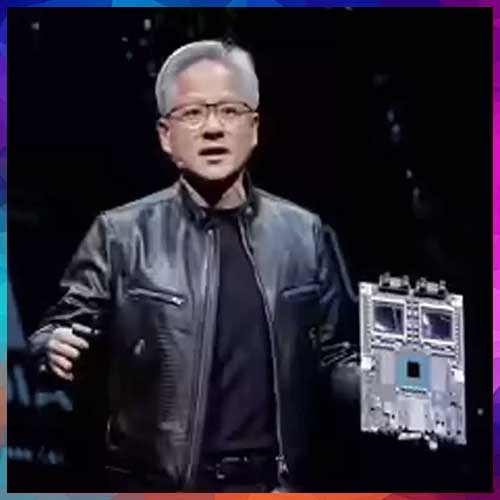
Heading a trillion-dollar AI powerhouse, Huang gains early insight into the strategies of tech giants like Zuckerberg, Musk, and Altman, allowing him to anticipate AI advancements well ahead of public releases and industry trends
Nvidia CEO Jensen Huang has made bold predictions about artificial intelligence (AI), stating that the technology will generate more millionaires in the next five years than the internet did over two decades. Speaking on the All In podcast, hosted by venture capitalist Chamath Palihapitiya alongside guests Chase Lochmiller and James Latinsky, Huang emphasized the transformative power of AI across industries.
Leading a trillion-dollar company at the forefront of AI development, Huang has unique insights into the strategies of major tech innovators like Mark Zuckerberg, Elon Musk, and Sam Altman. He noted that this insider perspective shapes his understanding of the AI landscape well before public announcements.
Addressing concerns over AI-driven job losses, Huang expressed confidence that AI will instead create new employment opportunities. “AI drives growth and causes people to create things others want to buy,” he said. Describing AI as “the greatest technology equalizer of all time,” Huang explained that it lowers barriers between ideas and execution by enabling everyone to become programmers through natural language interactions rather than coding languages like C++ or Python.
He elaborated that AI empowers creativity, saying, “Everybody is an artist now; everybody is an author now,” and warned that those who don’t adopt AI risk being left behind in the job market.
Looking ahead, Huang predicted every company will operate two “factories”: one producing their core products, and another developing the AI that supports them. Tesla was cited as a prime example, with separate divisions for manufacturing cars and building the AI behind them.
On infrastructure, Huang revealed Nvidia’s plans to produce roughly half a trillion dollars worth of AI supercomputers in Arizona and Texas over the next four years, driving trillions in AI-driven industry value. He also highlighted the enormous productivity of small AI teams, estimating that 150 researchers at companies like DeepSeek or OpenAI can generate $20 to $30 billion in value—a level of leverage unprecedented in any industry’s history.