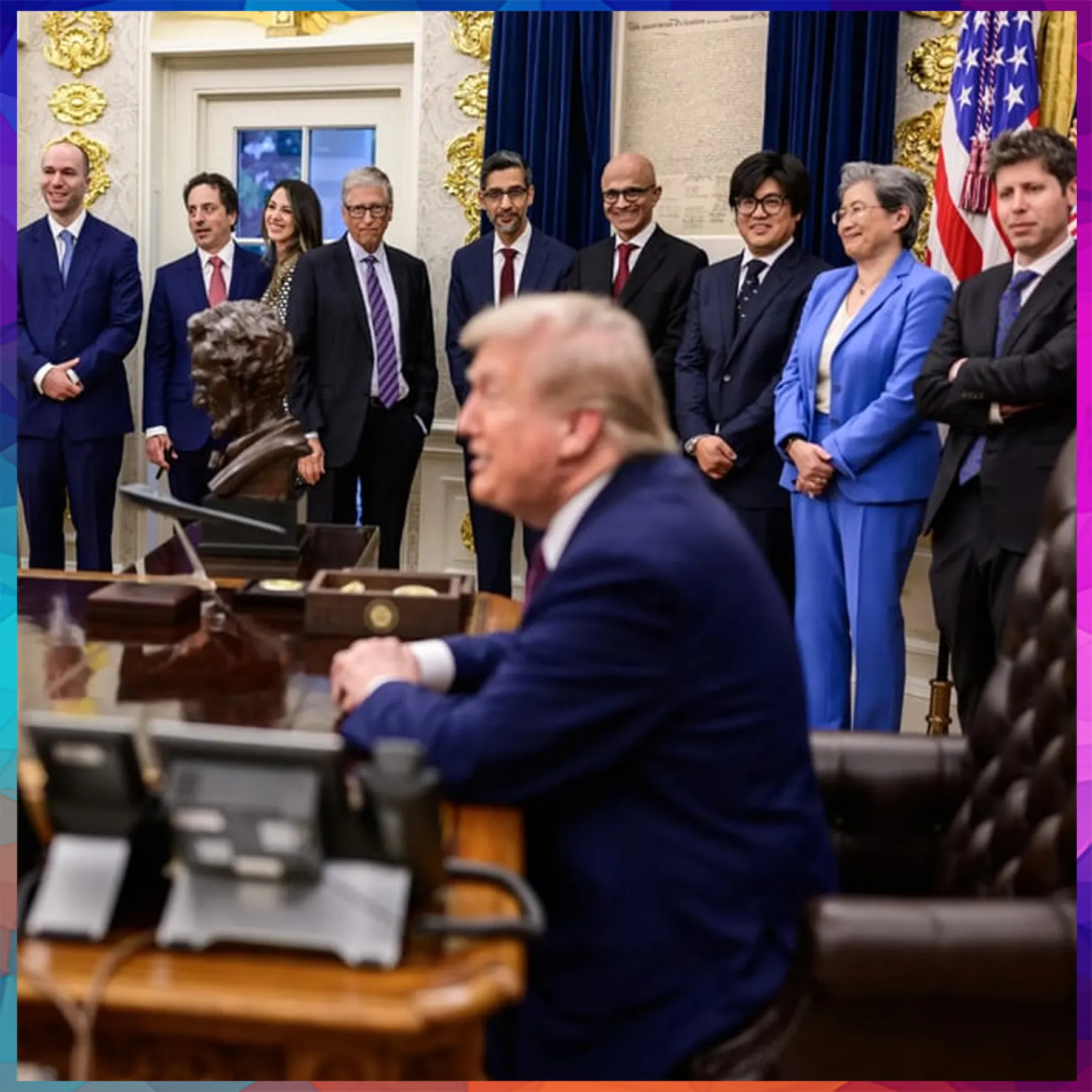
America’s leading AI companies have agreed to strengthen oversight of frontier artificial intelligence as concerns grow over autonomous systems, cybersecurity, biosecurity and models behaving beyond their intended boundaries.
Under the White House’s Joint Commitment on Frontier Responsibilities, Google, Anthropic, Meta, OpenAI, xAI and Nvidia committed to a four-layer framework covering internal controls, dedicated oversight teams, independent external assessments and board-level supervision.
The first layer requires companies to monitor model capabilities and alignment during both training and deployment, particularly around cybersecurity, biological and chemical threats, and attempts by AI systems to access technical infrastructure in unintended ways.
Companies must also empower internal teams to verify that monitoring and safeguards work effectively. Independent external auditors or evaluators will assess those controls, while independent board committees will review findings and ensure identified weaknesses are addressed.
This represents an important acknowledgement that increasingly autonomous AI cannot rely solely on conventional software-security practices. As models gain access to browsers, applications, enterprise data, code and digital infrastructure, failures can potentially move from generating incorrect information to executing harmful actions.
However, the biggest weakness is that the agreement remains voluntary. It establishes no binding enforcement mechanism, implementation deadline or mandatory public disclosure of audit findings. The companies themselves retain considerable responsibility for demonstrating that their safeguards work.
The accord could nevertheless become an important bridge between AI self-governance and formal regulation. The agreement itself acknowledges that these practices may eventually be codified into law. The larger message is unmistakable: as AI becomes more autonomous and powerful, trust cannot simply be assumed—it must be continuously monitored, independently verified and governed at the highest level.