Pre-trained from scratch in India, the suite includes a large language model in three sizes and a text-to-speech model that generates speech in English and 10 Indian languages and adapts pronunciation to the surrounding text.
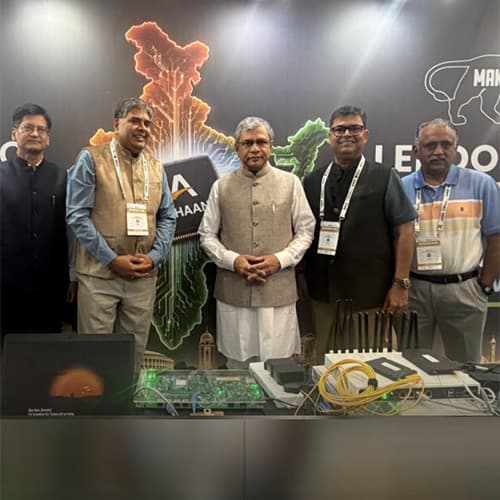
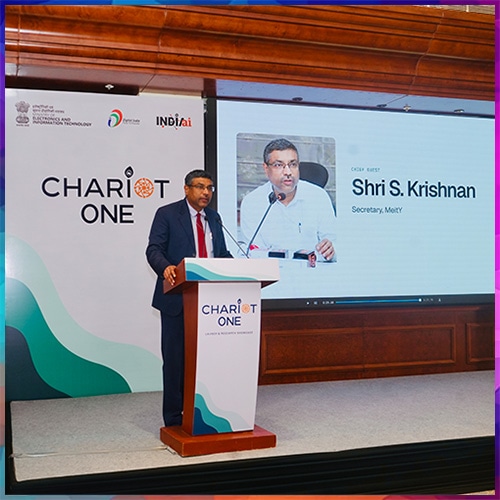
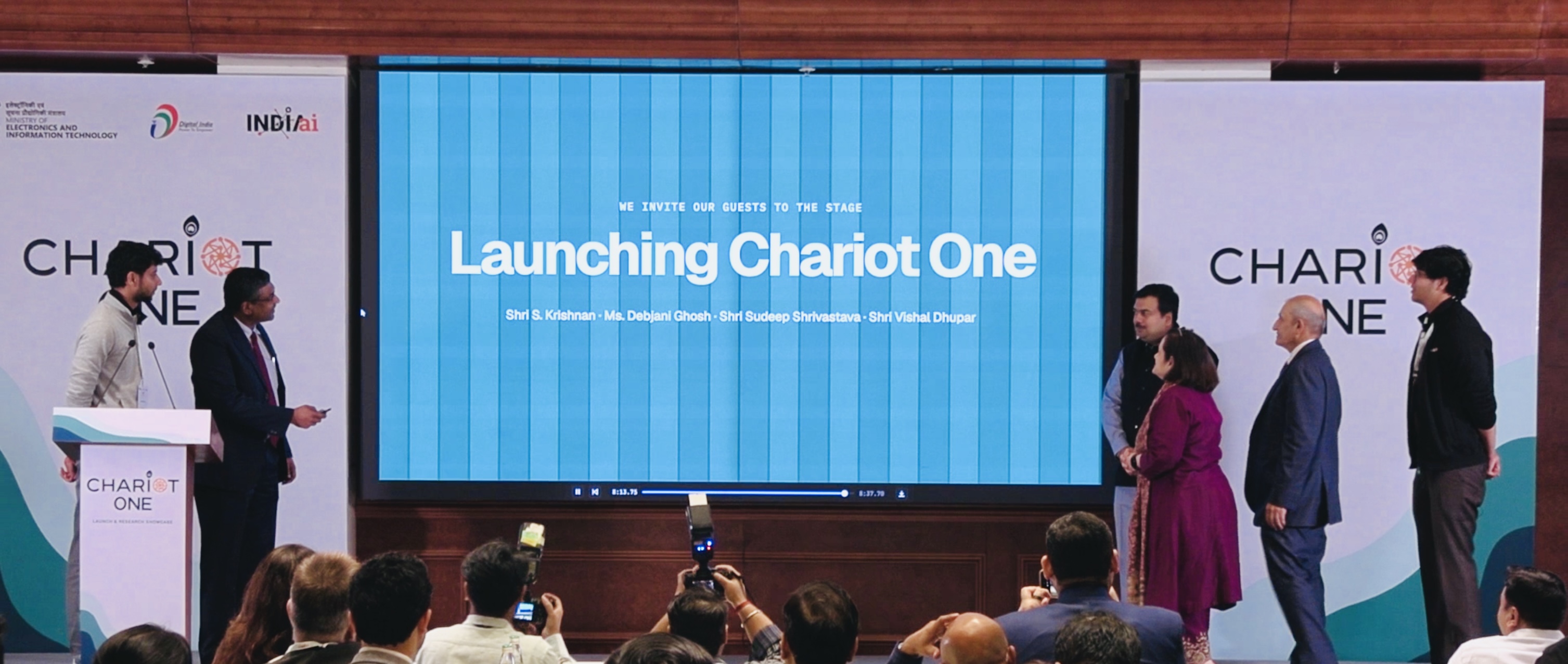
Chariot Artificial Intelligence has launched its Chariot-1 foundation model suite with support from the IndiaAI Mission. S. Krishnan, Secretary, Ministry of Electronics and Information Technology (MeitY), inaugurated the launch and research showcase at Bharat Mandapam in New Delhi on 26 November.
Chariot was among the first four teams selected under the mission to develop sovereign foundation models. The suite includes the Chariot-1 large language model (LLM) and Chariot-1 Text-to-Speech (TTS), both trained from scratch in India.
Parth Sarthi, Co-founder, Chariot, said, “Today is a proud moment for Chariot and for India. A nation of India's scale and diversity cannot depend on AI built elsewhere. It must build its own foundational technologies, rooted in its languages, its people and its needs. Chariot-1 is a demonstration that world-class AI can be conceived, developed and trained in India. We are grateful to MeitY and the IndiaAI Mission, whose vision and support have been instrumental in making this possible. This launch is only the beginning of our commitment to building sovereign AI for Bharat.”
A shared alphabet for 12 Indian scripts
At the showcase, Chariot presented IndicShift, an open-source approach that represents 1,012 characters from 12 Indian scripts using a shared alphabet of 350 letters. Chariot reported that IndicShift used as little as 40% of the tokens required by OpenAI’s GPT tokeniser on Indian-language text. The company also reported a 5% to 8% improvement in Indian-language model performance using the same computing resources, with performance on English and code maintained.
The company also presented Nested Training, which trains three model sizes in a single run using a shared set of weights. Chariot reported a 62% improvement in training speed compared with training the three sizes separately. Its Mixture of Vocabularies technique divides the vocabulary into 11 groups and scores only the relevant group at each step. Chariot reported a 38% improvement in training speed on the same GPUs, with negligible change in model loss.
Language models in three sizes and speech in 11 languages
The Chariot-1 LLM is available in versions with 10.7 billion, 1.7 billion and 745 million parameters, designed for computing environments ranging from data centres to smartphones and edge devices. The largest version uses a mixture-of-experts architecture, with four billion parameters active per token.
Chariot-1 TTS generates speech in English, Hindi, Bengali, Marathi, Tamil, Telugu, Kannada, Malayalam, Gujarati, Punjabi and Odia. It uses the surrounding text to determine how to read numbers, dates, currencies, units, URLs and abbreviations aloud. Chariot reported more than 97% verbalisation accuracy on the Async TTS Pronunciation Benchmark. In its reported tests, the model recorded a character error rate of 7.60% in Hindi and an average of 6.47% across nine other Indian languages.
Suvrat Bhooshan, Co-founder, Chariot, said, “Building AI for India demands a fundamental rethink of how models are trained, how they process language and how they are deployed across diverse computing environments. With Chariot-1, we have invested deeply in original research to build models that understand context, rather than merely convert text into speech. These innovations make AI development for Indian languages significantly more efficient, and we aim to empower researchers and developers across the country to build on this foundation.”
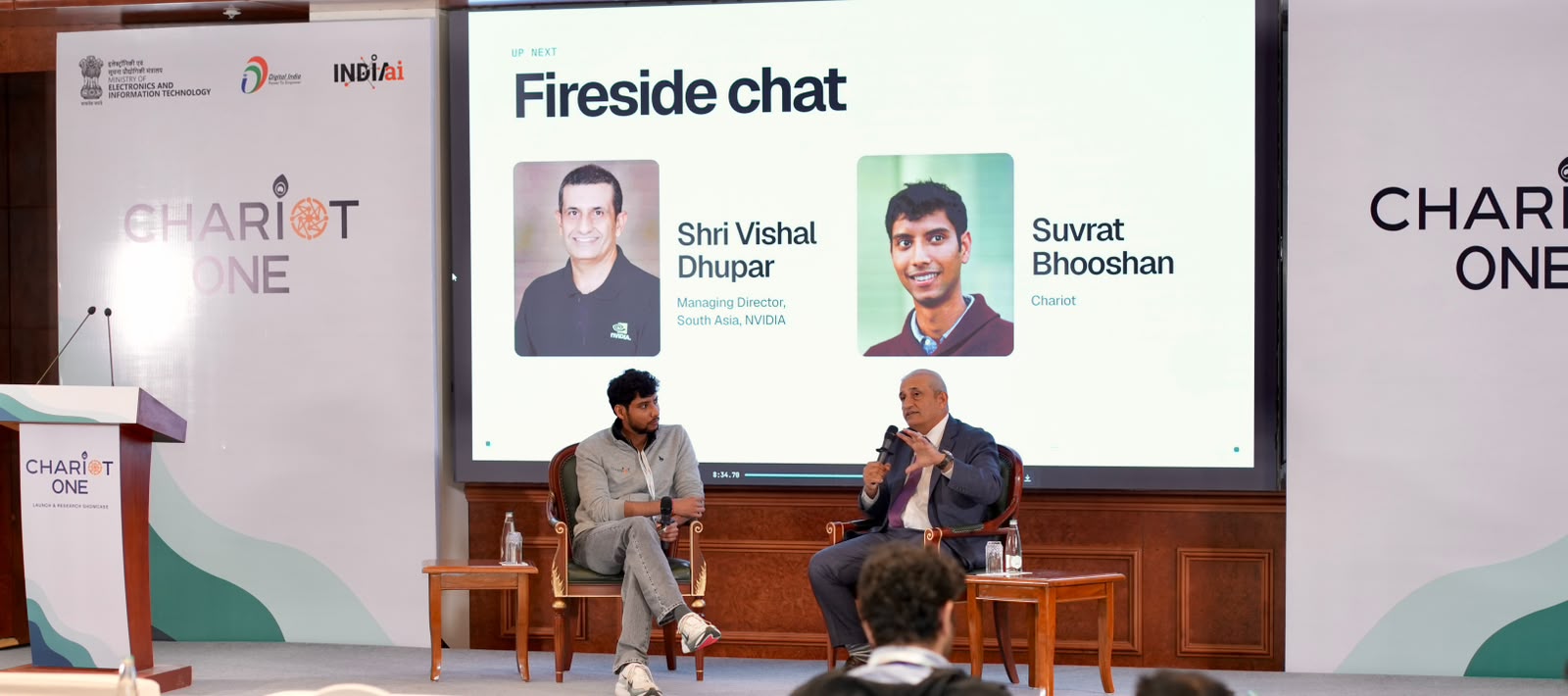
Krishnan cited the team’s approach to representing Indian languages as an example of the domestic AI research the mission was set up to support. The event also featured a discussion on emerging AI research between Bhooshan and Vishal Dhupar, Managing Director, South Asia, NVIDIA.