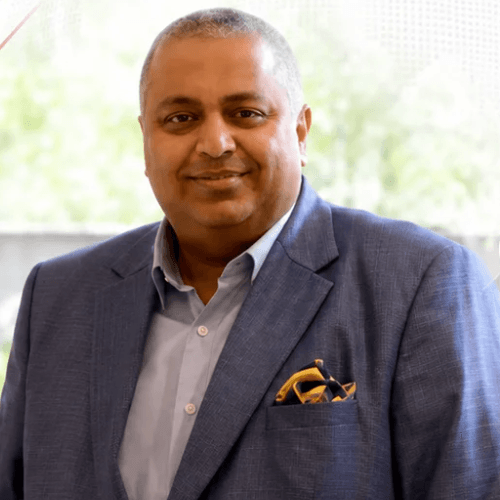
A potentially historic breakthrough in mathematics has placed artificial intelligence at the centre of scientific discovery. Anthropic mathematician Levent Alpöge claims to have developed a proof of the 167-year-old Riemann hypothesis with assistance from Claude, Anthropic's AI system.
First proposed in 1859, the Riemann hypothesis concerns the distribution of prime numbers. Solving it would represent one of mathematics' greatest achievements, with implications for number theory, computational mathematics and scientific research.
Alpöge's announcement goes beyond a conventional mathematical paper. His proposed proof uses Lean, a formal verification system designed to check logical reasoning step by step. He also claims his approach establishes the broader generalized Riemann hypothesis.
Early technical assessments reportedly indicate that the formal proof compiles and passes independent checking. However, successful machine verification is not equivalent to full mathematical acceptance, and experts must still examine the definitions, assumptions and underlying reasoning.
How Could This Impact the Technology Industry?
For the artificial intelligence industry, the most significant development is the possibility of AI becoming a genuine research collaborator rather than merely a tool for generating answers.
AI-assisted mathematical discovery could accelerate algorithm development, scientific simulations, semiconductor design, optimisation and complex engineering research. Combining generative AI with formal verification may also improve confidence in machine-generated technical results.
The cybersecurity industry could benefit from advances in mathematical verification, particularly in cryptographic protocol analysis, secure software development and automated vulnerability detection.
However, the Riemann hypothesis does not directly imply that existing encryption systems can be broken. Any practical cryptographic consequences would depend on additional mathematical discoveries and applicable algorithms.
For pharmaceutical research, aerospace, financial modelling and advanced manufacturing, the broader opportunity lies in AI systems capable of exploring difficult problems while producing independently checkable results.
What Could Be the Final Outcome?
If the proof withstands rigorous scrutiny, it could establish a landmark for AI-assisted mathematics and encourage greater investment in specialised scientific AI, formal reasoning engines and automated research platforms.
It could also reshape how universities, research laboratories and technology companies conduct mathematical investigations, allowing researchers to focus more on interpreting discoveries and identifying practical applications.
Nevertheless, important questions remain about reproducibility, human understanding and whether machine-verified arguments can be translated into accessible mathematical explanations.
The real breakthrough may extend beyond solving one famous problem: it could demonstrate a new research model in which human expertise, AI reasoning and formal verification work together to accelerate scientific innovation.