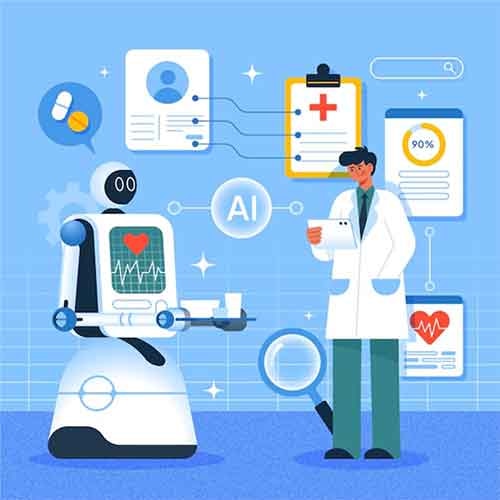
Artificial intelligence is reshaping health care by enhancing diagnostics, streamlining operations, and expanding access, potentially saving millions of lives and billions in costs.
AI-driven tools detect diseases like cancer and heart conditions earlier and more accurately, reducing diagnostic errors, which contribute to nearly three million deaths annually.
In critical care, AI optimizes emergency responses, such as reducing stroke treatment delays and predicting patient deterioration, improving survival rates.
AI also personalizes treatments by accelerating drug discovery, fine-tuning chronic disease management, and improving surgical precision.
These advancements not only boost outcomes but also cut medical errors, a leading cause of death.
Operationally, AI reduces administrative burdens and hospital inefficiencies, with predictive models minimizing readmissions and medical waste, aiming for savings of up to $188 billion annually by 2030.
Furthermore, AI technologies extend care to underserved regions through remote diagnostics and telehealth, supporting global health equity goals.
However, challenges persist.
Bias in training data risks exacerbating disparities, and AI systems demand constant human oversight, increasing costs.
Privacy concerns, error rates, and the danger of over-reliance on technology underline the need for careful integration.
AI’s superiority risk undervaluing human clinical judgment, which remains crucial.
While AI’s promise in healthcare is transformative, its success depends on addressing ethical risks, ensuring diverse data representation, and maintaining human-centered care.
By balancing innovation with caution, AI can revolutionize health care sustainably, ensuring both improved outcomes and equitable access without compromising patient safety.