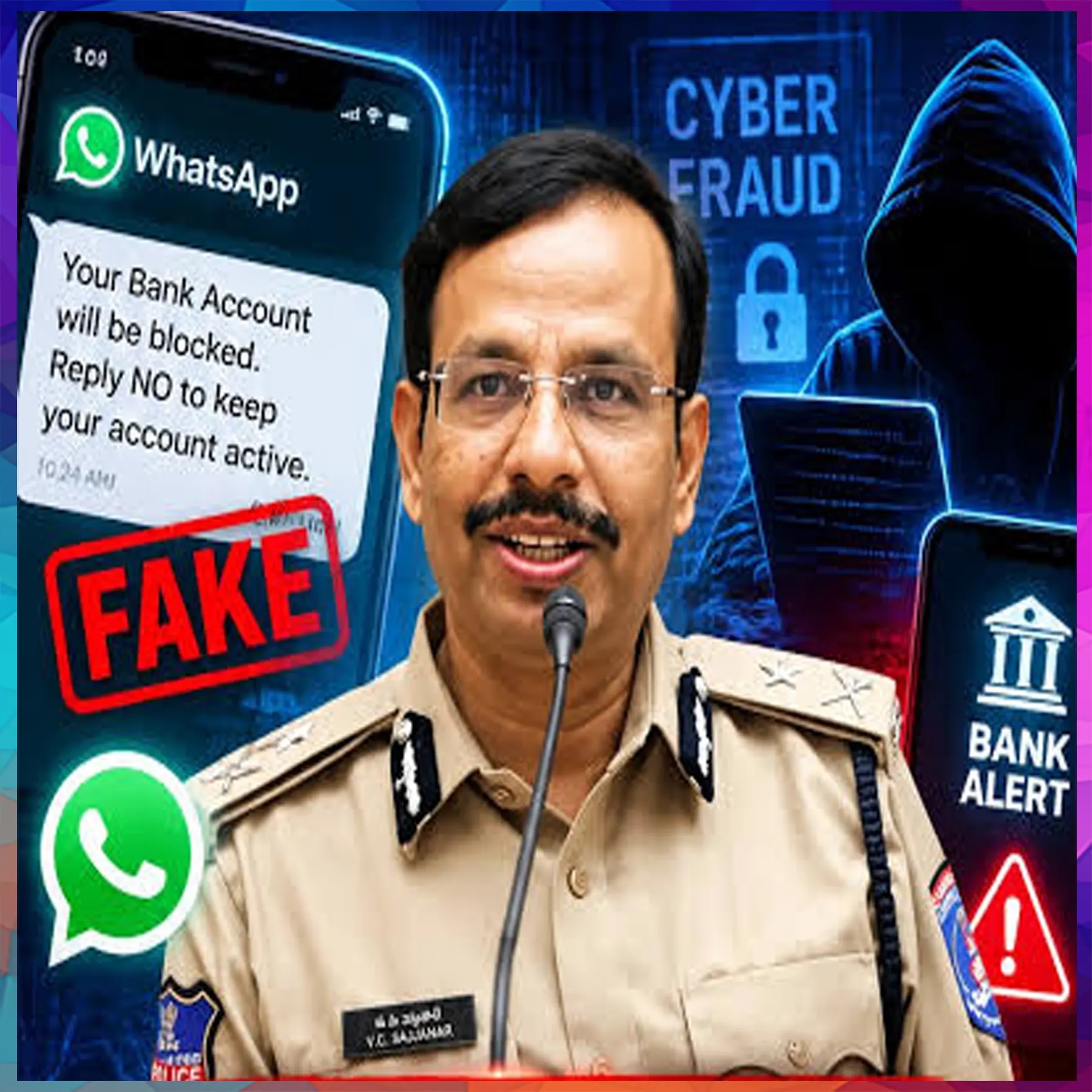
Commissioner VC Sajjanar says a seemingly harmless reply to a bogus debit notification can open the door to malware and financial theft, even when no OTP or link is involved.
Hyderabad’s top police officer has issued a public caution about a WhatsApp fraud that preys on panic rather than technical ignorance, urging residents to ignore messages that claim money has left their bank accounts.
Commissioner VC Sajjanar outlined the scheme in a video posted on social media platform X. He labelled the technique an “auto-execution file attack” and referred to a case in which a chartered accountant was targeted.
How the scam unfolds
What makes the alert notable is what the fraudsters leave out. Unlike familiar bank frauds, this one does not ask for a one-time password and does not push victims to tap a suspicious link. It relies instead on the sudden worry of losing money, hoping that anxious recipients will react before thinking.
According to the commissioner, the sequence begins with a message from an unfamiliar number saying an amount has been debited from the recipient’s account. A follow-up message then instructs the person to respond with “NO” if the transaction was not theirs.
Sajjanar cautioned that sending such a reply could expose a phone to malicious software. Once a device is compromised, criminals may be able to reach it and the financial details stored on it. He advised the public not to answer “YES” or “NO” to any unknown message about a banking transaction.
What residents should do
The commissioner’s advice is to verify independently. Anyone who receives such a message should open their bank’s official mobile app or net-banking site to see whether any debit has actually been made. A chat message, he indicated, is not evidence that money has moved.
Other precautions include:
· Do not open unexpected attachments or download files from senders you do not know.
· Do not reply to the message; block the number instead.
· Keep a record of the message if it may be needed later.
· Call the bank using its verified customer-care number if anything looks suspicious.
Those who fear they have already lost money should call India’s national cybercrime helpline at 1930 without delay and file a complaint on the cybercrime reporting portal, cybercrime.gov.in. Prompt reporting, officials say, can improve the chances that banks and investigators act on fraudulent transactions in time.