The global economy is expected to register a growth rate of 5.8% compounded over the next 15 years. Financial organizations around the world are now looking ahead. New challenges and new obstacles loom large, but, as the global economy evolves, many new opportunities present themselves way ahead. But first, the challenges. They include a host of new regulations aimed at reducing risks in the system; increasing capital reserves; growing revenue in recession-hit economies of mature markets; competing and partnering with non-traditional players; and, finally, competing to attract and retain increasingly demanding customers.
Without a sound and effective banking system in India, we cannot have a healthy economy. The banking system in India should not only be hassle free, but it should be able to meet new challenges posed by technology and other external and internal factors. For the past three decades, India's banking system has several outstanding achievements to its credit. The most striking is its extensive outreach. It is no longer confined to only metropolitans or cosmopolitans in India. In fact, the Indian banking system has reached even to the remote corners of the country. Further, Indian banks must become more client-centric by leveraging sophisticated insights to improve risk management, pricing, channel performance and client satisfaction.
Today, even rural areas enjoy a lot of banking support. Dr K. C. Chakrabarty, Deputy Governor, Reserve Bank of India, opines that since rural areas have some money now, banks can start providing financial support. Finance is the leveraging factor and plays the role of a catalyst agent.
 |  |  |
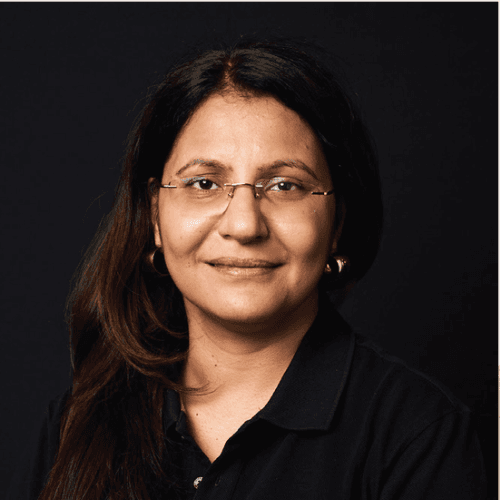
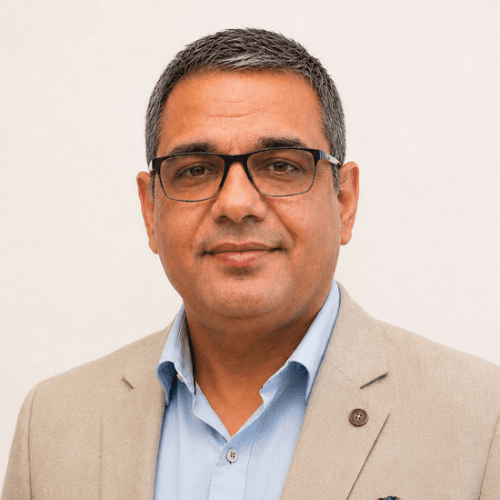
| Dr. KC Chakrabarty Deputy governor Reserve Bank of India | M V Tanksale CMD Central Bank of India | Ajit Kumar Rath General Manager, UNION BANK OF INDIA |
Information technology (IT) is a catalyst which is enabling transformation of the Indian banking sector – be it in the transaction process or for various other systems and processes. The technological evolution of the Indian banking industry has been largely directed by the various committees set up by RBI and the Government of India to review the implementation of technological change. The various technological platforms used by banks for their everyday operations have evolved considerably over the years.
It was only in the early 80s that some major advancements took place. The early 1980s witnessed the advent of mechanization and computerization in the Indian banks. This was the period when banks as well as the RBI went very slow on activating technology in every front, carefully avoiding the use of “computers” to avoid resistance from employees’ unions. Though there was initial resistance to using newer technology and computing device, with the moving time technology adoption became part of the Indian banking system.
M. V. Tanksale, CMD, Central Bank of India, says that no banks have shown any disinterest in financial inclusion for want of compensation.
Computer-Enabled Operations…
With the use of computers came the beginning of technological initiatives in the banking sector. Computerization could be seen in bank branches which were initiated with the use of basic to automate the functioning of branches, especially branches caught up with at high traffic.
Core Banking Solutions (CBS) which enable centralized data management and aids in the implementation of Internet and mobile banking is the networking of the branches of a bank, so that the customers can operate their accounts from any bank branch, regardless of which branch he opened the account with.
Ajit Kumar Rath, General Manager, Union Bank of India, says, “I believe that most of the businesses are depending on automation through deployment of IT solutions. CIOs have complete visibility to organizational data and are able to do co-relation of organization's different business lines and activities. By virtue of their data visibility, they are very close to observe organizational performance with respect to product, customer profile and their preference, cross-sell opportunities, etc. They are also in a position to identify duplication in operation and suggest centralization of functions. New-age customer needs Internet and mobile as a channel instead of a branch for doing banking transaction. The second is engaging with IT partners to understand new technology and its applicability.”
There is also an ardent need of standardization in banks. On this, D. Sahoo, DGM, IT Division, Punjab National Bank, says, “With the continuous growth of operations, there is always a need to standardize the technology platforms and processes. But it does not mean that standardization of activities will hinder the innovations. In fact, innovation is essential for any organization to maintain its competitive edge on its peers. Innovation happens where inventions reach market acceptance and penetration. Standardization can be a major facilitator for the validation and exploitation of new technologies and for market access.” He further says, “Ours is the first public sector bank to successfully implement the Core Banking Operations on an all-India basis. Our strategy of implementation of Core Banking in all the branches has given us an edge over our peers and our organization has been among the front-runners in the technology front for the last 8–10 years as we are able to bring in innovative ideas at the technology front in the banking industry. We have also successfully implemented the Core Banking Solution in all our sponsored Regional Rural Banks.”
Banking Using Satellite Connectivity
Satellite connectivity involves use of transponder space on the satellite and communication equipment called Very Small Aperture Terminal (VSAT) at the place being connected for data communication, as opposed to terrestrial link. VSAT is particularly useful in the regions where leased line connectivity cannot be established like hilly areas, ocean and desert. VSAT technologies ensure link security and reliability. The benefits of VSAT are: faster relocation; quick establishment of new sites; rapid installation of equipment at the customer's premise with limited infrastructure; reduced Network implementation time; availability (99.9%) is far better than the availability of ground networks – reliability of data network; lowest TCO over terrestrial for multistage applications; highest uptime; security – VSAT networks are very secure and the ideal option for confidential, business sensitive data transfer; bandwidth on demand – the ban dwidth channels can be regulated independence from earth networks and infrastructure; and reduced operational cost.
Development of Distribution Channels
Today, Automatic Teller Machines (ATMs), Internet banking, mobile and telephone banking and card-based delivery systems are the major and upcoming channels of distribution in the banking industry, besides branches.
Automatic Teller Machines
ATMs are electronic banking outlets which allow customers to complete basic transactions without the aid of a branch representative or teller. These were introduced to the Indian banking industry in the early 1990s initiated by foreign banks. Public sector banks are also looking at expansion of ATM networks. Today, multilingual ATMs have also come up. Installation of multilingual ATMs has also entered pilot implementation stage for many large banks in the country. This technology is aimed at the rural banking business which is believed to have large untapped potential.
Biometrics in Banks
Though expensive to install, the scope of biometrics is expanding rapidly. Banks across the country have started the process of setting up ATMs enabled with biometric technology to tap the potential of rural markets. It provides for better security system by linking credentials verification to recognition of the face, fingerprints, eyes or voice.
Online or Internet Banking
Internet banking allows customers to conduct financial transactions on a secure website operated by the institution, which can be a retail or virtual bank, credit union or building society.
 |
Phone Banking and Mobile Banking
Phone banking channels function through an Interactive Voice Response System (IVRS) or telebanking executives of the banks. Phone and mobile banking are a fairly recent phenomenon for the Indian banking industry. There exist operative guidelines and restrictions on the type and quantum of transactions that can be undertaken via this route. With the rapidly-growing mobile penetration in the country, mobile banking has the potential to become a mass banking channel, with very nominal investment required by the banks.
Card Based Delivery Systems
The penetration of card-based systems has increased over the past decade. Credit cards, debit cards, smart cards, etc are among the card-based delivery mechanisms for various banking services. These have been very successful in India since their introduction.
Finally…
Information Technology (IT) continues to be the single-largest facilitating force behind the successful transformation of transactions and analytical processing of banking business in the country. Developments which have taken place during the last few years all have IT as the pivotal centre point. Since the publication of the Financial Sector Technology (FST) Vision in July 2005, there have been significant changes in the banking sector of the country, as far as implementation of Information Technology is concerned.