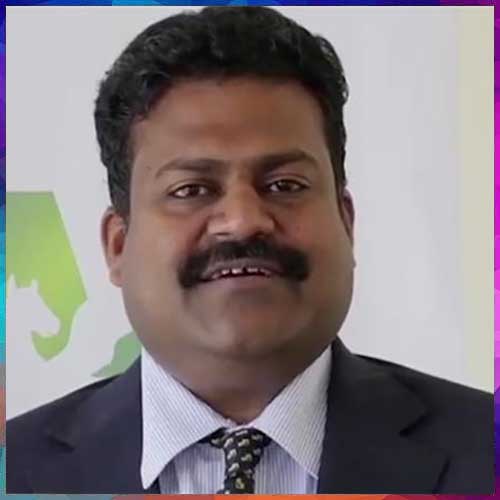
J Satyanarayana
IAS, Secretary, DeitY, Ministry of Communication & IT
GOI
e-Governance in India has gradually progressed from computerization of Government Departments to initiatives such as citizen centricity, service orientation and transparency. Over the years, a large number of e-Governance projects have been undertaken by various State Governments and Central Ministries. Sustained efforts have been made at multiple levels to improve the delivery of public services and simplify the process of accessing them. The National e-Governance Plan (NeGP), takes a holistic view of e-Governance initiatives across the country, integrating them into a collective vision, a shared cause.
“In the last nine to ten months the government has approved three policies which are very significant, the new Telecom, IT and Electronics policy which is the latest to be approved. If you see the common thread in these policies, it is to reach out to the citizens of the country in various ways. One of the objectives of the telecom Policy is to provide broadband for all by 2020. Though it may sound quite simple but is difficult to implement even in a span of eight years. The reasons are quite obvious; one reason is the terrain of Indian geographies, affordability, awareness, usefulness of broadband to a person in a remote village. One of the major objectives of the IT policy is to bring a second wave in the IT industry to take the industry to three hundred billion dollars by 2020 from the one hundred billion dollar which we crossed last year. Another dimension is the e-literacy campaign where one member of each household will be an e-literate. The objective of the Electronics Policy is to raise the level of manufacturing by creating necessary and appropriate ecosystem. The degree of dependence on imports is quite disturbing at this time. More than 85% of our electronic consumption is dependant upon imports,” says, J Satyanarayana, IAS, Secretary, DeitY, Ministry of Communication & IT, Government of India.
 |
N Ravi Shanker
IAS, Additional Secretary & Administrator, USOF, Department of Telecommunication, Ministry of Communications and IT
Government of India
“The journey of e-governance can be put into a framework where we live in a country with asymmetric digital acceptance and digital penetration. To the outside world India is thought of as an IT hub, however India lives in many layers. Some parts of the country are so remote that often enough we say that time stands still there and that poses a challenge for e-governance in our country. So it is a spectrum of time where some are keeping race with the latest and some are in far flung areas. The dept of IT has embarked upon the National e-Governance Programme, which tried to bridge the digital divide by trying to take digital services to the people.”
 |
R.S. Sharma
IAS, D.G & Mission Director, UIDAI
Government of India
“The journey of UIDAI started three years back. It took us about one year to essentially put in place various kinds of stuff together and make ourselves ready for starting this project. Finally we decided to collect and manage only identity, the data which we decided to collect was decided through a Data Standard Verification Committee. We decided to collect, age, gender, name and address. Therefore we have adopted a very minimalistic approach and restricted ourselves to collect data which proves identity.
Snapshot of various e-governance initiatives taken in different states of the country…
 |
Andhra Pradesh
Prajavani is an e-Governance initiative that provides practical shape to the Right to Information Act and also creating job opportunities for the educated but unemployed youth of Rangareddy. Prajavani is a public private partnership program, which gives citizens an opportunity to interact with the government without coming to any government office. The information related to various departments was made available to the kiosks through a website hosted on NIC AP web server. The kiosks were given login/passwords to log on to Prajavani website.
Online MPHS (Multi Purpose House hold Survey), the services available are; Caste Certificates, Birth Certificates and Nativity Certificates.
Online CFST (Citizen Friendly Services of Transport Department)- the available services are issue of learner licences on the same day, issue of driving licences on the same day, renewal of driving licences within 2 hours on the same day, issue of duplicate driving licences within 2 hours on the same day etc.
Employee Information System (EIM)- the available services are, search employee by their employee number, name, school, college or office.
 |
Bihar
NIC Bihar State Centre has been providing e-Governance support to Govt. of Bihar to help deliver better governance to common man. All this has been achieved by supporting design, development and deployment of e-Governance applications leading to transparency and efficiency in the Government. Under NICNET all 38 districts have been upgraded to 34 Mbps and 16 Districts are strengthened with additional 34 Mbps Railtel connectivity. Video-Conferencing services over NICNET in Bihar are successfully utilizing QoS for review, monitoring and capacity building programmes of the government in Bihar. Over and above, a number of ICT led projects has been initiated and implemented under the technical guidance and support of NIC Team in Bihar are i-BHUGOAL (GIS Framework), VAHAN & SARATHI (Transport), e-PDS, MCTS, e-Registration (Property Registration), Chanakya (University Computerization), e-Procurement (PMGSY Tenders), MUDRA (Municipal Tax), e-Gazette (Gazette Publication), ELECON (Election), Bhu-Abhilekh (Lands Records), Courts Computerization, e-Panchayat (PlanPlus Software, PRIAsoft), NADRS, Jeevika Online SHG MIS, MIS for Mukhya Mantri Kshetra Vikash Yojana, Mobile based project monitoring system for construction sites of building and construction department etc. are being utilized by the departments. Training programme is organized for e-Governance projects implementation including capacity building for strengthening of the e-Governance initiatives of the government.
 |
GOA
Even though the potential to excel in e-Gov is not fully tapped, the Government plans to catch-up fast and set benchmarks for others to follow. The same is reflected in its e-Gov vision.
For proper utilization of the infrastructure and offering the services to the citizen and business, it is very much essential to complete the back end computerization with all the services and processes in all the Departments.
Government has initiated the development of necessary required softwares for service delivery of 11 nos. of Departments/Directorates through National Informatics Center (NIC)/ Goa Electronics Ltd. (GEL). Subsequently, another 46 Departments were identified for overall computerization under e-Governance application software development.
 |
Gujarat
Some of the e-Governance projects taken by the Government for the State of Punjab are:
SWAGAT Online (State Wide Attention on Grievances through Application of Technology)- The grievance of the common man are addressed through Video conferencing and solutions are provided online to the common man immediately.
e-Gram – Vishvagram - This Project Initiates e-Gram Project connecting 13695 Gram Panchayats and 6000 Citizen Common Service Centres as a part of the eGram connectivity Project.
e-Dhara enchances complete Computerization of Land Records across the state. Elimination of Manual Records, computer controlled mutation process and self sustainability are the leading objectives of e-Dhara system.
Hospital Management Information System (HMIS) is to build trust and confidence for the general hospitals in the hearts of the citizen of the state by providing efficient and quality health services through IT application.
E-City - The Project undertaken by Revenue Department of GoG, Ahmedabad Municipal Corporation is the first Municipal Corporation in India to facilitate better performance of the delivery of municipal services like birth and death registration, building plan, primary health and education, city cleanliness, water supply, sewage, road, street-lights, parks and garden through e-governance to citizens of the city.
IWDMS (Integrated Workflow and Document Management System)- Gujarat Government implements e-Governance as the tool to improve the Accountability, Transparency & Effectiveness in Government administration.
VAT (Value Added Taxes)- The Project implemented by Commissionerate of Commercial TAX, GoG, was initiated to ensure prompt capturing of data at its origination in digitized form so that the VAT administration could be more informed and controlled with a view to simplify Administrative procedures.
BISAG- Government of Gujarat has established the Bhaskaracharya Institute for Space Applications and Geo-informatics (BISAG) in the year 1997, earlier known as Remote Sensing and Communication Centre (RESECO) as a state level nodal agency, operating under Department of Science and Technology of Govt. of Gujarat.
 |
Some of the e-Governance initiatives taken for the state of Karnataka are:
BHOOMI- the land records management systems is the first e-Governance project that has been successfully implemented for the benefit of the common man. It is providing service to more than 70 lakh farmers of Karnataka since last 4 years.
Samanya Mahiti- is the web based initiative of Rural Development & Panchayati Raj Department to provide information about basic amenities available in all Hamlets of Karnataka State.
e-Granthalaya- it enables acquisition, serials, OPAC, circulation and administration, with barcode interface. Also enables exhaustive help and search. Guest account for non-members and web utilities are also available.
 |
Kerala
The Government of Kerala acknowledges the critical importance of Information Technology as an instrument for the State’s overall development and remains deeply committed to its dissemination, both as a crucial engine of economic growth and as a tool for increasing productivity, speed & transparency in governance and improved quality of life for the common man.
e-Procurement system is an e-infrastructure for G2B purchase and sale of work, goods and services using the ICT tools.
UIDAI in Kerala- The Government of Kerala would like to enhance efficiency in delivery of government benefits and services through accurate identification of beneficiaries and to have uniform and to have uniform standards and processes for verification and identification of beneficiaries.
ICT For Women- KSITM has entered into an Agreement with the Trivandrum based Sakhi Women’s Resource Centre to educate women on ICT skills. Conduct of awareness workshops and campaigns on the ‘Misuse of Communication Technologies and New Forms of Violence Against Women and Children’ is aimed as part of this initiative.
Cloud Computing Test Bed to be set up at IIITM-K- The Government of Kerala has launched several e-Governance projects and services to address various sections of the population. One project that addresses the employees is SPARK, which reaches out to nearly 5.25 lakh employees across the Kerala. Owing to its wide reach, a huge amount of resources are required during the peak period of computation; the last week of the month.
 |
Maharashtra
Rojgar Wahini has been developed for the department of Employment and self-Employment (DE & SE), Government of Maharashtra. DE & SE provides free services like vocational guidance, job opportunities and self-employment guidance to the job seekers. It also collects, compiles and provides the statistical information to the planning commission and other planning bodies to be used for manpower planning.
SARITA is a G2C-U project with an aim to design, develop, and implement a computerized application for Registration of documents, received at each Sub-Registrar Office and provide data updation on timely basis to their respective Joint District Registrars and higher offices under the purview of Department of Registration, Pune, Maharashtra State.
Digital Payment System has initiated with the objectives to help the poor farmers in using IT as a tool to help increase the productivity of existing cooperatives of these farmers.
SETU has started with aim to provide greater transparency, accessibility and efficiency to government procedures. Indirect employment generation is also another goal.
 |
Odisha
An e-Governance portal for Odisha "orissaonline.gov.in" is being developed by M/S Tata Consultancy Services in line with "aponline.gov.in". The land record project "Bhulekh" is developed in Odisha by NIC in line with "Bhoomi" project of Karnataka state. IT KIOSKs are being developed in the state by providing subsidy and training to the educated unemployed entrepreneurs. Unicode based Odia language is getting developed by Microsoft India to incorporate in MS-Windows and MS-Office to enable the citizens to use ICT based projects. Computerisation of schools and colleges, treasury, commercial tax, registration office, transport sector, Panchayati Raj, election office etc. are being developed on stand alone basis.
GramSATs under ORSAC, are installed at each DRDA and Block levels of Odisha. SWAN project is coming up as a better alternative solution to facilitate ICT in Odisha. The e-Governance related projects are running in isolation will be integrated soon. Human Resource Development & Training has been started for Government staff (6000 employees will be covered) and public entrepreneurs. A state level Centralized Data Centre will be developed soon.
 |
Some of the e-Governance initiatives taken by the Government for the State of Punjab are:
Punjab Sewa- Online citizen services portal which is a one stop portal for common man that provides comprehensive information on all kinds of citizen services. Also, it describes the importance of specific service and procedure of application. Online Public Utility Forms which includes Department wise public utility forms, i.e- Social security and pensions, Municipal services, Housing services, Transport, Agriculture, Public distribution services, Freedom fighters, Education and training, Ex-servicemen, Small savings, Electricity and Industries.
Punjab E-District project envisages integrated and seamless delivery of citizen services by district administration through automation of workflow, backend computerization, data digitization across participating departments.
eProcurement, Technical Education Counselling, SUWIDHA and PRISM are some of the latest initiatives which have revolutionized the way government provides services to its customers. Service counters have been established across the state at district and sub-district level promising and providing committed service delivery. NIC Punjab has also embraced Mobile technology to reach the masses.
 |
Tamil Nadu
e-District is a State Mission Mode Project under the National e-Governance Plan. The project aims to target high volume services and undertake backend computerization to electronically enable the delivery of these services through Common Service Centres (CSC).
State e-Mission Teams (SeMT)- SeMT is established to help the line departments to implement their MMPs that are aligned with NeGP goals. SeMT will act as an internal advisory body to all mission mode departments and work closely with them.
The ICT Repository shall be established at TNeGA. This was an announcement in the Floor of the Assembly by the Hon’ble Minister for Information Technology in 2009. This shall provide guidelines and roadmaps on how to access and use common resources and the necessary budgetary support required.
ICTACT – Information and Communication Technology Academy of Tamil Nadu is a society formed by a consortium of Government of India, Government of Tamil Nadu & Confederation of Indian Industry (CII).
Prajavani is an e-Governance initiative that provide practical shape to the Right to Information Act and also creating job opportunities for the educated but unemployed youth of Rangareddy. Prajavani is a unique public private partnership program, which gives citizens an opportunity to interact with the government without coming to any government office.
The information related to various departments was made available to the kiosks through a website hosted on NIC AP web server. The kiosks were given login/passwords to log on to Prajavani website.
 |
West Bengal
As part of the goal for adopting e-Governance West Bengal has introduced significant computerization at various levels in several Government Departments and Directorates. These include Finance, Labour, Transport, Panchayat & Rural Development, Land & Land Reforms, I & CA, Tourism Forest, Youth Services, Municipal Affairs, Higher Education, Environment, Housing etc.
Tele medicine: Midnapore- Telemedicine is a client friendly high tech system used for critical patients. Purulia district hospital is linked with the medical colleges like NRS, Medical College and Burdwan Medical College.
Smart Card- Webel enabled West Bengal is all set to become the first state among all to implement the Ministry of Road Transport and Highways. Government of India has given direction for standardization of transport applications in the entire country by way of 'Smart Card' based Driving License & Registering Certificate using 'Sarathi' and 'Vahan' thus bringing uniformity in the system throughout the country.
West Bengal State Wide Area Network (WBSWAN)- West Bengal State Wide Area Network is the backbone network for data, voice and video communication throughout the state of West Bengal and this Government Intranet, through which e-Governance activities of the Government of West Bengal are being undertaken, is based on IP (Internet Protocol) technology.
Ot her Recent e-government projects
India launches national cloud initiative. The Government of India has launched a national cloud initiative -GI Cloud-to help the government leverage cloud computing for effective delivery of e-services.
The project by the Department of Electronics and IT (DeitY) has been initiated to support the implementation of the National e-Governance Plan of India (NeGP) and aims to create a private cloud environment for the use of government departments and agencies at the centre and state levels.
The roadmap declares that cloud computing environments will be established at the national and state levels, starting with one National Cloud, using new and existing data centres.
India will soon have a cyber security policy that will ensure preventive measures against cyber crime and fraud, Minister for Communications and Information Technology Kapil Sibal told the Lok Sabha during Question Hour on Wednesday.
According to the Minister, the computer emergency response team in India, CERT-In, was monitoring any suspicious move on the Internet in order to checkmate potential cyber attacks from hackers.
The minister said that if any instance of fake calls on mobiles or emails promising a big award in exchange of personal information of a user is reported to his Ministry, it will take action. Sibal stressed the need for international agreements, saying that the intermediaries of various internet service providers were located outside India, making it difficult to seek information from them.
moumita@varindia.com