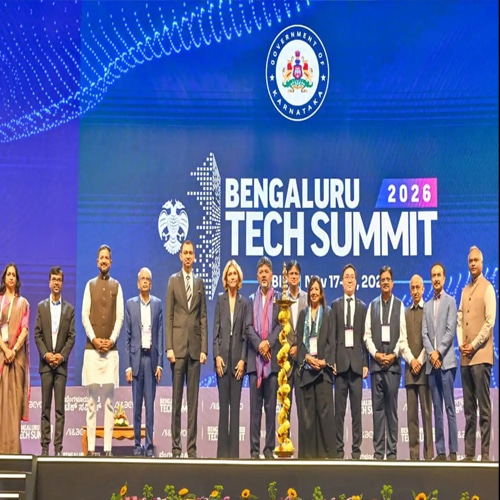
Bengaluru Tech Summit 2026 highlights enterprise AI maturity, semiconductor investments and India's ambition for technological self-reliance.
Karnataka has reinforced its position as India's technology powerhouse with the launch of the report “GCCs in Karnataka: Shaping the Future of Enterprise AI” at Bengaluru Tech Summit 2026 on November 19.
Released by Karnataka's Department of Electronics, IT & BT and launched by Minister Priyank M. Kharge, the report highlights the state's growing leadership in enterprise artificial intelligence and global capability centres.
A significant finding reveals that 66% of surveyed Karnataka GCCs have reached the Portfolio Hub stage of AI maturity, demonstrating the transition from conventional service delivery towards innovation-led operations.
Ashok Chandak, President of IESA, emphasized that Karnataka's progress reflects collaboration among government, global enterprises, academic institutions, startups and skilling organizations.
With Bengaluru hosting over 1,100 GCCs, the ecosystem provides a foundation for enterprise AI development, advanced research, digital transformation and globally competitive technology solutions.
Chandak highlighted the importance of aligning Karnataka's innovation ecosystem with the IndiaAI Mission and Viksit Bharat vision, particularly across semiconductors, electronics, robotics and deep technologies.
The summit's “AI & Beyond” theme reinforced the convergence of artificial intelligence, intelligent systems and semiconductor technologies, creating opportunities for product innovation and commercialization.
As a supporting industry association, IESA curated the Circuit Stage conference track and an industry roundtable, with over 25 leaders contributing insights on emerging technologies and ecosystem development.
The co-location of Embedded World India further strengthened connections between semiconductor design, embedded systems and next-generation intelligent applications, supporting India's ambition to move from silicon to systems.
Meanwhile, the Semicon 2.0 Web Application Portal marks another milestone in translating semiconductor policy into implementation, encouraging investments across manufacturing, advanced packaging, chip design and research.
Chandak welcomed the proposed ₹1.275 lakh crore Semicon 2.0 outlay and expansion of the Electronics Components Manufacturing Scheme to ₹40,000 crore, highlighting opportunities for startups, MSMEs and global investors.
India's next challenge is execution. Converting policy approvals into operational manufacturing facilities, skilled talent, resilient supply chains and commercial innovation will determine its global competitiveness. Karnataka's experience demonstrates how coordinated investments in AI, semiconductors and deep technology can accelerate India's journey towards technological self-reliance.