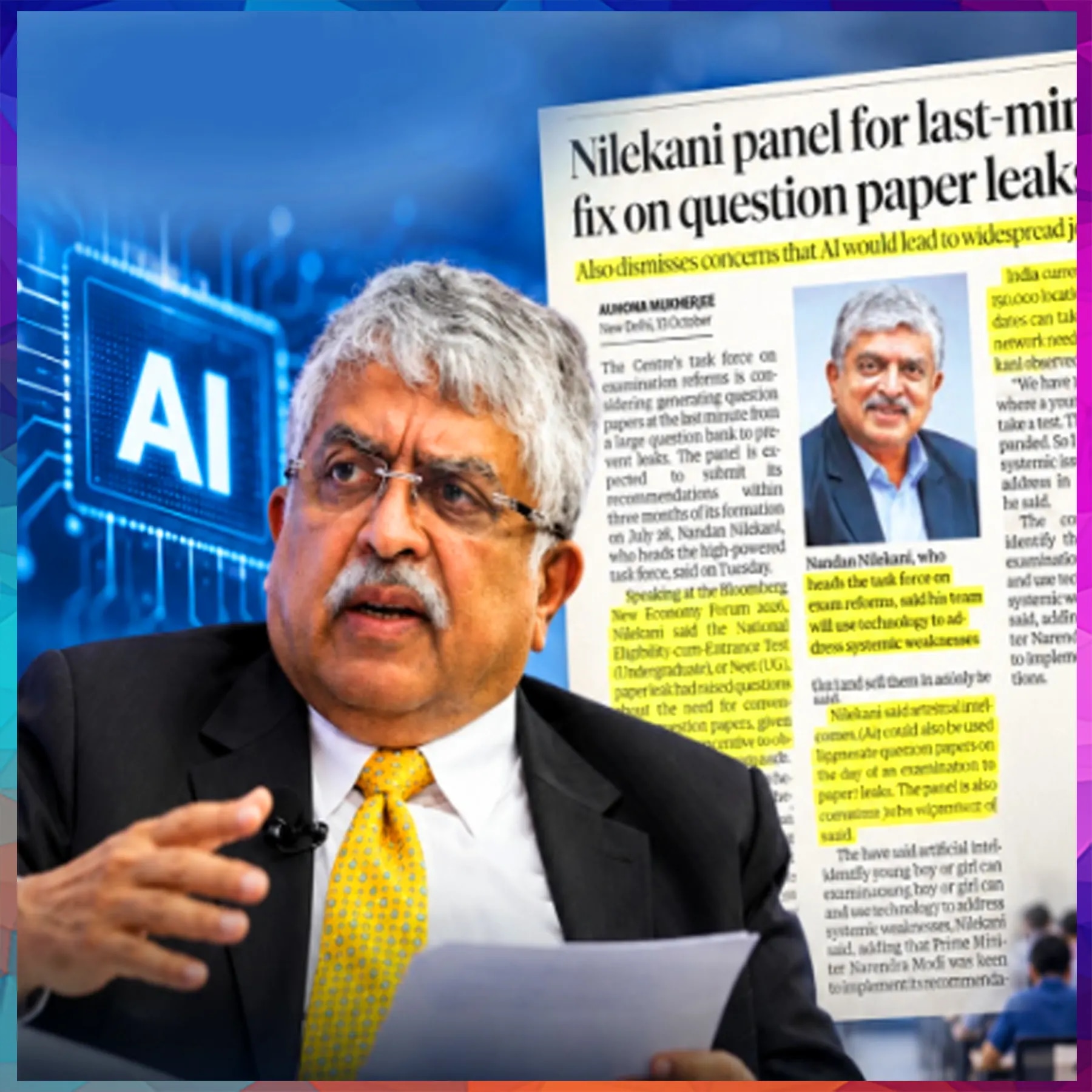
Infosys co-founder says building a large question bank and creating papers on exam day could weaken the profit motive behind leaks, while urging a countrywide move to computer-based testing.
Infosys co-founder Nandan Nilekani has suggested that India’s competitive examinations could be made harder to compromise by generating question papers only at the last moment, removing the fixed document that leak racketeers seek to steal and sell.
Speaking at the Bloomberg Economic Forum in New Delhi on Tuesday, October 13, Nilekani questioned the need for a pre-prepared paper at all. Once a paper exists, he argued, it acquires a market value, and that creates a financial incentive for someone to leak it.
A question bank instead of a single paper
The proposal comes against a backdrop of persistent worry over the security of high-stakes tests and the toll that leaks take on students who prepare for years. Rather than drafting one paper well ahead of the exam, Nilekani said authorities could assemble a large bank of questions and draw the final paper from it close to the start of the test.
The logic is straightforward: if no final paper exists until shortly before the exam, there is little for anyone to obtain in advance. The idea aims to take away the reward that comes from gaining early access to a paper.
The approach is not a guarantee, however. How well it works would hinge on how the system is designed, who controls the question bank, and how securely it is protected.
Push for computer-based testing
Nilekani also urged a nationwide transition to computer-based testing, or CBT. In this format, candidates sit the exam on computers at designated centres instead of answering printed papers. Moving to digital delivery could lessen the risks tied to printing, packing and transporting question papers across the country.
Even so, CBT is not free of vulnerabilities. Safeguards would still be required against unauthorised access, impersonation and other forms of malpractice.
Capacity is another challenge. According to Nilekani, India already has around 150,000 locations where candidates can take tests, but the network would need to grow to support wider use of computer-based exams. That would demand adequate facilities and dependable systems in every region, including places where digital infrastructure remains limited.
Nilekani, who leads a task force looking at reforms to the examination system, described the problems as systemic ones that must be tackled at the root. The proposals remain part of an ongoing reform process, and whether they are adopted will depend on the recommendations and safeguards that authorities ultimately settle on.
Technology, in short, may shrink some weak points, but secure question banks, rigorous oversight and easily accessible test centres will remain essential to making examinations fairer and more dependable.