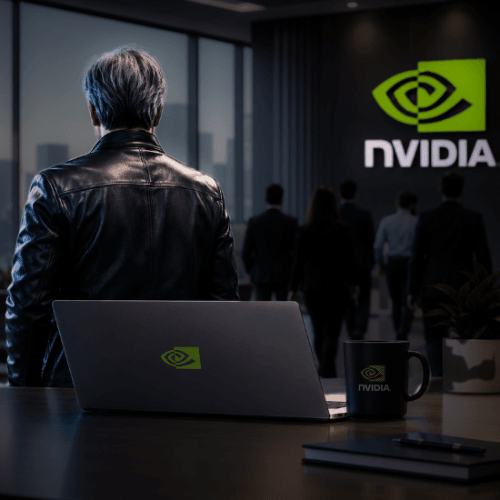
Nvidia faces a defining leadership transition following Jensen Huang's resignation, while speculation about a potential $50 billion semiconductor venture raises questions about his next move.
The company's board accepted Huang's resignation in November 2026, ending his 33-year tenure leading the artificial intelligence chipmaker he co-founded.
Nvidia appointed Chief Financial Officer Colette Kress as interim CEO, ensuring management continuity while directors search for a permanent successor.
Board chairman Harvey Jones subsequently confirmed that directors unanimously accepted Huang's departure and had no plans to reinstate him.
The resignation followed disclosures concerning Huang's personal conduct, prompting wider scrutiny of corporate governance, executive accountability and potential regulatory implications.
American authorities are examining allegations involving sensitive semiconductor technology and possible export-control violations, although investigations have not established criminal wrongdoing by Huang.
Despite public appeals supporting his return, Nvidia's directors have maintained their position, placing institutional governance above pressure from prominent technology industry figures.
Analysts suggest employee-led opposition may have limited influence because substantial stock-based compensation creates financial incentives to preserve organisational stability.
Meanwhile, online reports suggest Huang could establish another semiconductor company, potentially targeting advanced AI processors and large-scale computing infrastructure.
The widely circulated $50 billion funding figure, however, remains speculative, with no confirmed fundraising commitments, company formation or official announcement from Huang.
Such a venture, if eventually established, could challenge existing semiconductor competitors while accelerating innovation across AI hardware, networking and data-centre technologies.
For Nvidia, immediate priorities include maintaining customer confidence, safeguarding intellectual property and delivering its established product roadmap without operational disruption.
The company continues benefiting from strong demand for accelerated computing, enterprise AI deployments and infrastructure investments supporting increasingly sophisticated machine-learning systems.
Its permanent leadership appointment will influence future investment priorities, regulatory relationships, technological partnerships and strategic positioning within the global semiconductor ecosystem.
Ultimately, Nvidia's challenge extends beyond replacing its founder: sustaining innovation, protecting shareholder confidence and navigating geopolitical scrutiny while the industry awaits clarity on Huang's next chapter.