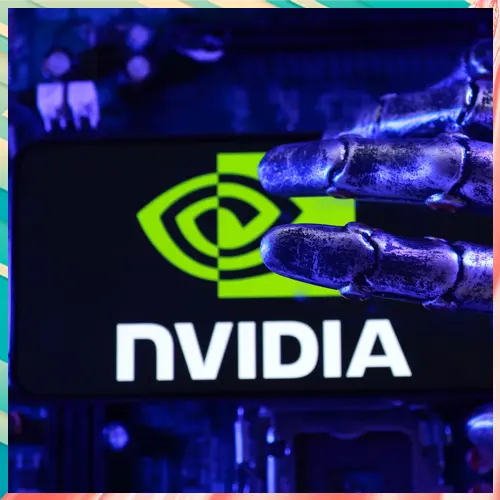
Nvidia is making an aggressive push beyond chips and infrastructure with Nemotron 4, an upcoming family of open AI models designed to compete with some of the world’s most capable open models. Reports indicate the flagship model could contain at least one trillion parameters, potentially placing Nvidia much closer to the frontier of large-scale model development.
The strategy represents an important evolution for Nvidia. The company already dominates the accelerated-computing infrastructure underlying much of the AI boom. Building competitive models allows it to demonstrate how its GPUs, DGX Cloud, networking, CUDA ecosystem and AI software can work together as a complete stack—from silicon to intelligence.
Nemotron 4 is also not purely an in-house effort. Nvidia earlier established the Nemotron Coalition, bringing together Black Forest Labs, Cursor, LangChain, Mistral AI, Perplexity, Reflection AI, Sarvam and Thinking Machines Lab. The first project includes a base model co-developed by Nvidia and Mistral AI, with coalition members contributing data, evaluations and domain expertise.
Key Highlights:
● Nemotron 4 targets frontier performance — a flagship model with 1 trillion+ parameters.
● Open AI as strategy — enabling enterprises to customize models instead of relying solely on closed APIs.
● An ecosystem play — built via Nvidia's Nemotron Coalition of AI companies.
● Agentic AI focus — optimized for autonomous, long-running workloads.
● Nvidia climbs the stack — now spanning chips, networking, models, inference, and agent infrastructure.
● Partner conflict risk — strong Nvidia models could rival its own customers.
● End goal: infrastructure consumption — better open models drive more demand for Nvidia's compute.
Open AI Becomes the New Battlefield
The timing is significant. Powerful open and open-weight models are giving enterprises greater freedom to customize AI, deploy it on private infrastructure and avoid dependence on a single proprietary-model provider. Nvidia says its Nemotron models make weights, training data and technical information available, supporting enterprise specialization and deployment across edge, cloud and data-center environments.
This also responds to increasing competition from lower-cost and increasingly capable Chinese open models. If Nvidia can produce frontier-level open models optimized for its own hardware, it could strengthen demand for Nvidia compute while simultaneously establishing an alternative open AI ecosystem.
From GPU Vendor to Full AI Platform
Nemotron therefore serves a larger strategic purpose. Nvidia does not necessarily need to monetize models in the same way as a traditional AI laboratory. Powerful open models can encourage developers to consume more Nvidia GPUs, networking, inference software and cloud infrastructure.
The company is already moving in this direction. Nvidia says Nemotron 3 Ultra delivers faster inference and lower costs for complex agentic workloads, while companies including CrowdStrike, Palantir, Siemens and Synopsys are building agentic applications around Nvidia's broader software and model ecosystem.
But Nvidia Faces a Partner Paradox
The strategy nevertheless creates an important competitive tension. Nvidia supplies infrastructure to many companies developing AI models. If Nemotron becomes a direct competitor to models produced by customers and partners, Nvidia must carefully manage its position as both the arms supplier and a participant in the AI-model race.
That could become increasingly sensitive as Nvidia expands upward into models, agent frameworks and enterprise AI software. Customers may question whether Nvidia will remain a neutral infrastructure provider or gradually capture more of the application stack itself.
The counterargument is that open models could expand the entire ecosystem. If Nemotron accelerates enterprise adoption, customers may ultimately consume more infrastructure and build more specialized applications—benefiting Nvidia and its partners simultaneously.
Agentic AI Could Be the Real Prize
Nemotron 4’s biggest opportunity may ultimately be agentic AI rather than conventional chatbots. Autonomous agents require reasoning, coding, tool calling, long context and efficient inference while potentially executing thousands of tasks continuously.
Nvidia is already complementing its model strategy with NeMo Switchyard, an open-source routing technology designed to direct workloads toward appropriate models based on requirements such as performance and cost.
The combination points toward Nvidia's larger ambition: GPU + networking + models + inference + routing + agent runtime.
If successful, Nvidia will no longer be merely supplying the engines powering the AI revolution. It could increasingly provide the architecture upon which enterprises build and operate their entire AI factories.
The bigger picture: Nemotron 4 could transform Nvidia from the company supplying the hardware for the AI race into one of the companies increasingly defining how AI itself is built, customized and deployed.

See What’s Next in Tech With the Fast Forward Newsletter







Tweets From @varindiamag
Nothing to see here - yet
When they Tweet, their Tweets will show up here.