The first study examines payment rules in India and five Southeast Asian markets, finding that existing frameworks leave liability unclear when AI agents use valid credentials to make purchases outside the limits set by customers.
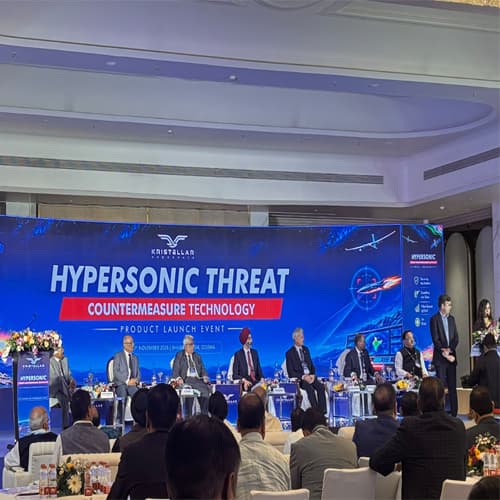
Pine Labs has launched The Agentic Fine Print, an independent research series examining how payment systems can handle purchases made by AI agents on behalf of consumers. Unveiled at the Singapore FinTech Festival 2026 on 23 November, the series invites regulators, payment networks, banks and AI developers to help shape the standards and safeguards for agentic commerce.
The series looks at how AI assistants can find and read merchant catalogues, how merchants can verify an agent’s identity and who authorised it, and how agents can make payments within a customer’s limits. It also examines whether agents and payment networks can work across platforms and who bears responsibility when a purchase goes wrong.
“Every major shift in payments has required clear rules of responsibility before achieving mass adoption, from credit cards to real-time payments, and agentic commerce is no different,” said B. Amrish Rau, CEO, Pine Labs. “The most urgent question is not whether AI agents will handle purchases, but whether we build the trust infrastructure before or after the first billion-dollar dispute. For this to scale, consumers must trust an AI agent with their wallet just as implicitly as they trust their payment card today. Technology alone cannot manufacture that trust, nor can any single company build it in isolation. That's why we've worked with leading researchers to launch The Agentic Fine Print as an open series, our foundational contribution to this ecosystem-wide dialogue. We invite regulators, networks, banks, and AI innovators to help us shape these answers together, not after the fact.”
First study examines who bears the loss
The opening edition, Accountability in Agentic Commerce, was written by Ben Charoenwong, Associate Professor of Finance at INSEAD. It reviews payment rules in six markets as of 8 September 2026 across three scenarios involving compromised credentials, purchases that exceed a customer’s instructions and payment execution errors.
The study found that most of the markets have frameworks for unauthorised payments involving fraud. Across all six, however, the rules leave open who bears the loss when an AI agent uses valid credentials to buy something the customer did not authorise. Charoenwong proposes assessing payment systems by whether customers can prevent, pause and reverse purchases initiated by an agent.
“The most striking finding is that protection is generally better specified for third-party fraud than for the agent's own mistakes or overreach,” said Ben Charoenwong, Associate Professor of Finance, INSEAD. “Across all six markets, existing rules do not clearly settle who pays when an agent buys outside its instructions using the customer's valid credentials. This isn't a technology gap, it's a gap at the boundary between contract law, agency rules and payment frameworks. Working on this series reinforced why we need this conversation now: the rules being written in 2026 and 2027 will either enable or constrain agentic commerce for the next decade. The research also revealed an interesting pattern, even in India, the only market where a payment rail explicitly names 'AI Profiles,' the underlying rules leave critical questions unresolved. That tells us something important: naming AI in a regulation doesn't automatically settle how it should work.”
Payment infrastructure and industry coordination
The first edition also includes Pine Labs’ technical assessment of the infrastructure for agentic commerce. It outlines the components the company says it has put in place and where it still needs cooperation from payment networks, banks and AI companies.
Pine Labs said guidance from Singapore’s Infocomm Media Development Authority and Monetary Authority of Singapore, as well as the Data Security Council of India, addresses some of the questions raised by the series.