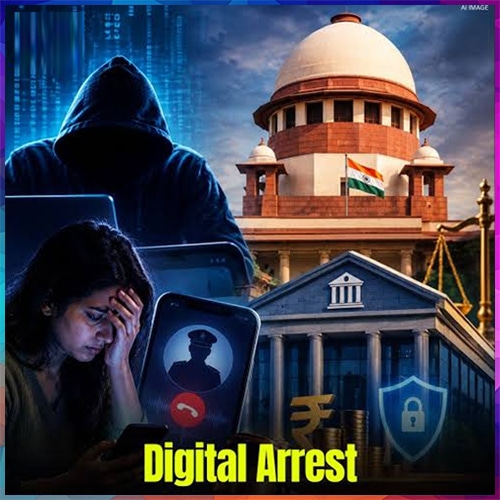
The Supreme Court has intensified its scrutiny of digital-arrest scams, demanding stronger preventive measures from WhatsApp, banks, and law-enforcement agencies. Its intervention signals growing emphasis on institutional accountability for financial fraud.
Digital-arrest scams involve criminals impersonating police, CBI, customs, or judicial officials. Through threatening video calls, fabricated documents, and false arrest warnings, fraudsters manipulate victims into transferring money to supposedly secure accounts.
On November 10, the Court asked WhatsApp and other digital intermediaries to explain their fraud-prevention strategies. Representing WhatsApp, senior advocate Kapil Sibal reportedly stated that approximately 9,400 suspicious accounts had already faced action, while additional detection mechanisms were being developed.
Significantly, the Court pressed the Reserve Bank of India to develop a compensation framework for victims. Banks could face liability when investigations establish that negligence or inadequate due diligence enabled fraudulent transactions. However, compensation would not automatically apply to every cybercrime.
Proposed safeguards include AI-powered transaction monitoring, identifying unusual financial activity, temporarily restricting suspicious transfers, strengthening customer verification, and rapidly freezing funds routed through mule accounts.
The RBI has reportedly been asked to submit details of authorised financial institutions before the November 23 hearing. State police authorities must also report registered cases, investigation progress, and measures taken to combat digital-arrest fraud.
The larger message is clear: Digital trust demands shared accountability. Technology platforms must detect impersonation, banks must prevent suspicious transactions, and law enforcement must accelerate investigations. For India's expanding digital economy, effective prevention, timely compensation, and stronger institutional safeguards are essential to protecting consumers and restoring confidence.