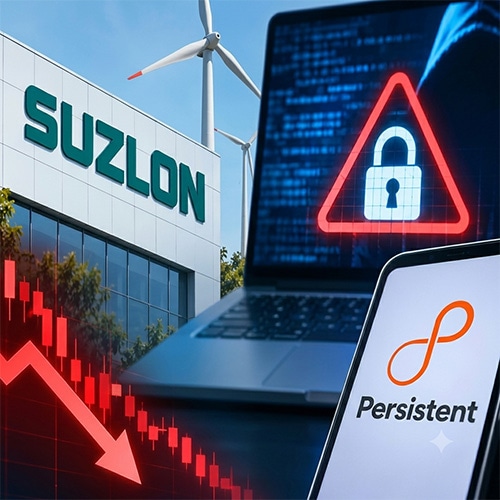
Two prominent Indian companies, Suzlon Energy and Persistent Systems, have disclosed separate cybersecurity incidents to stock exchanges, highlighting growing threats to corporate infrastructure and sensitive employee information.
The disclosures, made on November 23, 2026, underline how cyberattacks increasingly target both enterprise networks and external service providers handling confidential business data.
Renewable energy major Suzlon Energy confirmed a cybersecurity incident affecting its information technology environment, prompting immediate containment and precautionary security measures.
The company activated its incident response protocols and initiated an assessment to determine the nature and potential impact of the intrusion.
Suzlon clarified that its business-critical applications remained unaffected at the time of disclosure, providing reassurance regarding operational continuity.
The incident was also reported to the Indian Computer Emergency Response Team (CERT-In), reflecting the company's commitment to regulatory transparency and coordinated cybersecurity response.
Separately, IT services company Persistent Systems reported a potential data breach involving a United States-based law firm engaged to manage employee immigration matters.
According to its exchange filing, certain employee immigration records and supporting documents were reportedly extracted without authorisation from the external legal service provider's systems.
Persistent emphasised that its internal systems remained secure and business operations continued normally. Claims involving theft of critical corporate information remain unverified.
The incidents illustrate two distinct cybersecurity challenges: protecting internal digital infrastructure and securing sensitive information shared with third-party vendors.
For enterprises, the implications extend beyond immediate operational disruption. Exposed employee records could potentially facilitate identity theft, impersonation, targeted phishing and sophisticated social engineering attacks.
The larger warning is that cybersecurity protection cannot stop at corporate firewalls. Organisations increasingly require AI-driven threat detection, continuous monitoring, third-party risk assessments, identity protection and rapid incident response capabilities.