In order to highlight product integration and combined leadership in virtualization and cloud security, Trend Micro has announced to participate in VMware's vForum and VSS events across Asia-Pacific. Trend Micro will be working with VMware to integrate its Deep Security with VMware NSX, the platform for network virtualization. This will produce a best-of-breed security framework for joint customers that increase protection and automate security deployments in virtualized data centers.
At these VMware events, Trend Micro will be discussing the latest advances in virtualized server and VDI security, along with sophisticated capabilities for detecting the latest in targeted attacks and web application vulnerabilities.
 |
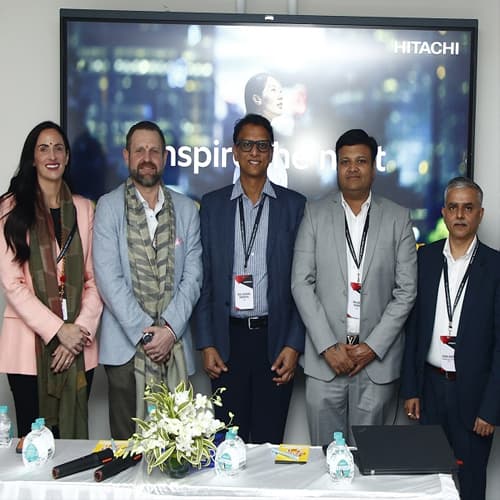
Dhanya Thakkar, Managing Director, India & SAARC, Trend Micro, said, "With the rise of software defined data centers, Trend Micro is excited to work alongside VMware to create a comprehensive security backbone that protects the data center of the future. Through the product integration of Trend Micro advanced network security capabilities with VMware’s next- generation network virtualization platform, we can help simplify and automate how security is deployed, delivering reliable protection that easily scales to the needs of each customer."
As part of the Trend Micro Cloud and Data Center Security Solution, Deep Security integrates anti-malware, Web reputation and firewall in addition to intrusion prevention, integrity monitoring and log inspection to protect mission-critical applications and data.
Trend Micro Deep Security platform is built for VMware environments to yield efficient resource utilization, higher VM densities and easier manageability over traditional anti-malware solutions. This architecture has been designed for service providers and enterprises with software-defined data centers, with support for multi-tenancy, auto-scaling, utility computing and self-service.