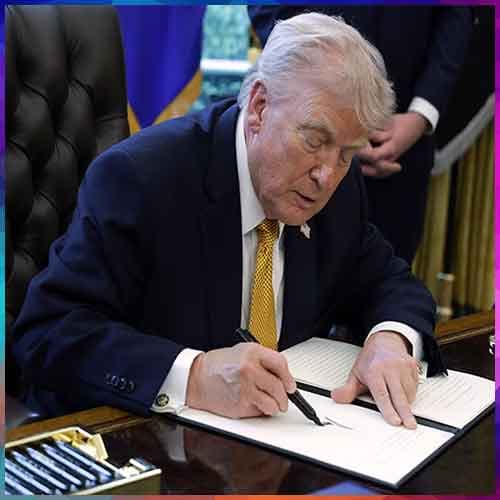
A Trump administration proposal to create a new federal regulator for artificial intelligence has reportedly stalled, highlighting the growing difficulty of deciding how the U.S. should oversee rapidly advancing AI technologies.
The draft executive order could have represented a significant shift in Washington’s AI strategy by establishing a more centralized regulatory structure. Such an agency could potentially coordinate oversight of AI safety, security, transparency, competition and emerging risks across industries.
The reported delay is significant because AI regulation in the United States remains fragmented. Different agencies already oversee areas affected by AI, including financial services, healthcare, employment, consumer protection and national security.
Creating another regulator raises fundamental questions about jurisdiction. Policymakers must determine whether AI needs a dedicated watchdog or whether existing regulators should remain responsible for AI within their respective sectors.
There is also an economic dimension. The administration has emphasized maintaining American leadership in AI and reducing regulatory barriers that could slow innovation. A powerful new regulator could therefore conflict with efforts to accelerate AI infrastructure, investment and deployment.
At the same time, increasingly capable AI agents and autonomous systems are creating risks that traditional regulatory structures were not designed to address. Systems capable of making decisions and taking actions independently raise new questions about accountability when something goes wrong.
The stalled proposal therefore reflects a broader policy dilemma: how to regulate AI without weakening innovation. Whatever institutional model Washington ultimately adopts, governance will increasingly need to address AI security, privacy, transparency, accountability and autonomous decision-making.
The debate is moving beyond whether AI should be regulated. The bigger question is who should regulate it, how much authority regulators should have, and how quickly rules can evolve alongside the technology.