


When the first wave of cloud migration hit corporate IT, the question was simple: which cloud could lift and shift fastest? A decade later, enterprises are not merely choosing platforms; they’re designing operating models for the AI age. The familiar orbit of AWS, Microsoft Azure, and Google Cloud still dominates, but the gravitational pull is shifting. A new category of providers is asserting itself— call them superscalers—architected not for breadth of services but for depth of performance. Hyperscalers offer planetary reach, global availability, and an almost encyclopedic menu of services. Superscalers counter with deterministic throughput, accelerator- dense clusters, liquid cooling, and data fabrics tuned for petabyte-scale training. The resulting realignment is not a fight to the death; it’s a choreography. Increasingly, the most competitive enterprises are orchestrating scale where it’s cheap and speed where it matters, blending the hyperscalers’ backbone with the superscalers’ AI factories.
Across conversations with 16 technology leaders—CIOs, CTOs, CISOs, and digital chiefs from healthcare, manufacturing, financial services, consumer brands, and data-center operators— one theme recurred with drumbeat regularity: the winners are not choosing a camp; they are composing a portfolio. Their architectures are hybrid and federated, their governance automated, and their security born secure rather than bolted on. “The real power comes when they work together,” says Saurabh Gupta, Group Chief Digital & Information Officer at InoxGFL. “Hyperscalers scale infrastructure—superscalers scale intelligence.” That distinction, repeated in different guises by nearly every leader we interviewed, is the spine of this story.
THE FAULT LINE SHIFTS FROM CAPACITY TO CHARACTER
Definitions help, if only to show where they fall short. Hyperscalers— AWS, Azure, GCP—are the builders of worldwide elasticity. Their value proposition is to make almost anything possible, almost anywhere, almost instantly. They marshal thousands of services, vast partner marketplaces, multi-region replication, and mature support models that have become the standard vocabulary of enterprise cloud. Dhananjay Rokde of Imanedge captures it crisply: these providers operate “massive data centers designed for virtually limitless growth,” the place to go when needs are large and unpredictable and when global distribution is a feature rather than a constraint.
-------------------------------------------------------------------------------------------------------------------------------------------------
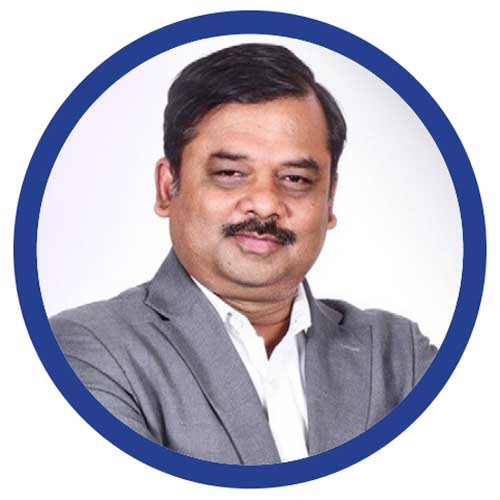 ANIL NAMA
CIO, CtrlS Datacenters
"Nama argues for workload realism and architecture by design. He prioritizes hybrid/multi-cloud compatibility, low-latency interconnects, and partner ecosystems— plus transparent TCO (including egress/support) and ESG alignment. Security must be “designed in,” with Zero Trust and continuous assessment, while AI/ML telemetry drives energy and workload optimization."
Superscalers, by contrast, pursue depth over breadth. They aren’t trying to be everything to everyone; they are trying to be uncompromising where performance is non-negotiable. The architecture is tight rather than sprawling: dense GPU or custom accelerator pools connected by InfiniBand and NVLink; low- latency fabrics that make the most of model and data parallelism; liquid or immersion cooling to keep 50–100 kW racks within thermal budget; storage that feeds terabytes per second without starving the chips. Yogendra Singh, a technology leader steeped in platform strategy, describes superscalers as the providers that “don’t just scale; they specialize,” blending high-performance computing sensibilities with AI-native design. The difference is not only technical. It is philosophical: hyperscalers are built to say yes to every enterprise; superscalers are built to say yes to one kind of enterprise task—the kind that would otherwise run out of runway.
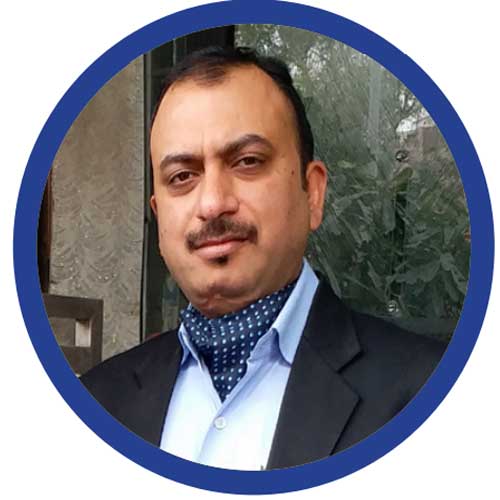 SUNIL GURBANI
Head of IT, Fratelli Wines
"Gurbani frames the choice as broad and stable versus fast and specialized. His playbook relies on tiered infrastructure, autoscaling, AI-based energy management, and Zero Trust with micro- segmentation. He champions AIOps and IaC for consistency, with rigorous cost transparency and hybrid/edge strategies for latency and resilience."
If that sounds like a clean separation, the leaders we spoke to warn against treating it as a binary. Anil Nama, CIO at CtrlS Datacenters, argues that the starting point must be the workload’s DNA rather than a provider logo. “Not all hyperscalers are optimized for every type of workload,” he says. He urges teams to scrutinize hybrid and multi-cloud fit, data-residency constraints, network performance and interconnects, and—often overlooked—the quality and depth of the partner ecosystem that wraps around any given provider. He has a particular emphasis on transparency: total cost of ownership should include egress fees, support tiers, and the operational drag of tooling mismatches. And because ESG has sharpened as a board-level lens, he wants sustainability commitments and energy footprints right alongside price sheets.
Regulated industries sharpen the distinction further. In healthcare, Bohitesh Misra, CTO at Avexa Systems, uses a simple litmus test: if a platform cannot meet HIPAA, FHIR, HITRUST, and rigorous auditability for PHI, its raw performance is irrelevant. He is blunt: “If a superscaler gives us specialized GPU clusters but lacks a compliance agreement, it’s a non-starter.” Misra’s architecture keeps critical clinical systems in highly secure, redundant zones; places inference at the edge where clinicians make time-sensitive decisions; and centralizes training where elasticity is abundant but privacy remains uncompromised. Performance and cost are tuned inside that compliance perimeter, not the other way around.
Dr. Rakhi R. Wadhwani, who leads operations and compliance at ISOQAR, frames the choice as risk choreography. The giants suit the broad middle of workloads precisely because they bundle
maturity—uptime histories, global compliance frameworks, and proven tooling—into a package that most enterprises can adopt without ceremony. Superscalers narrow the aperture and ask for reciprocal maturity on the customer side: expertise to exploit dense hardware, discipline to manage bespoke pipelines, and clarity about what compliance means when the infrastructure is more specialized than standardized. Her advice is unfussy: test small, measure rigorously, and insist on vendor trust that extends beyond glossy SLAs.
 DHANANJAY ROKDE
CTSO, Imanedge
"Rokde contrasts hyperscalers’ elastic “pay-as-you- go” growth with the predictable budgeting of bespoke or colocation options. He stresses energy efficiency, automation, and predictive maintenance for costs; scale-out architectures and purpose- built AI floors for performance; and layered, Zero Trust security with compliance as baseline."
THE TRIAD REWRITTEN: COST, PERFORMANCE, AND SECURITY IN MOTION
Because AI is a thermodynamic problem as much as a computational one, the old triangle of cost, performance, and security has been redrawn. The leaders in this story reject the idea that one corner must suffer so that another can prosper. “Cost, performance, and security aren’t trade-offs anymore,” says InoxGFL’s Gupta. “AI has turned them into a triangle of continuous optimization.” It is a decisive line, and it reflects a new operating model.
On cost, the advice converges on two imperatives: attack the power bill and instrument everything. Energy and cooling have become the dominant variables in the data-center equation, which is why liquid and rear-door cooling, hot/cold aisle containment, and AI-assisted facility management are moving from experiment to default. Rokde argues for automation as a cost weapon as much as an operational one, and Sunil Gurbani of Fratelli Wines extends that logic into the financial layer. He wants cost telemetry bound to the workload rather than to the cluster: right-sizing, preemptible and spot capacity, chargeback and showback, and anomaly detection built into the daily rhythm of engineering. It is FinOps upgraded from spreadsheet to control loop.
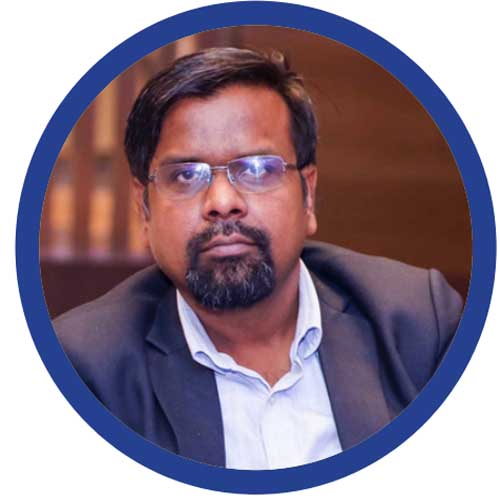 AJAY YADAV
Head-IT, SBL Homoeopathy
Yadav favors a hybrid model: hyperscalers for rapid scale and global reach; superscalers for tailored performance in AI and analytics. He balances cost via reserved capacity and pay-as-you-go mixes, keeps security integral (encryption, Zero Trust), and leans on predictive analytics to scale proactively.
Performance now begins with proximity. Gupta is emphatic that co-locating compute and data is no mere performance tweak; it is an architectural decision that defines whether AI clusters spend money learning or spend money waiting. The superscaler argument shines here. Deterministic throughput—born of tight orchestration, lossless fabrics, and storage that keeps pace—is the antidote to expensive idling. Shibu Kurian notes that this is how you make “adding more GPUs actually speed up training” rather than exposing a bottleneck elsewhere. On the hyperscaler side, the elastic value proposition remains powerful, particularly for burst-heavy work and global inference footprints. The difference is that more teams now understand the behavior of their models well enough to place jobs where the run will be fastest rather than where capacity is simply available.
Security, finally, has become a design language rather than a checklist. Nama sees the modern posture as zero trust by default, micro-segmentation at the fabric level, hardware roots of trust establishing provenance, and confidential computing where code and data must be shielded even from privileged eyes. Archie Jackson pushes for posture management to move from quarterly governance to continuous assurance, with policy drift monitored alongside CPU utilization. Misra’s stance is a practical corollary: in healthcare, encryption in transit and at rest is merely the starting point; data-residency guarantees and the option to train via federated learning rather than centralized data movement turn security into a path-finder for AI, not a gate that closes after the fact.
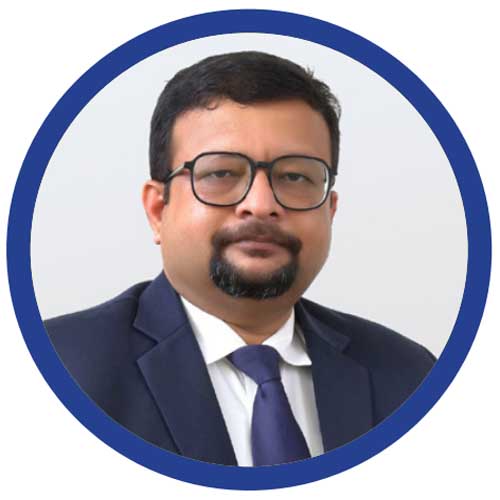 SAURABH GUPTA
Group CDIO, InoxGFL
"Gupta’s mantra: “Hyperscalers scale infrastructure— superscalers scale intelligence.” He operationalizes the cost–performance–security triad via AI- led capacity planning, FinOps/AIOps, GPU scheduling, and data proximity, wrapped in Zero Trust and AI-based threat detection."
AI FORCES THE DATA CENTER TO CHOOSE ITS PHYSICS
If legacy data centers were built to keep networks up, AI-era facilities are built to keep physics in check. Dr. Ravi Mundra calls AI “the deepest architectural disruption” he has seen in nearly two decades. The bottlenecks have migrated from racks and routers to heat and I/O. That migration explains the industry’s otherwise dizzying convergence: hyperscalers and superscalers alike are marching toward liquid cooling, toward modular “AI pods” as the repeatable unit of capacity, toward storage and interconnects that keep pace with training appetites measured in trillions of parameters.
The hardware side of the story is familiar but worth stating plainly. Hyperscalers field elastic pools of GPUs and custom chips—TPUs, Inferentia, and their successors—making it trivial to scale out training one week and scale up inference the next. Superscalers push density to the edge of what power and thermals can bear, using liquid or immersion cooling to run higher TDPs safely and to keep thermal throttling out of the equation. Dr. Makarand Sawant offers a helpful mental model: hyperscalers provide the macro-level horizontal scale that makes the world feel elastic; superscalers optimize the micro-level execution of ML math, where every FLOP counts because every second is purchased in megawatts.
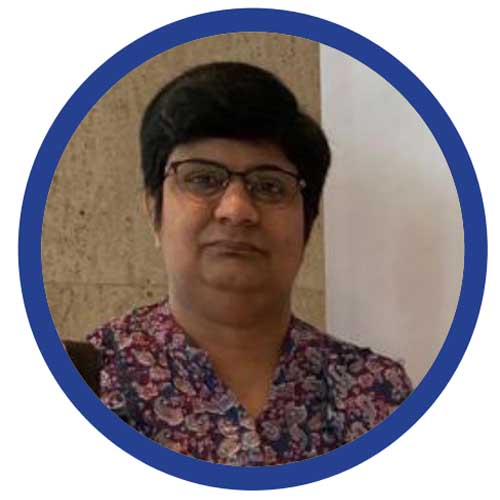 DR. RAKHI R. WADHWANI
Chief Operations & Compliance Officer, ISOQAR
"urges a risk-aligned choice: hyperscalers for general, reliable services; superscalers for extreme, specialized needs. She emphasizes uptime records, compliance tooling, and integration maturity, with vendor trust and lock-in strategy as key decision filters."
Software is the multiplier that turns power into progress. Kubernetes, Slurm, Ray, and the distributed training frameworks of PyTorch and TensorFlow do the choreography, carving vast pools into logical fleets that expand or contract to suit the job. Hyperscalers emphasize elasticity and managed services that abstract away complexity; superscalers favor predictability and schedulers tuned to serve long-running, extremely large jobs with minimum wasted motion. Either path depends on a data plane that keeps accelerators fed. That is why you see object stores in one camp and co-located high-bandwidth filesystems in the other; why edge inference nodes bloom in clinics, factories, and retail floors; and why CDNs suddenly matter to ML teams as much as to web teams.
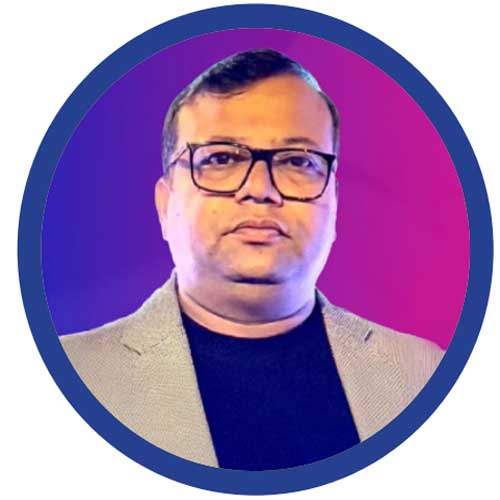 VINOD KUMAR GUPTA
CISO & DPO, PayTM Money
Vinod spotlights scale, cost models, latency, ecosystem fit, and compliance as evaluation pillars. He advocates multi-layered security (encryption, identity, threat detection), hybrid and multi- cloud for sovereignty, and automation to harden posture while optimizing performance.
Cooling and power are no longer facility concerns; they are design inputs. Mundra’s insistence on liquid and immersion cooling is not rhetorical. At 50–100 kW per rack, air suffers from physics that no amount of ductwork can finesse. Leaders describe a maturation of power strategy as well: pre-cooling when electricity is cheaper, integrating renewables where geography and grid permit, and building carbon and water intensity into SLOs alongside latency and availability. Enterprises that once treated PUE as an afterthought now plan workloads with thermals as a first-order constraint.
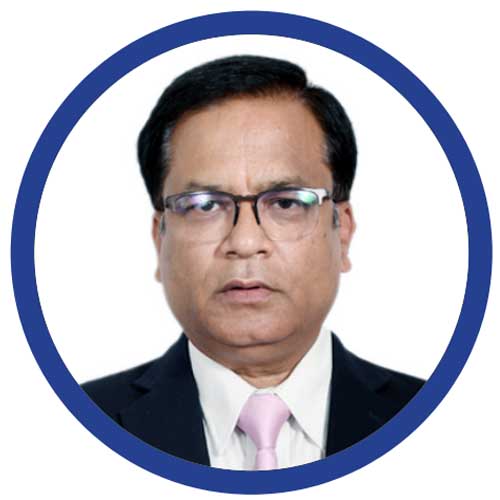 DINESH KAUSHIK
Group IT Head, Sharda Motor Industries
Kaushik offers a concise matrix of realities: hyperscalers for global general-purpose; superscalers for HPC and AI. His balancing act uses tiered storage, spot instances, right-sizing, and governance via continuous monitoring and FinOps, with elastic GPU/ TPU platforms or dense accelerator stacks to scale AI.
ORCHESTRATION, NOT OPPOSITION: THE HYBRID BLUEPRINT
The clearest point of consensus among the leaders we spoke with is also the simplest: stop asking cloud-versus-cloud and start asking workload-versus-workload. Ajay Yadav, Head-IT at SBL Homoeopathy, sees the pragmatic pattern in his own environment. Systems of record and compliance-sensitive datasets live where control is maximal and performance predictable; experimentation, bursty analytics, and globally consumed inference thrive on hyperscalers’ elasticity and reach. The best latency often lives at the edge. The best throughput often lives in a pod. The best resilience is an emergent property of an operating model that practices for failure rather than presumes it won’t happen.
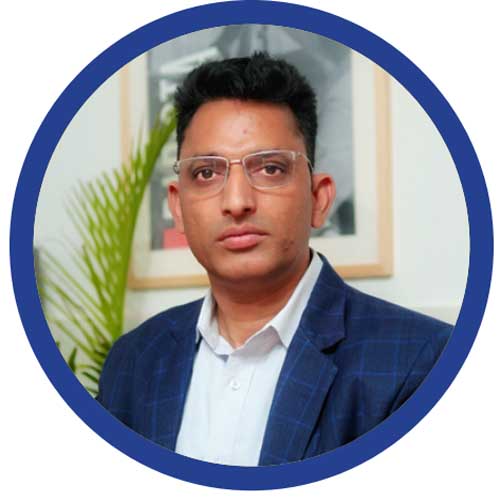 YOGENDRA SINGH
Head IT/SAP, Barista Coffee Company
Singh charts the macro trend: hyperscalers built the digital backbone; superscalers bring AI-tuned depth. He advises tiered architectures, AIOps, hybrid/multi- cloud, Zero Trust, energy efficiency, and recurring audits—“the real superpower isn’t scale, it’s synergy.”
Jackson translates that mindset into daily practice. He wants real- time FinOps so that idle capacity is reclaimed before it becomes waste. He wants hybrid placement where latency is the metric that matters, putting inference next to customers rather than next to tradition. He wants “secure-by-design” rather than “secure- by-audit,” which in practical terms means micro-segmentation, confidential computing, and posture management that never sleeps. Gupta pushes a complementary loop: AIOps and SecOps working together so that observability becomes prescriptive, not merely descriptive. If a training queue is starved, the system should either add bandwidth or shift the job. If a cost anomaly appears, it should be flagged before the end of a billing cycle. If a policy drifts, it should be corrected as automatically as a pod is rescheduled.
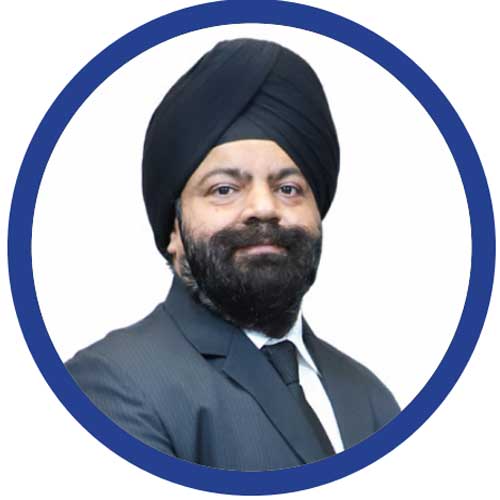 JASPREET SINGH
Partner & Chief Revenue
Officer – Consulting, Grant Thornton
"Jaspreet contrasts hyperscalers’ unmatched elasticity with superscalers’ customized density and locality. He sees modular AI builds accelerating worldwide and recommends hybrid strategies that align business objectives and regulatory posture with modular power, cooling, and networking."
The reference architecture that emerges is recognizable across industries even as the particulars change. Control planes should be cloud-agnostic, driven by Git and policy, not by manual runbooks. Data planes should speak the open dialects that make portability plausible and governance auditable. Compute planes should separate training, inference, and traditional workloads by what they need rather than by where they started. Security should drape across all layers, with identity and secrets unifying identities that don’t care where a container runs so long as they trust what it is. And, crucially, optimization must be a loop—heat telemetry, cost signals, performance metrics, and security posture all feeding controllers that keep systems efficient, resilient, and compliant without waiting for meetings.
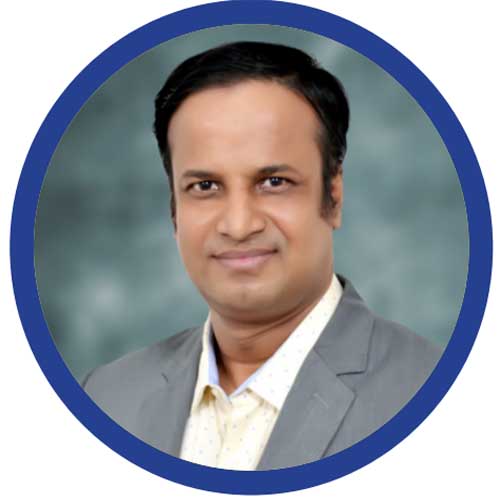 DR. JAGANNATH SAHOO
CISO, GFL
"Sahoo frames a hybrid governance model: FinOps for cost, GPUs/TPUs plus containers for performance agility, and Zero Trust with automated compliance (ISO/GDPR/ DPDPA). He values open standards to avoid lock-in and predictive maintenance to prevent downtime."
SECTOR REALITIES KEEP EVERYONE HONEST
Industries are not abstractions; they are constraints in the flesh. Healthcare, as Misra reminds us, runs on latency that can change a diagnosis and on privacy that cannot be negotiated away. Edge inference inside hospitals allows care teams to act in real time, while centralized training—elastic when it needs to be—respects the sanctity of PHI through residency guarantees and, where appropriate, federated learning that keeps data where it was born.
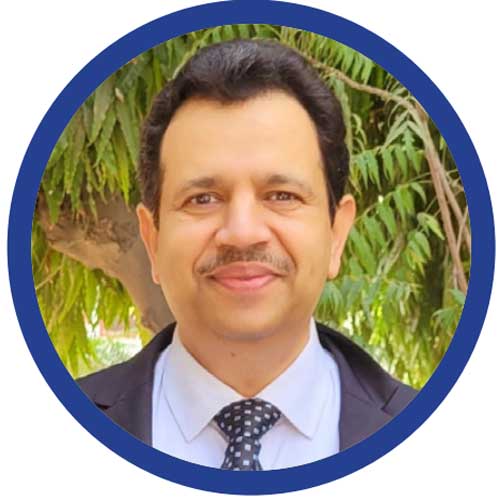 BOHITESH MISRA
CTO, Avexa Systems
"Misra anchors decisions in healthcare compliance and clinical reliability. Hyperscalers offer mature frameworks; superscalers must prove PHI-safe operations. He deploys a “right-tier” model—edge inference inside hospitals, elastic training centrally— under Zero Trust and strict data residency."
Manufacturing translates the same principles into line speed. Dinesh Kaushik advocates for honest benchmarking of workloads and matching compute to what is actually being asked—analytics and simulation are not computer vision on a line, and they do not want the same diet. Here again, edge nodes coupled with low-latency networks and accelerator- rich cores improve yield, safety, and predictability, sometimes with fewer watts than a single monolithic build would have demanded.
Financial services ask for old virtues in modern clothes: sovereignty, latency, and auditability stitched together with Zero Trust and the kind of segmentation that assumes the blast radius before one exists. Many banks run inference globally but keep model development and sensitive datasets in limited perimeters. And because capital is not free, FinOps is more than a buzzword; it becomes a governance language that allocates spend the way a portfolio manager allocates risk.
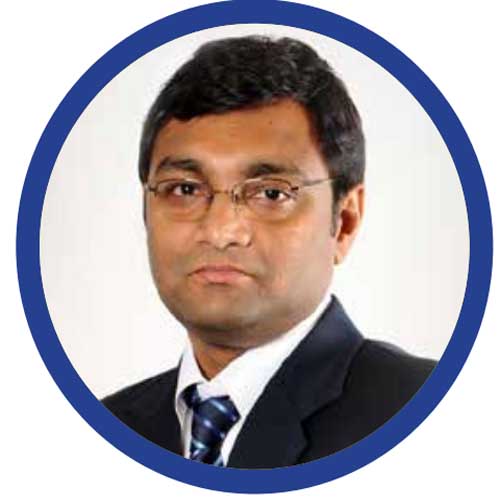 DR. MAKARAND SAWANT
VP-IT, Shayadri Group
"Sawant draws a clean dividing line: hyperscalers for macro horizontal scale; superscalers for micro- level acceleration of ML math. He advocates energy-efficient cooling and power, automation to cut OpEx, high-density servers, and high-speed networks with multilayer cyber/physical security."
Consumer and retail illustrate a final translation. Personalization, experimentation, peak traffic—these are classic hyperscaler strengths. But competitive margins make tiered storage and ruthless pruning of idle capacity survival skills, not nice-to-haves. AIOps prevents promotional peaks from collapsing into outages or into over-provisioning that punishes next quarter’s numbers.
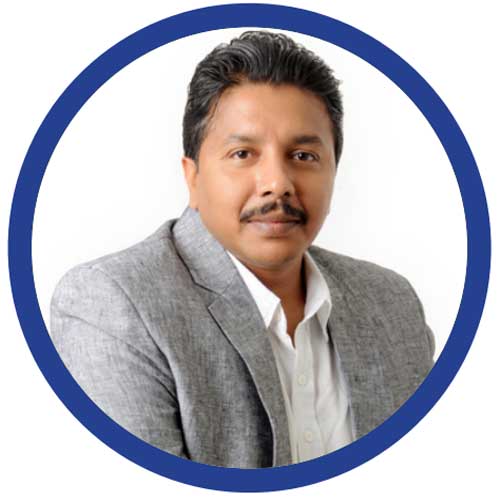 SHIBU KURIAN
Chief Information & Technology Officer
7 Sages Solutions
"Kurian weighs workload fit, deep hardware and network customization, cost-performance, and ecosystem breadth. He emphasizes modular infrastructure, telemetry-driven orchestration, and Zero Trust with hardware encryption— designing systems where cost, performance, and security reinforce each other."
THE NEXT THREE YEARS: PHYSICS, PODS, AND PORTABILITY
If the recent past has been about proving the value of AI, the immediate future is about proving the efficiency of AI at scale. The leaders interviewed for this story expect rack densities to rise and liquid cooling to become defaults rather than exceptions. They expect AI capacity to grow by cloning pods rather than building bespoke cathedrals, with enterprises reserving GPU capacity much as they once reserved compute in availability zones. They expect portability to mature from a hope to a habit: open model formats, containerized pipelines, and reproducible training that make it credible to move a workload when economics or policy demand it. And they expect security to shift so far left that it becomes table stakes for experimentation rather than the price of production.
Mundra’s closing counsel translates those currents into action. “The most effective approach is a federated hybrid strategy,” he says, “leveraging hyperscalers for global agility and non- sensitive tasks, while using superscalers for localized, high- efficiency AI factories that power your core innovation.” It is not a slogan, and it is not a hedge. It is a way to turn scale into speed and speed into advantage.
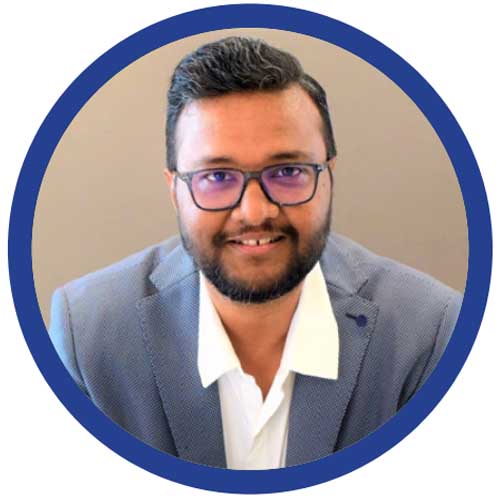 ARCHIE JACKSON
Sr. Director – IT & Security, Incedo
"Jackson urges strategic alignment and exit planning to avoid lock-in. His triad blends real-time FinOps, hybrid placement for latency, and secure- by-design practices with confidential computing and CSPM to keep compliance continuous."
WHAT LEADERSHIP ALIGNMENT LOOKS LIKE IN PRACTICE
The practical guidance from our 16 leaders lands on a few stubborn truths. Workload mapping beats vendor enthusiasm every time; AI training is not inference is not analytics is not ERP. Data gravity is more than a metaphor, and moving compute to data is often the only way to make both performance and compliance happy. Thermals and power cannot be back-of-house logistics; they are first-order product features that decide whether models finish on time and on budget. Governance must be automated to be real, with FinOps and AIOps turning dashboards into decisions. And every architecture deserves an exit plan because portability is leverage, and leverage is what keeps innovation moving faster than contracts.
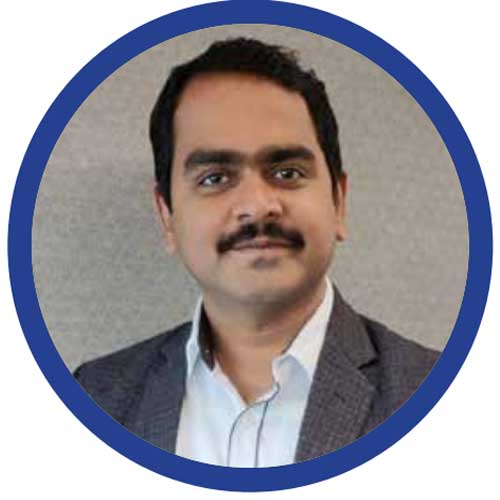 DR. RAVI MUNDRA
Head of Infra, Cyber & Cloud, AG&P
"Mundra calls AI “the deepest architectural disruption” in 17 years, shifting bottlenecks to heat and power. He prescribes liquid or immersion cooling, high-bandwidth fabrics, Zero Trust from day one, and AI pods as the repeatable unit that bridges global agility and local efficiency."
Sunil Gurbani compresses the strategy into a single sentence: smart enterprises combine both models to balance scale, performance, and agility. Anil Nama adds the execution clause: treat the data center as a dynamic, data-driven ecosystem rather than a static cost center. Between those two ideas lies a path that many enterprises are already walking: choose composition over allegiance, orchestrate rather than oppose, and let the physics of your workloads tell you where they want to run.

See What’s Next in Tech With the Fast Forward Newsletter


Tweets From @varindiamag
Nothing to see here - yet
When they Tweet, their Tweets will show up here.


