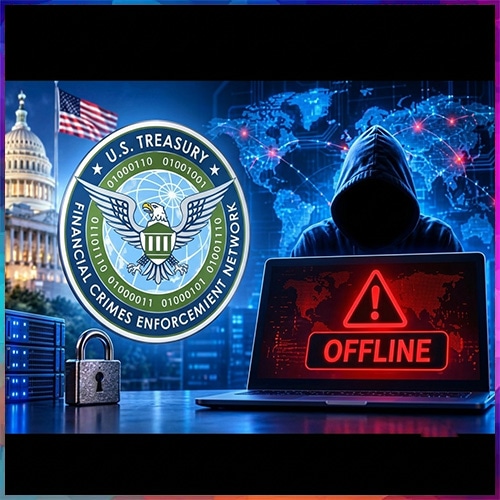
The US Treasury’s Financial Crimes Enforcement Network (FinCEN) has suffered a cybersecurity incident, disrupting critical electronic filing systems and raising concerns about the resilience of America’s financial regulatory infrastructure.
Following unauthorized access to agency systems, FinCEN took its electronic filing platforms offline while federal authorities launched an investigation.
The agency extended regulatory reporting deadlines to December 30, 2026, providing financial institutions additional time to fulfill their mandatory reporting obligations.
Key Highlights
-
Unauthorized intrusion: Hackers reportedly gained access to FinCEN systems.
-
Operational disruption: Electronic regulatory filing platforms were taken offline.
-
Deadline extension: Mandatory reporting deadlines extended to December 30, 2026.
-
Financial security concerns: Potential risks to sensitive financial intelligence and regulatory oversight.
FinCEN plays a crucial role in combating money laundering, terrorist financing, financial fraud and other illicit financial activities across the United States.
Its electronic filing infrastructure enables banks, financial institutions and regulated businesses to submit Suspicious Activity Reports and Currency Transaction Reports.
The disruption could delay financial intelligence collection, regulatory oversight and investigations into suspicious transactions, potentially affecting financial crime monitoring capabilities.
The incident also highlights the growing vulnerability of government-operated digital infrastructure that processes sensitive financial and regulatory information.
Potential exposure of confidential financial records remains a significant concern, although the extent of unauthorized access and any data theft remain unconfirmed.
Compromised financial information, if obtained by criminals, could potentially facilitate sophisticated financial fraud, identity theft and AI-powered synthetic identity attacks.
The incident reinforces the need for continuous authentication, zero-trust architecture, behavioral intelligence, data privacy controls and real-time threat detection across critical financial infrastructure.
As cybercriminals increasingly target institutions responsible for financial security, protecting regulatory infrastructure must become a national cybersecurity priority, safeguarding financial intelligence, institutional integrity and public trust.