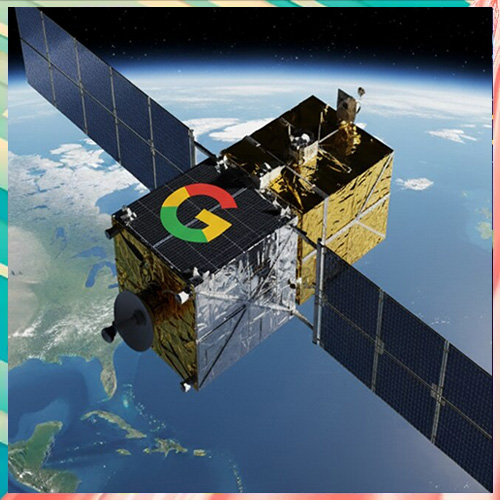
On 4 November 2025, Google Research revealed an ambitious new initiative named Project Suncatcher, aimed at bringing large-scale artificial-intelligence infrastructure into orbit. The project envisions a constellation of solar-powered satellites carrying Google-designed TPUs (tensor processing units) connected via free-space optical links, with the ultimate goal of creating a space-based computing platform capable of tackling the largest-scale machine-learning workloads.
Google Research
The concept, as outlined in the blog post, builds on the fact that solar panels in certain orbits can generate up to eight times the energy they would on Earth, with near-continuous exposure to sunlight reducing reliance on batteries.
By coupling that power advantage with compact satellite architectures and inter-satellite links, Google researchers believe the idea of a “data-center-in-space” is not just speculative—but technologically feasible.
In the system design described, satellites would operate in sun-synchronous low-Earth orbit (LEO), enabling near-constant solar collection. To support ML workloads comparable to terrestrial data centers, the satellites must maintain extremely high-bandwidth links—on the order of tens of terabits per second. To achieve this, Google’s engineers have conducted bench-scale demonstrations showing 800 Gbps one-way transmission using a single transceiver pair.
Another major challenge tackled in the research is locomotive control and cluster formation in orbit. The team employed physics models and a JAX-based differentiable simulation to analyse tightly-clustered satellites flying just hundreds of metres apart while compensating for Earth’s gravity perturbations, atmospheric drag and other non-Keplerian orbital effects.
The research indicates such satellite formations may require only modest station-keeping maneuvers—making the concept more practical than previously assumed.
Radiation tolerance was also tested: Google’s v6e Cloud TPU (“Trillium”) underwent proton-beam testing up to 15 krad(Si) and showed no hard failures. While the high-bandwidth memory subsystems exhibited irregularities after 2,000 rad(Si)—about three times more than the expected five-year mission dose of 750 rad(Si)—the outcome suggests that these accelerators are surprisingly robust for space use.
On the economic front, the blog acknowledges that launch cost remains a major hurdle. However, Google’s analysis of historical and projected data suggests prices may drop to under US$200 per kg by the mid-2030s, at which point the per-kilowatt/annum cost of a space-based data center could be comparable to terrestrial equivalents.
Looking ahead, Google plans a learning mission in partnership with Planet Labs, with two prototype satellites slated for launch by early 2027. The mission will test how TPUs perform in orbit and validate optical inter-satellite link technology for distributed machine-learning workloads.
While many engineering challenges remain—including thermal management, ground-to-space communications, and long-term reliability—the research team concluded that no fundamental physical or economic barriers currently preclude the vision.

See What’s Next in Tech With the Fast Forward Newsletter








Tweets From @varindiamag
Nothing to see here - yet
When they Tweet, their Tweets will show up here.