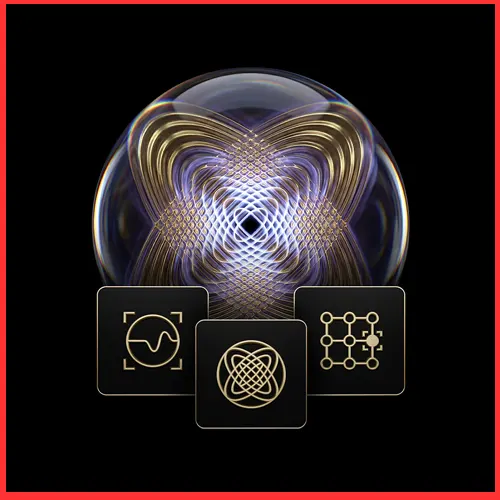
NVIDIA has announced the world’s first family of open source quantum AI models, NVIDIA Ising, designed to help researchers and enterprises build quantum processors capable of running useful applications. Named after a landmark mathematical model that dramatically simplified the understanding of complex physical systems, the NVIDIA Ising family provides high-performance, scalable AI tools for quantum error correction and calibration.
Ising models run the world’s best quantum processor calibration and enable researchers to tackle much larger, more complex problems with quantum computers by delivering up to 2.5x faster performance and 3x higher accuracy for the decoding process needed for quantum error correction.
“AI is essential to making quantum computing practical,” said Jensen Huang, founder and CEO of NVIDIA. “With Ising, AI becomes the control plane — the operating system of quantum machines — transforming fragile qubits to scalable and reliable quantum-GPU systems.”
The quantum computing market is expected to surpass $11 billion in 2030, according to analyst firm Resonance. This growth trajectory highly depends on continued progress in addressing critical engineering challenges, such as quantum error correction and scalability.
NVIDIA Ising includes state-of-the-art customizable models, tools and data that accelerate quantum processors:
· Ising Calibration: A vision language model that can rapidly interpret and react to measurements from quantum processors. This enables AI agents to automate continuous calibration, reducing the time needed from days to hours.
· Ising Decoding: Two variants of a 3D convolutional neural network model — optimized for either speed or accuracy — to perform real-time decoding for quantum error correction. Ising Decoding models are up to 2.5x faster and 3x more accurate than pyMatching, the current open source industry standard.

See What’s Next in Tech With the Fast Forward Newsletter





Tweets From @varindiamag
Nothing to see here - yet
When they Tweet, their Tweets will show up here.