Data Center
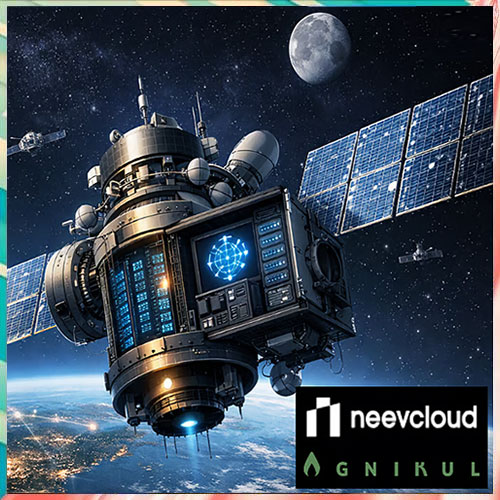
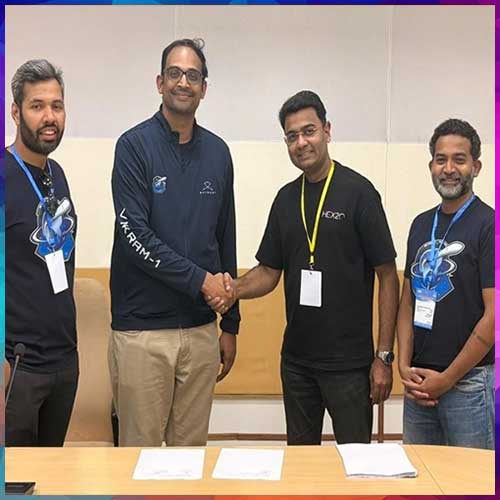
NeevCloud has signed a memorandum of understanding with Agnikul Cosmos to develop what the companies describe as India’s first indigenous, AI-powered data centre in space, marking a significant expansion of India’s ambitions in sovereign AI and space infrastructure.
NeevCloud operates under RackBank Datacenters, while Agnikul Cosmos is a Chennai-based private space company focused on small satellite launch vehicles. Under the partnership, the two companies plan to deploy high-performance AI inference nodes in Low Earth Orbit (LEO), creating an orbital layer of AI compute infrastructure.
The initiative aims to address what the companies describe as a growing global AI latency gap. According to NeevCloud, more than 80% of the world’s population is located over 200 milliseconds away from the nearest AI data centre, limiting the reliability of real-time, latency-sensitive applications such as autonomous systems, remote robotic surgery, industrial automation and border surveillance.
Under the MoU, Agnikul Cosmos will provide the launch vehicle and orbital hosting platform using its lightweight and extendable upper-stage rocket architecture. The upper stage, including the nozzle, will remain in orbit and be repurposed as a functional space-based data centre, while the lower stage will return safely to Earth.
NeevCloud will deploy and operate the AI infrastructure, managing data centre operations and AI inferencing workloads through its cloud orchestration framework. The orbital data centre will be powered entirely by solar energy and integrated into NeevCloud’s broader AI SuperCloud platform.
Narendra Sen, Founder and Chief Executive Officer of NeevCloud, said the partnership represents a shift beyond terrestrial limitations. He said placing AI compute directly in orbit could enable secure, low-latency intelligence for critical use cases across defence, maritime operations, manufacturing and energy infrastructure, particularly in regions underserved by traditional data centre networks.
Agnikul Cosmos Co-founder and CEO Srinath Ravichandran said the company’s convertible upper-stage technology allows launch hardware left in orbit to be transformed into active infrastructure. He said this approach extends the role of launch providers from transportation to long-term orbital asset deployment.
The companies said the space-based AI data centre model could reduce the need for replicated terrestrial edge data centres, lowering capital expenditure, land use, cooling requirements and energy consumption, while extending the usable life of high-value AI chips.
The first pilot launch is scheduled before the end of this year. Subject to successful validation, the partners plan to scale the network to more than 600 orbital edge data centres over the next three years, creating a continuous, near real-time AI inferencing constellation.
The collaboration positions India at the intersection of the rapidly growing AI inference market and the emerging orbital compute economy, as the country seeks to expand its sovereign digital and space infrastructure capabilities.
NeevCloud operates under RackBank Datacenters, while Agnikul Cosmos is a Chennai-based private space company focused on small satellite launch vehicles. Under the partnership, the two companies plan to deploy high-performance AI inference nodes in Low Earth Orbit (LEO), creating an orbital layer of AI compute infrastructure.
The initiative aims to address what the companies describe as a growing global AI latency gap. According to NeevCloud, more than 80% of the world’s population is located over 200 milliseconds away from the nearest AI data centre, limiting the reliability of real-time, latency-sensitive applications such as autonomous systems, remote robotic surgery, industrial automation and border surveillance.
Under the MoU, Agnikul Cosmos will provide the launch vehicle and orbital hosting platform using its lightweight and extendable upper-stage rocket architecture. The upper stage, including the nozzle, will remain in orbit and be repurposed as a functional space-based data centre, while the lower stage will return safely to Earth.
NeevCloud will deploy and operate the AI infrastructure, managing data centre operations and AI inferencing workloads through its cloud orchestration framework. The orbital data centre will be powered entirely by solar energy and integrated into NeevCloud’s broader AI SuperCloud platform.
Narendra Sen, Founder and Chief Executive Officer of NeevCloud, said the partnership represents a shift beyond terrestrial limitations. He said placing AI compute directly in orbit could enable secure, low-latency intelligence for critical use cases across defence, maritime operations, manufacturing and energy infrastructure, particularly in regions underserved by traditional data centre networks.
Agnikul Cosmos Co-founder and CEO Srinath Ravichandran said the company’s convertible upper-stage technology allows launch hardware left in orbit to be transformed into active infrastructure. He said this approach extends the role of launch providers from transportation to long-term orbital asset deployment.
The companies said the space-based AI data centre model could reduce the need for replicated terrestrial edge data centres, lowering capital expenditure, land use, cooling requirements and energy consumption, while extending the usable life of high-value AI chips.
The first pilot launch is scheduled before the end of this year. Subject to successful validation, the partners plan to scale the network to more than 600 orbital edge data centres over the next three years, creating a continuous, near real-time AI inferencing constellation.
The collaboration positions India at the intersection of the rapidly growing AI inference market and the emerging orbital compute economy, as the country seeks to expand its sovereign digital and space infrastructure capabilities.

See What’s Next in Tech With the Fast Forward Newsletter







Tweets From @varindiamag
Nothing to see here - yet
When they Tweet, their Tweets will show up here.