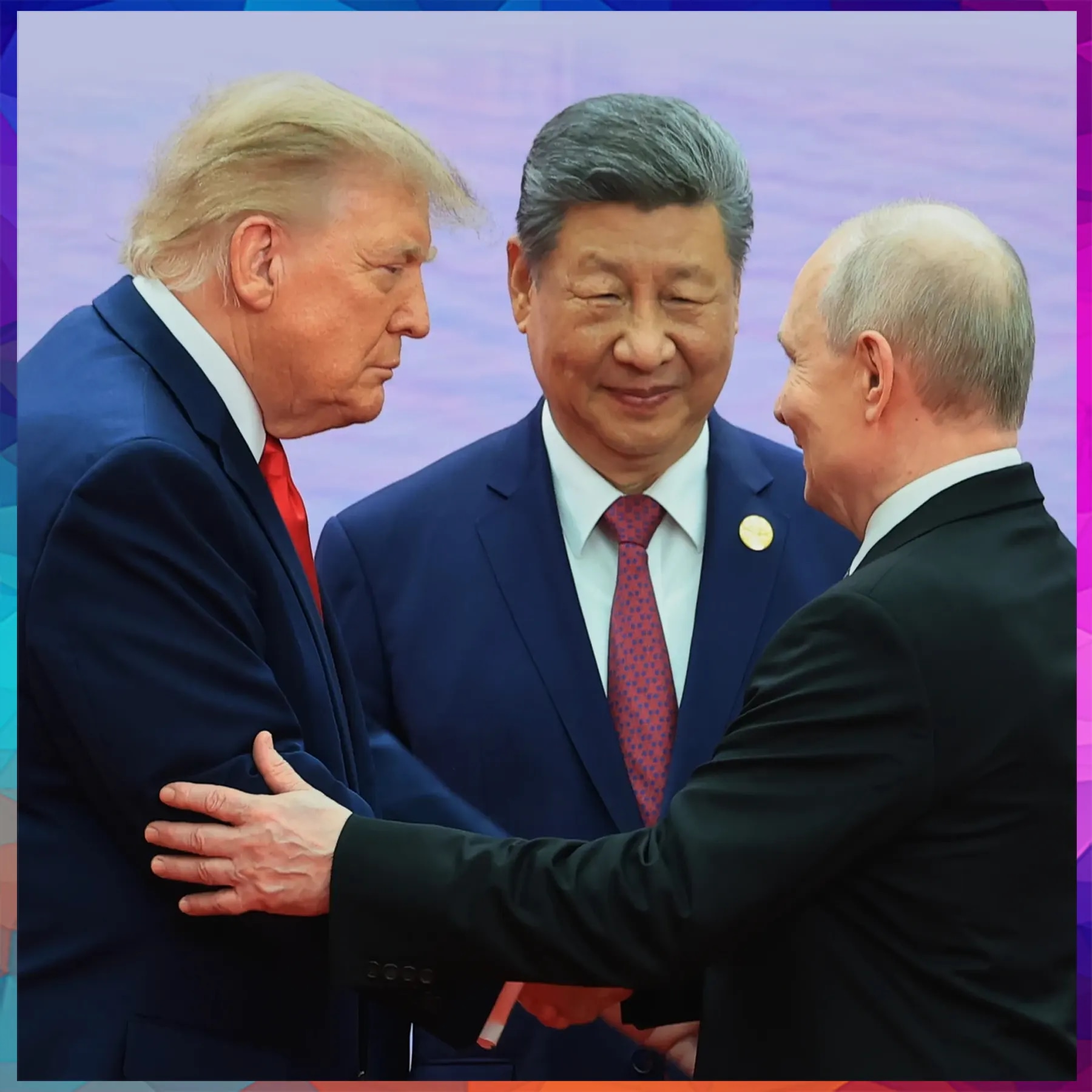
From nuclear arms control and Ukraine to AI supremacy and trade tensions, the proposed trilateral engagement highlights the challenges facing global diplomacy.
A reported November 19 meeting involving US President Donald Trump, Chinese President Xi Jinping and Russian President Vladimir Putin in Shenzhen has drawn attention to the possibility of renewed dialogue among three major powers.
The proposed gathering comes amid intensifying geopolitical rivalry, military competition, technological restrictions and regional conflicts, with global security increasingly shaped by Washington, Beijing and Moscow.
Trump's diplomatic approach emphasizes direct engagement with world leaders. However, fundamental disagreements over territorial security, economic influence and international alliances complicate prospects for meaningful agreements.
Key Highlights
-
Historic Trilateral Summit: Trump, Xi and Putin convene in Shenzhen amid escalating global tensions.
-
Nuclear Arms Control: New negotiations become urgent following New START's expiration.
-
Ukraine and Iran: Conflicting strategic interests complicate prospects for lasting peace.
-
Trade and AI Rivalry: Semiconductor restrictions, tariffs and technological competition dominate relations.
-
Global Security Outlook: Concrete agreements and sustained diplomacy will determine the summit's significance.
Nuclear arms control represents a particularly urgent challenge. Following the expiry of the New START treaty in February 2026, Washington and Moscow face renewed pressure to establish credible limits on strategic nuclear weapons.
The United States and Russia maintain substantially larger nuclear arsenals than China. Beijing's reluctance to accept equivalent restrictions complicates Washington's ambition for a comprehensive trilateral arms-control framework.
Ukraine remains another major obstacle. Russia seeks a settlement reflecting its strategic objectives, while Ukraine and European allies insist that any sustainable peace must respect Ukrainian sovereignty and security.
The Iran conflict adds further complexity. Washington seeks regional de-escalation, while Beijing and Moscow maintain political and economic relationships with Tehran, creating competing diplomatic priorities.
Trade disputes also threaten stability. Agricultural purchases, rare-earth supplies, tariffs and advanced semiconductor export restrictions continue to influence the relationship between the United States and China.
Artificial intelligence is emerging as a new frontier of geopolitical competition. Control over advanced chips, computing infrastructure, foundation models and strategic technologies increasingly shapes national security and economic influence.
Beyond traditional military competition, AI-driven cyber capabilities and autonomous systems introduce additional risks, strengthening the case for international cooperation on technological safeguards.
Any meaningful diplomatic progress would require sustained negotiations, enforceable commitments and participation by directly affected countries, particularly Ukraine, rather than relying exclusively on personal relationships between leaders.
The defining question is whether diplomatic engagement can translate geopolitical rivalry into practical cooperation. Without measurable progress on nuclear stability, regional security and technology governance, even a historic meeting would offer limited reassurance to an increasingly uncertain world.