
AI Will Redefine How Networks Are Managed
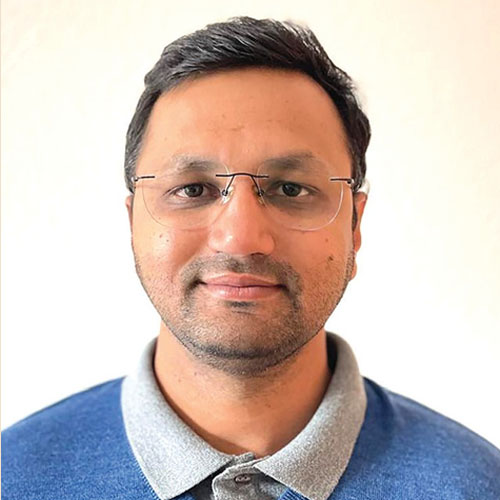
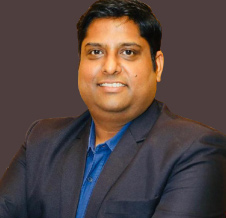
Akshay Balaganur,
Co-founder & CEO,
LinkEye
In a landscape where enterprise networks are expanding while IT teams are shrinking, the ability to maintain reliability, visibility, and performance has become a strategic imperative. Bengaluru-based LinkEye, co- founded by Akshay Balaganur, is among the early movers globally building an AI-driven network assurance platform - a step beyond traditional monitoring and observability.
In this conversation with Gyana Swain of VAR India, Akshay explains how AI agents are changing the fundamentals of network operations, why human-in-the-loop still matters, and how new-age companies like Zepto rely on LinkEye to manage thousands of unstable last-mile connections.
To begin with, could you briefly introduce yourself and your company?
I’m the Co-founder and CEO of LinkEye, an AI-driven network assurance platform. I’ve spent about 15 years in the networking space—starting with Cisco and later running Aerowire Networks, a consulting and MSP company. LinkEye is a natural extension of that journey.
What exactly does LinkEye do and where does it fit into the enterprise IT landscape?
LinkEye solves the challenge of managing large enterprise networks with increasingly smaller IT teams. Most IT teams today are generalists, not deep network specialists. The skill gap is widening, and that’s where our AI-enabled platform comes in. We use AI agents to diagnose issues, identify root causes, and guide next steps—essentially bridging the expertise gap.
What key pain points are you addressing compared to others in the market?
Networks are like electricity—nobody notices them until they fail. And when anything slows down, the network gets blamed first, even when it’s not at fault.
We address two core questions: Is the network really the culprit? If yes, what exactly is wrong and what should be done next?
Our platform observes the network continuously. When it detects anomalies, AI agents jump in to diagnose and generate a root cause analysis (RCA). This gives IT teams clarity before they act.
So one of your major strengths is network observability?
Observability is a part of it, yes. Networking has evolved from monitoring observability assurance. Monitoring gives basic metrics and alerts, Observability adds logs, traces, and richer context and Assurance—where the industry is now heading—brings AI into the loop.
In assurance, AI agents use domain knowledge, vendor-specific knowledge, and real-time network context to automatically troubleshoot just like a skilled engineer would.
How do these AI agents work? Are they rule-based, customer-specific, or universal?
We replicate what makes a great network engineer. That expertise has three layers: Domain knowledge – routing, wireless, security (vendor-agnostic), Product knowledge – how Cisco routers, Aruba controllers, Palo Alto firewalls work and Organizational context – the company’s real network topology, what we call tribal knowledge.
Our AI agents are trained across these layers, and we maintain a digital twin of each customer’s network to supply the contextual intelligence.
You must be processing massive volumes of data. How large is it?
At our current scale, we add 5–6 terabytes of data every month to our system. AI requires a strong, scalable data layer, and we maintain multiple optimized data copies for different use cases.
With generative AI, hallucination has become a major concern. How do you handle that?
Two points. First, we don’t give full autonomous decision-making to the system yet. There’s always human-in-the-loop. The AI diagnoses and recommends, but the engineer takes the final call.
Second, to reduce hallucinations, we use RAG (Retrieval Augmented Generation). We narrow the LLM’s knowledge window by feeding it validated, contextual, domain- specific training data. Proper training and validation are key.
We follow global best practices and Data privacy is another area where LinkEye has invested heavily. The company is SOC 2 Type II certified and compliant with GDPR and NIS2 requirements for Europe. For highly regulated sectors, LinkEye provides private-cloud deployment options where the entire platform resides within the customer’s environment. And so far, we haven’t had any data breach incidents.
What’s next for LinkEye? Are you expanding beyond network assurance?
We’re still early—we’re barely scratching the surface. Today we focus on enterprise campus networks. Next, we plan to expand into data center environments.
AI for networking is a very new domain globally, and we’re among the early movers. The industry itself is evolving in real time.
Can you share your customer base and growth numbers?
I can’t disclose revenue, but we serve 60+ customers in India and 20+ customers internationally. Our customers include large retailers, jewellery brands, sports retailers, a top three pharma company, a major power distribution utility, and India’s largest aluminium manufacturer.
To name a few, Decathlon, Hindalco, Zepto, Dr. Reddy’s, and BESCOM are our customers.
Why do modern, fast-growing companies like Zepto choose LinkEye over established players?
Because we solve a mission-critical operational problem.
Zepto operates thousands of dark stores. Each store is a standalone network with two internet links, and India’s last-mile connectivity is highly unstable/ Managing thousands of fluctuating links manually is impossible.
We automate the entire process - monitoring, diagnostics, and link management-so a small IT team can manage thousands of sites efficiently.
How old is the company and what’s your growth trajectory?
LinkEye is about 2.5 years old, and we’re growing 100% year-on-year. We are now entering a high-growth phase-expanding aggressively into Europe and the US, with a European office coming up soon.

See What’s Next in Tech With the Fast Forward Newsletter






Tweets From @varindiamag
Nothing to see here - yet
When they Tweet, their Tweets will show up here.