Team of researchers from CSIRO, Australia's National Science Agency, the Australian Institute of Marine Science (AIMS) and the University of Melbourne isolated the microalgae from coral and cultured them in the specialist symbiont lab at AIMS. Using a technique called "directed evolution", they then exposed the cultured microalgae to increasingly warmer temperatures over a period of four years.
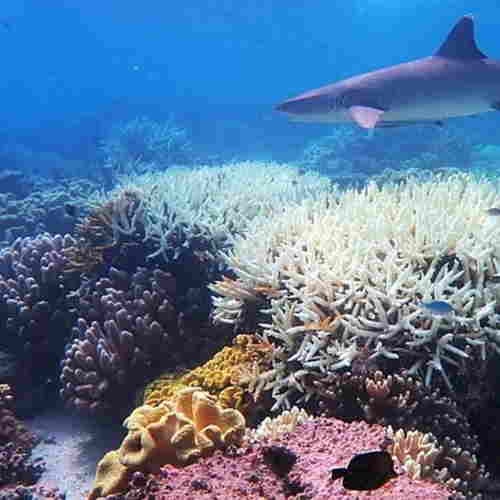
Corals with increased heat tolerance have the potential to reduce the impact of reef bleaching from marine heat waves, which are becoming more common under climate change.
The team made the coral more tolerant to temperature-induced bleaching by bolstering the heat tolerance of its microalgal symbionts-tiny cells of algae that live inside the coral tissue.
This assisted them to adapt and survive hotter conditions. The microalgae were exposed to temperatures that are comparable to the ocean temperatures during current summer marine heat waves causing coral bleaching on the Great Barrier Reef.
The researchers then unveiled some of the mechanisms responsible for the enhanced coral bleaching tolerance.
Professor Madeleine van Oppen, of AIMS and the University of Melbourne, said, "We found that the heat tolerant microalgae are better at photosynthesis and improve the heat response of the coral animal. These exciting findings show that the microalgae and the coral are in direct communication with each other."