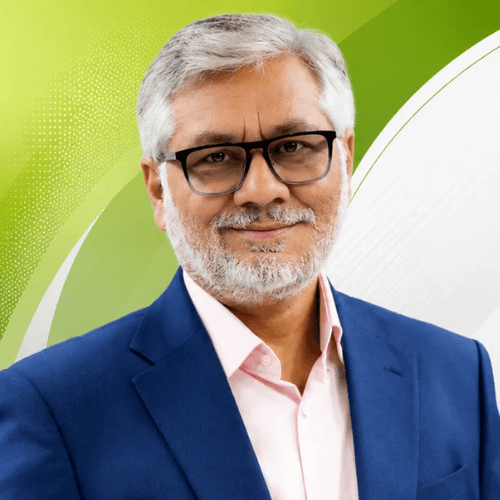
Sanjay Gupta, Senior Director - NXP Semiconductors shares with VARINDIA the current focus of NXP in the country in the semiconductor space and the opportunities it sees in the automotive industry vis-a-vis the technology landscape in the country -Â
How is the semiconductor industry growing for NXP? What is its current focus with regard to the India market?
India is definitely a growing market and we have a strong presence here. We are clearly the leader in automotive supply business and want to increase our focus on security, connectivity and processing. Over the years, the operations have significantly grown in India and today we are a team of professional engineers working tirelessly to move up the value chain. They are a vital part of global network of design teams which form the core of Freescale-NXP business operations. In 2007, Freescale- NXP India expanded its Noida operation with acquisition of a 300,000-sqare-foot campus. The India Design Center is involved in development of hardware and software designs for the embedded market.
India is a key market for us and especially with the kind of focus on R&D and other initiatives like Digital India, Smart cities etc. we believe we have huge opportunity here and are looking to significantly contribute to various initiatives of the government.
What are the opportunities for semiconductor players in the automotive industry?
The auto industry is always evolving and it thrives upon new technological developments for growth. Every company in the sector wants to offer something different or new to its customers. Technologies like in-car infotainment, touch to start etc. have already taken a front seat and are driving growth of the automotive industry. Furthermore, elements like digital display and park assists have become a ‘must have’ in all segments of cars today. So semiconductor players have a clear opportunity in this segment and we are working extensively to capture this opportunity. Our strength in R&D and design has helped us develop innovative solutions and we are working with multiple Indian OEMs already.
Moreover, we are working extensively to develop technologies and solutions in the in-car infotainment, in-vehicle networking, Automated Driver Assistance Systems (ADAS), powertrain, chassis, body and overall secure car. Today 90% of auto innovation is happening via electronics. What is increasingly becoming important is security. Our R&D team is focused on enabling secure car access and are working on other security solutions. We are also focusing on other areas like the non-memory space, connected home and have solutions to cater to larger initiatives like Smart cities, secure gateways etc.
What are the new application areas that NXP is looking at in the auto industry?
As mentioned earlier, we are working extensively on in-car infotainment, ADAS and other security solutions in the automotive space. Very recently, we achieved live reception of Digital Radio Mondiale (DRM) services for vehicles in India. Digital Radio Mondiale (DRM) is a service which helps to boost AM audio quality so as to provide individuals with enhanced radio quality. We designed a chipset module that is capable of handling three digital standard signals on a single platform. DRM module so developed will not only help to improve radio quality over AM channels but also provide users with utilities like updates pertaining to real time traffic scenarios, news and natural disaster warnings. Car owners will also benefit from services like seamless communication between vehicles on road, remote car management, broadcast management, location based services and personalization settings.
How soon are driverless cars going to be a reality in India? Globally, how is NXP looking at this industry and who are the semiconductor players it is vying with in this space?
The automotive sector overall believes that driverless cars are the future and will hit the roads by 2020. However, there is limitation to this technology as the latest prototype has not been tested in heavy rain or snow due to safety concerns. These cars rely primarily on pre-programmed route data, they do not obey temporary traffic lights and, in some situations, revert to a slower "extra cautious" mode in complex unmapped intersections. But they will be a reality.
In India it might take some time as the vehicle has difficulty identifying when objects, such as trash and light debris, are harmless, causing the vehicle to veer unnecessarily. Additionally, the LIDAR technology cannot spot some potholes or discern when humans, such as a police officer, are signalling the car to stop. The present day infrastructure also acts as a roadblock, technology is developing at a very fast pace compare to the adaptability of it. With the growing concerns of road safety and innovation of technology, there is a boom in the automotive sector and in future of driverless cars. However, making this technology glitch free and smooth will require few more years of testing.
Major players like Mercedes-Benz, Audi, Nissan, Delphi and Nissan have been working on the technology from past half a decade or so. Recently Google’s prototype pilot testing last year was quite interesting making driverless cars the topic of discussion.
Is Internet of Things a coveted business area for NXP? What is it doing in this space?
IoT is about everything being connected, it adds intelligence to everyday items that do not have intelligence or connectivity with analytics. I think it has already started and is really prevalent in a lot of places around the world. What NXP terms as Internet of Tomorrow is not only connectivity, intelligence and analytics but also added security. I think one of the components that still have to be ingrained in every single component of IoT is security. Freescale-NXP has been providing security solutions inside all our processors that fit into gateways and the cloud, so you have a continuous stream of communication with security, which actually secures the entire IoT. The Internet of Tomorrow is thus a secured IoT. From a market positioning perspective, we are clearly the #1 automotive supplier in the country. We are already working with most of the leading automotive companies here and we want to further maintain and grow our business in this segment.