
Breaking News
BharatGen will unveil a 17-billion parameter multilingual artificial intelligence model at the India AI Impact Summit 2026, marking a significant step in India’s push for sovereign, language-inclusive AI development.
The model, named BharatGen Param2 17B, is a Mixture of Experts (MoE) foundational model built from the ground up to support 22 Indian languages. It has been trained extensively on Indian datasets and is positioned as a core element of the country’s strategy to reduce dependence on foreign AI systems while expanding access to AI across linguistic and regional boundaries.
BharatGen said the model is designed for real-world deployment across sectors including governance, healthcare, education, finance, agriculture and enterprise services. At the summit, the initiative will showcase multiple sector-focused demonstrations developed in partnership with government departments and industry players.
In governance, applications include MahaGPT, developed with the Government of Maharashtra to improve efficiency in urban development and revenue departments, and AI-powered tools for the Department of Water and Sanitation to enable multimodal citizen access. Goa Electronics Limited is also piloting AI-driven solutions for state-level digital transformation.
In healthcare, the Medsum app developed by Mata Amrita Technologies leverages BharatGen models to support doctor-patient interactions and improve access to medical information. Education-focused use cases include an AI-driven spoken English assessment solution built with Kotak Education Foundation.
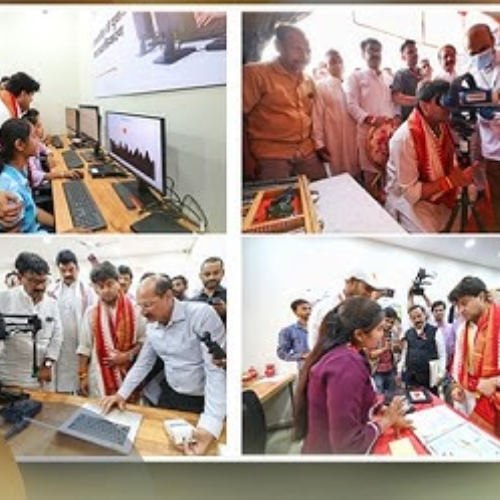
Cultural preservation initiatives will also feature prominently. Under the Ministry of Culture’s Gyan Bharatam programme, BharatGen’s models are being used to power OCR and conversational AI tools for digitising and accessing ancient manuscripts across multiple Indian languages. The National Archives of India is similarly deploying AI-based tools to improve access to historical records.
In financial services, the initiative includes an AI-powered policy explainer for insurance customers, an underwriting copilot for risk assessment and fraud detection, and a conversational regulatory assistant for the International Financial Services Centres Authority (IFSCA).
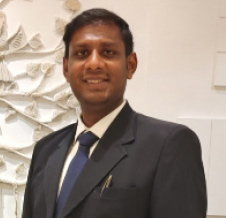
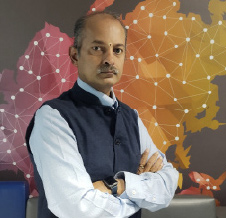
Rishi Bal, Chief Executive Officer of BharatGen, said India’s AI progress must be rooted in language accessibility and contextual understanding. “These models are built for deployment across citizen services, finance, healthcare and education while strengthening India’s sovereign AI capability,” he said, adding that the platform will offer open access pathways for developers, startups and enterprises.
BharatGen operates under the IndiaAI Mission and is supported by government-backed high-performance computing infrastructure. Alongside Param2 17B, the initiative is advancing large-scale multimodal models across text, speech and vision, powered by Bharat Data Sagar, a curated research-led data repository drawn from trusted public and private sources.
The model, named BharatGen Param2 17B, is a Mixture of Experts (MoE) foundational model built from the ground up to support 22 Indian languages. It has been trained extensively on Indian datasets and is positioned as a core element of the country’s strategy to reduce dependence on foreign AI systems while expanding access to AI across linguistic and regional boundaries.
BharatGen said the model is designed for real-world deployment across sectors including governance, healthcare, education, finance, agriculture and enterprise services. At the summit, the initiative will showcase multiple sector-focused demonstrations developed in partnership with government departments and industry players.
In governance, applications include MahaGPT, developed with the Government of Maharashtra to improve efficiency in urban development and revenue departments, and AI-powered tools for the Department of Water and Sanitation to enable multimodal citizen access. Goa Electronics Limited is also piloting AI-driven solutions for state-level digital transformation.
In healthcare, the Medsum app developed by Mata Amrita Technologies leverages BharatGen models to support doctor-patient interactions and improve access to medical information. Education-focused use cases include an AI-driven spoken English assessment solution built with Kotak Education Foundation.
Cultural preservation initiatives will also feature prominently. Under the Ministry of Culture’s Gyan Bharatam programme, BharatGen’s models are being used to power OCR and conversational AI tools for digitising and accessing ancient manuscripts across multiple Indian languages. The National Archives of India is similarly deploying AI-based tools to improve access to historical records.
In financial services, the initiative includes an AI-powered policy explainer for insurance customers, an underwriting copilot for risk assessment and fraud detection, and a conversational regulatory assistant for the International Financial Services Centres Authority (IFSCA).
Rishi Bal, Chief Executive Officer of BharatGen, said India’s AI progress must be rooted in language accessibility and contextual understanding. “These models are built for deployment across citizen services, finance, healthcare and education while strengthening India’s sovereign AI capability,” he said, adding that the platform will offer open access pathways for developers, startups and enterprises.
BharatGen operates under the IndiaAI Mission and is supported by government-backed high-performance computing infrastructure. Alongside Param2 17B, the initiative is advancing large-scale multimodal models across text, speech and vision, powered by Bharat Data Sagar, a curated research-led data repository drawn from trusted public and private sources.

See What’s Next in Tech With the Fast Forward Newsletter






Tweets From @varindiamag
Nothing to see here - yet
When they Tweet, their Tweets will show up here.