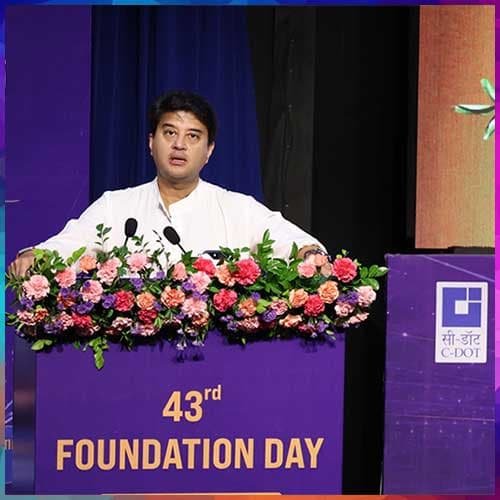
Union Communications Minister Jyotiraditya Scindia has called on the Centre for Development of Telematics (C-DOT) to take a leadership role in India's 6G ambitions while transforming indigenous telecom innovation into globally competitive products. Speaking at C-DOT's 43rd Foundation Day, Scindia said India had been behind the world in 4G, moved alongside global leaders in 5G, and now has the opportunity to lead the world in 6G.
His message represents India's broader ambition to transition from being one of the world's largest technology consumers to becoming a developer and exporter of strategic telecom technologies. Scindia urged C-DOT to accelerate its work across 6G, artificial intelligence, quantum technologies and cybersecurity, while moving innovations beyond research laboratories into commercially viable products for domestic and international markets.
C-DOT already has a strong foundation to build upon. Its indigenous 4G core technology has been deployed across more than 100,000 towers in India. Scindia stressed that the next challenge is to convert this technological capability into products that are affordable, dependable, scalable and globally competitive—moving from simply “Made in India” to “Made in India for the World.”
The organisation's future mandate extends well beyond conventional mobile networks. C-DOT is advancing technologies in quantum key distribution, post-quantum cryptography, cybersecurity and disaster-resilient communications, while 14 indigenous quantum-secure products were showcased during its Foundation Day celebrations. These capabilities will become increasingly important as future networks connect critical infrastructure, governments, enterprises, autonomous systems and billions of intelligent devices.
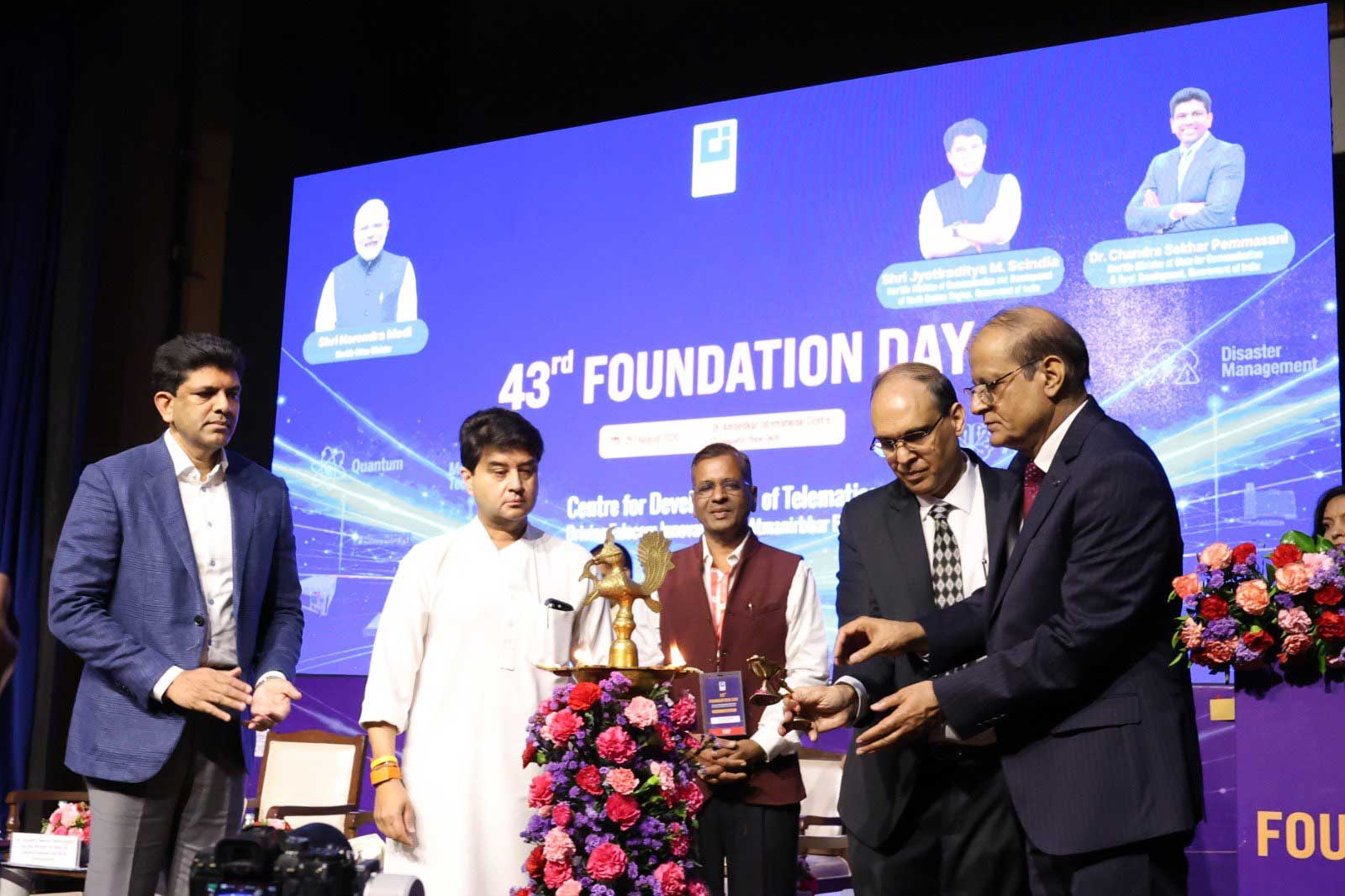
The 6G push is particularly significant because global technology leadership will increasingly depend on intellectual property, standards, patents and indigenous network architectures. Scindia said C-DOT has already contributed to 6G standards and challenged its engineers to build on that capability. With more than half of C-DOT's 1,565 employees reportedly under 30, the organisation's young engineering talent could play an important role in India's technological ambitions through 2047.
The opportunity also extends beyond India's domestic telecom market. Affordable technologies engineered for India's enormous scale could find significant demand across Asia, Africa, the Middle East and other emerging economies. Successfully commercialising C-DOT technologies internationally would strengthen India's position in global telecom supply chains while reducing dependence on foreign network technologies.
Scindia's call therefore signals an important evolution in India's technology strategy—from Make in India to Innovate in India, Own the Technology and Compete Globally. If C-DOT can combine indigenous R&D with stronger industry partnerships, manufacturing and global commercialization, it could become a major vehicle for India's ambitions in 6G, AI, quantum communications and secure digital infrastructure, helping establish India not merely as a participant but as a technology leader in the next generation of global telecommunications.