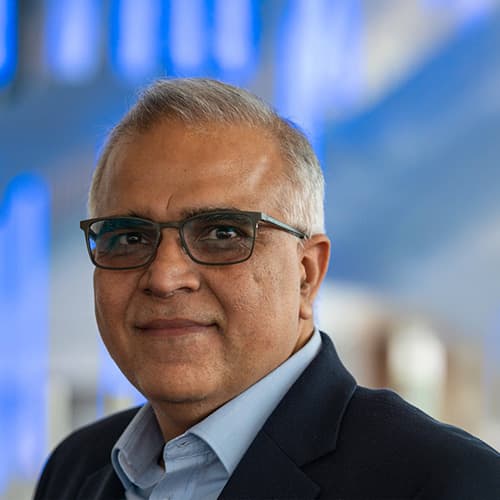
Krithiwas Neelakantan, Head of Channels, India & South Asia, Check Point Software Technologies, discusses how AI is changing threat prevention, how enterprises can protect data used in detection, and where partners can help customers put those capabilities to work.
“AI is changing cyber security on both sides,” says Neelakantan. “Attackers can use it to move faster, automate activity and adapt their techniques, which means traditional, manual approaches simply cannot respond quickly enough. For defenders, AI provides the speed and intelligence needed to identify unusual behaviour, uncover new attack patterns and prevent emerging threats before they can cause damage.”
How is AI changing threat prevention?
Neelakantan points to ThreatCloud AI as an example of how Check Point uses AI in its security architecture. He says it combines more than 55 AI and machine learning engines and makes billions of security decisions every day, helping identify zero-day, polymorphic and other emerging threats in real time.
“The key shift is from simply detecting an attack to predicting and preventing it, while using automation to dramatically shorten the time between identifying a threat and taking action.”
He sees a role for channel partners in helping customers turn those capabilities into practical security outcomes. Through training and certifications in AI Security, Exposure Management and Zero Trust, Check Point is helping partners advise customers, deploy AI-powered security and build managed services around it, he says.
How can enterprises protect the data used in threat detection?
“Check Point takes a privacy-by-design approach. Our AI-powered security is designed so that data used in threat detection can be anonymised, encrypted and handled in accordance with applicable regulatory requirements,” says Neelakantan.
He adds that customers have controls over how data is collected, stored and analysed, with reporting and audit trails that provide visibility into AI-driven security decisions. He says a unified approach can also help organisations apply consistent policies across data centres, cloud environments, secure access service edge (SASE) and distributed infrastructure as they navigate privacy, data residency and AI governance requirements.
“Partners are particularly important here because compliance is rarely a one-size-fits-all exercise. Their understanding of local regulations, customer environments and industry requirements enables them to translate technology into practical security and compliance strategies.”
What does effective prevention look like?
“Our differentiation starts with a prevention-first philosophy,” says Neelakantan. “In a threat environment increasingly shaped by automation and AI, enterprises cannot afford to wait until an attack has succeeded before responding. The objective is to identify and stop threats as early as possible.”
He says Check Point’s platform helps organisations apply protection consistently across networks, cloud environments, endpoints, workspaces and hybrid infrastructure. Exposure Management complements that approach by helping teams identify where they are vulnerable, prioritise the risks that matter most and speed up remediation.
For partners, Neelakantan sees opportunities to develop recurring services in managed security, Exposure Management, SASE and AI security. He says Check Point University, technical certifications and initiatives for managed security service providers support partners in building those capabilities.
“Ultimately, the measure of good cyber security is not how many alerts a customer receives, but how effectively risk is reduced and threats are prevented before they disrupt the business,” Neelakantan says.