The deployment is now operational, expanding access to dedicated bare-metal AI infrastructure and accelerator choice for global offtakers and Indian enterprises deploying at scale in India.
Neysa, an AI cloud provider, has announced the deployment of a large-scale AMD Instinct MI350X GPU cluster on Neysa Tytan, its dedicated bare-metal AI infrastructure offering for AI offtakers. The deployment is now live, and will support training, fine-tuning and large-scale inference workloads.
Global customers have already contracted this capacity to support large-scale AI deployments in India. The commitments reflect demand for more than accelerator capacity: customers require a partner that delivers dedicated, high-density clusters with the operational control, infrastructure assurance and capacity certainty needed for critical AI workloads. This announcement also reinforces India's growing role as a strategic hub for AI compute, supporting both domestic AI innovation and global AI workloads.
The deployment expands the AMD Instinct capacity available through Neysa Tytan and advances Neysa’s silicon-agnostic infrastructure strategy. Tytan allows customers to select infrastructure around their workload requirements, including accelerator architecture, network design, storage platform, deployment model and service-level requirements, while Neysa delivers a single accountable operating layer for cluster deployment and operations.
Neysa Tytan is Neysa’s dedicated AI infrastructure offering for organizations running critical workloads at scale. It provides guaranteed silicon access, high-density cluster capacity and tier-1 data center infrastructure for training, fine-tuning and large-scale inference. Customers retain the control to define the architecture, operating environment and service requirements their workloads demand.
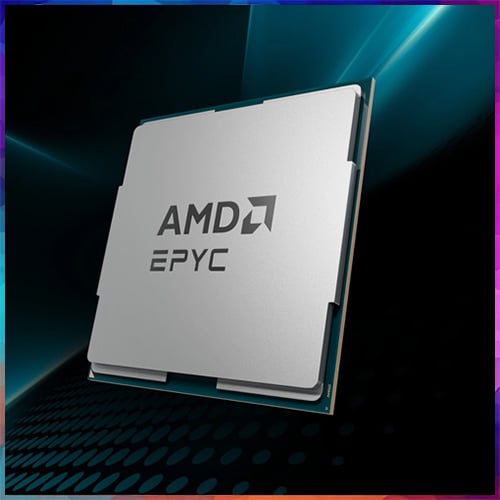
The cluster has been brought online in a single phase in Mumbai as a high-density, dedicated bare-metal deployment. Powered by AMD Instinct MI350X GPUs, AMD EPYC processors and the AMD ROCm open software ecosystem, it is designed to support an open ecosystem and a broad range of AI and high-performance computing workloads, including large language model training, fine-tuning, generative AI and high-throughput inference. Customers will be able to deploy Tytan in configurations suited to their operating model, including bare metal, bare metal with Slurm, or bare metal with Kubernetes.
"The question for large AI deployments is no longer simply how many GPUs are available. It is whether the infrastructure can be deployed at scale, operated with certainty and configured for the workload", said Sharad Sanghi, Co-founder and Chief Executive Officer, Neysa. “Neysa Tytan gives AI offtakers that control: dedicated bare-metal capacity and the freedom to choose the silicon, architecture and operating model that fit their requirements. With AMD Instinct MI350X on Tytan, we are expanding that choice while delivering the scale global customers need to deploy AI infrastructure in India.”
Vinay Sinha, India Managing Director, Sales, AMD, said, "Organizations are looking for flexibility in how they build and scale AI, and open ecosystems play an important role in enabling that choice. The AMD Instinct MI350X GPU is designed to support a broad range of AI workloads while giving customers the ability to align infrastructure decisions with their performance, operational and business requirements. Through our collaboration with Neysa, we are expanding access to advanced AI infrastructure in India and supporting the development of a more diverse and resilient AI ecosystem."
India’s ability to participate meaningfully in the next phase of AI will depend on the availability of AI compute infrastructure that can be delivered at scale, operated reliably and adapted to different customer requirements. By deploying this large-scale AMD Instinct MI350X cluster through Neysa Tytan, Neysa and AMD are expanding dedicated AI compute capacity, infrastructure choice and deployment capability for organizations building in India and for global AI offtakers establishing compute capacity in the country.