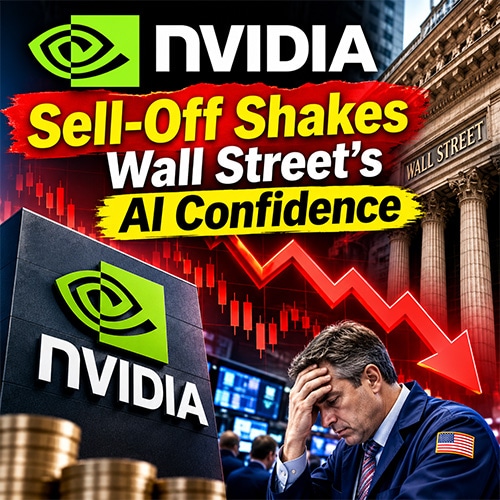
Wall Street witnessed renewed volatility on November 10, 2026, as technology stocks declined amid rising inflation concerns, uncertainty over US interest rates, and growing investor anxiety surrounding artificial intelligence valuations.
The Nasdaq Composite fell approximately 0.7%, while the S&P 500 declined 0.4% and the Dow Jones Industrial Average slipped 0.3%, reflecting broader market caution.
Nvidia emerged as a major contributor to the technology sell-off, with its shares dropping more than 5%. The decline intensified concerns about the sustainability of AI-driven stock valuations.
Investor sentiment was further affected by reports of an investigation involving Nvidia CEO Jensen Huang. However, allegations surrounding the matter remain disputed, and no wrongdoing has been established.
Meanwhile, US consumer prices increased 0.4% in October, exceeding economists' expectations. The inflation figures strengthened market expectations that the Federal Reserve could raise interest rates in December.
Higher borrowing costs pose challenges for technology companies investing heavily in AI infrastructure, particularly GPU-powered data centers, cloud computing, and high-performance computing facilities.
The sell-off extended beyond Nvidia. Several AI infrastructure companies faced pressure as investors reassessed capital expenditure commitments, financing costs, and the timing of returns on massive AI investments.
Concerns are also emerging over the circular nature of AI investment, where technology companies finance AI developers that subsequently purchase computing infrastructure from their investors.
Although such arrangements can accelerate innovation, they also raise questions about revenue sustainability, market concentration, and whether AI infrastructure spending is translating into measurable business returns.
For India, these developments carry important implications. The country's growing AI ecosystem requires substantial investments in GPU infrastructure, reliable electricity, advanced cooling, cybersecurity, and sovereign data centers. However, investment decisions must remain commercially sustainable.
The larger lesson is that AI's future will depend on profitability, not hype. While artificial intelligence remains a transformative technology, investors and enterprises must distinguish genuine demand from speculative expansion. Sustainable growth will require disciplined capital allocation, diversified infrastructure, and measurable returns on AI investments.