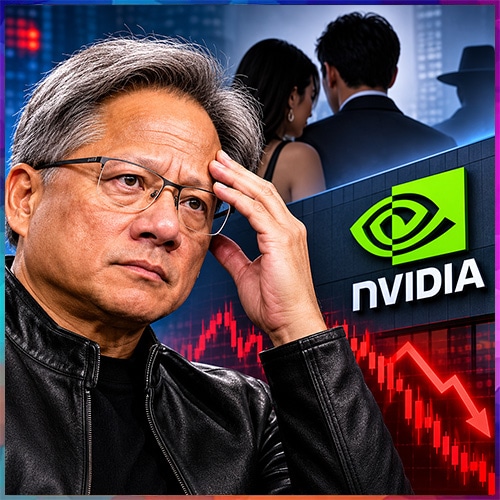
Nvidia shares reportedly plunged 4.3% on November 9, wiping approximately $230 billion from its market capitalisation, following reports of an internal investigation involving CEO Jensen Huang and a woman suspected of links to Chinese intelligence.
The allegations have sent shockwaves through the technology industry, raising concerns about corporate governance, national security and the potential exposure of sensitive information at one of the world's most influential semiconductor companies.
According to the circulated reports, Nvidia's board initiated an investigation after allegations emerged concerning Huang's personal relationship with Alice Huang, who has reportedly been suspected of working for Chinese intelligence. Beijing has rejected the espionage allegations as groundless.
Huang reportedly acknowledged being unfaithful to his wife and expressed regret in a statement to employees. However, the existence of a personal relationship does not establish espionage, wrongdoing or any compromise of Nvidia's technology.
The market reaction reportedly extended beyond Nvidia. Rival AMD gained approximately 9.37%, while Broadcom and Marvell Technology rose 7.47% and 8.65%, respectively, suggesting investors were reassessing competitive opportunities within the semiconductor sector.
Nvidia's strategic importance makes the allegations particularly sensitive. Its advanced GPUs power leading AI models, hyperscale data centres and critical computing infrastructure, placing the company at the centre of global technological competition.
The controversy also comes amid heightened US-China tensions over semiconductor exports, advanced computing capabilities and technological sovereignty. Any verified intelligence-related exposure could intensify scrutiny of Nvidia's international operations and export compliance.
Investors are additionally assessing leadership continuity. Huang, Nvidia's co-founder and longstanding chief executive, has played a defining role in transforming the company into a dominant force in AI infrastructure.
Beyond the immediate market reaction, the episode highlights how allegations involving senior executives can create reputational, governance and geopolitical risks, even before investigators establish the underlying facts.
The larger lesson for global technology companies is clear: corporate leadership, information security and national security are increasingly interconnected. Protecting sensitive technologies requires robust governance, independent investigations and safeguards against potential insider threats.