The Chief Information Officer (CIO) is an important job title which is generally given to the most senior executive for keeping an eye over information technology and computer systems for leveraging the enterprise's requirements, helping it in achieving its goals. Undoubtedly, the CIO’s position is to anticipate novel technological trends in the marketplace to ensure that the businesses make use of these trends with appropriate strategic IT planning and expert's guidance.
The first dimension of a CIO's role is that he/she is expected to achieve operational excellence, driving IT transformation through benchmarks, while ensuring the vendor's portfolio, budget, etc. The second dimension is to be a business transformational leader. A CIO has to be part of the business transformation, and actively drives the agenda. Without IT, an organization cannot do automation, geographic expansion, introduce new channels, etc. The IT person is vested with the responsibility of translating an aggressive business target into action. It is also important for the CIO of an organization to be strategically innovative and drive the learning curve up for the organization.
Dell has recently conducted a survey which found out that the area of highest concern for CIOs across the country was to improve the effectiveness of existing IT systems and infrastructure.
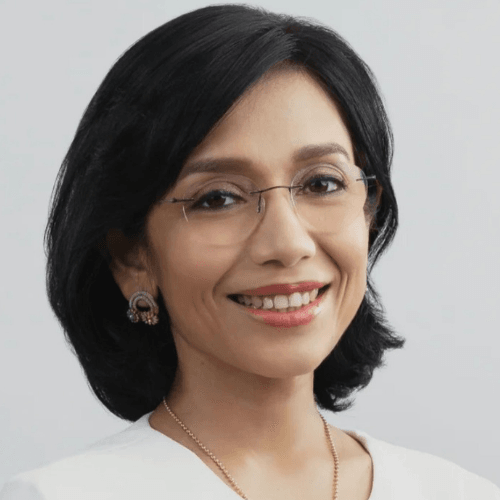
Hemal Shah, CIO, Dell India, says, "CIOs are currently at a juncture wherein they can define their roles based on two standpoints – they can view IT as something detached from competitive advantage or they can view it as being pivotal to innovation and business success. The role of CIO is, indeed, changing. The CIO will not be evaluated any longer on the efficiency of the data center but on how he or she can use the technological know-how to gain competitive advantage for their business."
Ajit Kumar Rath, General Manager, Union Bank of India, opines, "I believe that most of the businesses are depending on automation through deployment of IT solutions. CIOs have complete visibility to organizational data and are able to do correlation of organization's different business lines and activities. By virtue of their data visibility, they are very close to observe the organizational performance with respect to product, customer profile and their preference, cross-sell opportunities etc. They are also in a position to identify duplication in operation and suggest centralization of functions."
 |  |  |  |
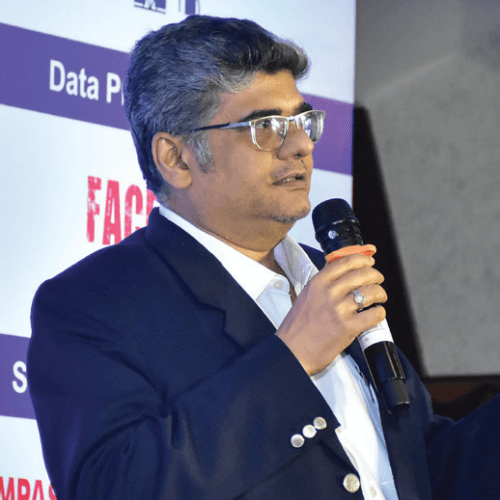
| Hemal Shah CIO Dell India | Ajit Kumar Rath General Manager, UNION BANK OF INDIA | Sunil Dara Head of - Information Technology at Emkor Solutions Ltd | Abhijit Chatterjee CTO C-Zentrix |
CIOs facing Newer Challenges: Mobility, Cloud, BYOD and Big Data
In the wake of today's tough economic conditions and constantly fluctuating revenues, Indian CIOs across industries are bracing up for novel challenges. On the one side, digitization and globalization are making the technology more critical than ever. On the other side, intervention of disruptive technologies including Mobility, BYOD, Big Data, etc are making businesses more and more complex. This puts CIOs in a situation where sufficient results have to be delivered while maintaining a tight IT budget.
Throwing light on the current market conditions, Sunil Dara, Head of Information Technology, Emkor Solutions Ltd, explains, "Businesses today are increasingly depending on new and emerging technologies to not only improve productivity and drive down costs but also to create new business opportunities and to find faster, easier and cheaper ways of conducting their business. Including IT innovation in strategic business planning is already indispensable and only those companies which wholeheartedly embrace the mindset and tools necessary to shake up business models will remain competitive in the years to come. This is where CIOs come in. They have to lead from the front and anticipate trends in the marketplace with regard to technology and then ensure that the business navigates these trends through expert guidance and proper strategic IT planning. Businesses have to innovate quickly and take full advantage of the opportunities created by breaking old constraints and in this CIOs have to ensure alignment to the corporate strategy of the organization."
In order to assimilate all available information within and outside the company and see how to make best use of it for furthering the company's interests, CIOs have to keep a close eye over the whole organizational structure. This way, CIOs become natural change agents spearheading and facilitating implementation of alternate processes / technology to improve company's performance. As a CTO, Abhijit Chatterjee of C-Zentrix has implemented a method for integrating leads for business from multiple sources - web, email, messenger, channel partners, phone calls and making it work together with the Leading CRM, Support CRM and Licensing System. It helps the company to reduce the time to reach potential customers and provide an enhanced level of service to them.
 |  |  |  |
| Anil Khatri Head (South Asia), Global IT-client technology and Field IT, SAP | Suresh A Shanmugam Head - Business Information Technology Solutions (BITS), Mahindra & Mahindra Financial Services Limited | Rajesh Saboo Head-IT Services at Future Group Retail Ltd | <
span style="color: rgb(153, 51, 0)"> Vipin Kumar Group CIO, Escorts Ltd |
Regarding the technology moving at a faster pace, Abhijit expressed, "Mobility and Cloud are two areas we are actively looking at. We are actively looking forward to the changing economic environment and once the solution will get stabilized, a clear value proposition will then emerge which would be suitable to our business we will embrace."
With more and more people getting aware of technology and its usage in their lives, whether it’s for work, play, learning, or to socialize - the amount of data being generated is truly astounding. SAP believes that this confluence of events is a golden opportunity for enterprises to rethink how they do business. SAP’s role starts here as they help their clients to do their jobs in a better way.
As far as implementation of BYOD is concerned, it is being managed most smartly by IT companies, as in most of the companies thousands of their employees are located in every nook and corner of the world. "Driven by the consumerization of IT and SAP's mobile-solution focus, we have developed an entire mobile platform engaging employees with applications that enable them to be more productive anywhere. In a rapidly-expanding list of countries, SAP offers the option to use either a corporate-owned or personally owned mobile device for work. Employees can either purchase their device through a corporate catalogue or bring in their own device (from an approved list). This BYOD approach was put in place to address the trend of the consumerization of IT - allowing employees to own a single device for both business and personal use," said Anil Khatri, Head (South Asia), Global IT - Client Technology and Field IT, SAP.
Besides handling economic volatility and technological expansion, CIOs also have to get ready for the sudden increases and decreases in the company’s budgets, which are not predictable to the economic conditions. In particular, volatile and business-driven projects are less predictable. So, CIOs generally require suitable ways to make the budget process more flexible and reactive to face the economic volatility and sudden budgetary changeovers. Suresh A. Shanmugam, Head - Business Information Technology Solutions (BITS), Mahindra & Mahindra Financial Services Limited, says, "It is hard to maintain a stable budget across the year. We do revise our budgets repeatedly between the projection and the time of execution through which IT is particularly exposed majorly on the customer satisfaction and the business projections towards such investments."
It will be pertinent to mention here that CIOs have to exercise great foresight and introduce more corrective measures to improve the quantity or quality of exact budgetary requirements, while keeping in mind that organizations should deliver energetic, constructive and provocative information to achieve their goals. D. Sahoo, DGM, IT Division, Punjab National Bank, shared his views on this. He says, “Budget management is an integral part of business management. We access IT requirements of our organization in view of the latest and upcoming technology available for sustainable growth of the organization. Banking these days is mainly driven by IT. As such, we always give top priority to the innovations required in Information Technology to remain on top in the sphere of business targets.”
Innovation Vs Standardization
Along with handling all the challenges, there is another significant factor which cannot be ignored. It is bringing innovation along with maintaining standardization. In today’s scenario, both are closely connected. With the continuous growth of operations, there is always a need to standardize the technology platforms and processes. At the same time, innovations are essential for any organization to maintain its competitive edge over its peers. According to Rajesh Saboo, Head – IT Services, Future Group Retail Ltd, “Standardization is doing the right thing again and again. It is like ‘One More Once More’. The Future Group launched T24, which is a unique mobile program which offers ‘UNPAID’ (free talk-time) against the prepaid and post-paid of worlds. This helped the company to penetrate the market very fast with the huge customer base which they have.” They are also using Transformation program for their current initiatives which will be innovation on the other hand.
On the other hand, Kamal Sharma, Group CIO, Mindlance, believes that both are different yet closely linked. Innovation is all about something new and it is termed as a catalyst for business. Innovation helps one to create superior services, products and processes for stakeholders, customers, while standardization is about charting up technical part and processes. By standardization, one can optimize the resources and improve efficiency.
Implementation of a successful business strategy by different CIO
In a bid to gain more revenue and excellence in performance, different CIOs and IT heads have implemented business strategies in their own ways. As far as Dell is concerned, it has 40+ different systems regionally running their support desks. Dell standardized all of them to one platform, of course in sync with the company’s business strategy to enable better support, better customer experience and sharing issues globally.
Mindlance has deployed Unified Communication and integrated it with their core infrastructure. The company has been focussing on deploying technologies where they can maximize integration. This is the company’s long-term strategy to ensure maximum benefits of integrated IT infrastructure.
 |
| Dr. JS Sodhi Head-IT & CIO (Assistant Vice President) at Amity Group |
 |
 |
| Kamal Sharma Group CIO, Mindlance |
Besides IT industry, CIOs of other sectors like telecom, hospitality, education, banking, etc have also successfully implemented IT strategies. Vipin Kumar, Group CIO, Escorts Ltd, asserts, “In Escorts Ltd, I formulated a long-term IT strategy for my company which had elements of IT consolidation, use of Cloud computing, standardization of business processes across the various divisions of our company, greater use of open-source technology, creating a robust infrastructure backbone for the company. I am extremely happy to state that most of these initiatives have been implemented and today our IT is a state-of-the-art set-up.” He further adds, “S ome of the key IT initiatives we have implemented are – Implementation of high-end supply chain tools to map our production with market demand keeping low and relevant inventories of raw materials and finished goods, Creating a state-of-the-art central data center, based on green IT concepts, for the entire group, Implementing a common single instance ERP group wide, and Enabling common business processes, wherever possible, across the group and common cloud based e-mail solution for the group.”
Nowadays, education is changing from teacher-centric to technology-centric. Students are engaging more in collaboration through various tools and devices of Information Technology. Keeping “Uniformity In Education” concept, Amity Group has implemented Live Class-Room Transmission project to transmit live lectures to various Amity locations. Dr J. S. Sodhi, Head – IT & CIO (Assistant Vice-President), Amity Group, says, “Amity has always played a leading role in the implementation of most Innovative Technological solutions. The ‘Uniformity In Education’ project was conceptualized and implemented innovatively by using a combination of various different technologies – MPLS, eLearning and IP cameras, thus making it very cost-effective. ”
D. Sahoo of Punjab National Bank adds, “PNB is the first public sector bank to successfully implement the Core Banking Operations on an all-India basis. Our strategy of implementation of Core Banking in all the branches has given us an edge over our peers and our organization has been among the frontrunners in the technology front for the last 8–10 years as we are able to bring in innovative ideas at the technology front in the banking industry. We have also successfully implemented the Core Banking Solution in all our sponsored Regional Rural Banks.”
Finally....
It will be very true to say that CIO is the true integrator between business and technology. CIO is supposed to fully understand the business needs of an organization. He/She is, indeed, the catalyst who ensures the growth of business through the use of secured and latest Information Technology.
satinder@varindia.com