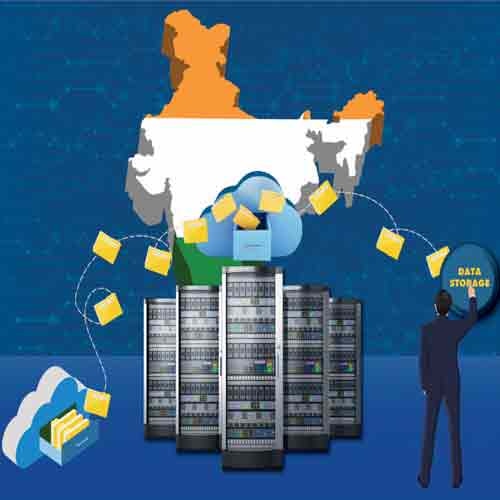
As we all know that data is the 'new oil' at present across globe. It holds immense importance for every individual and organization. Data plays a significant role in every decision making of an organization. Data can be both personal and non-personal and privacy of that data is the fundamental right as per Supreme Court of India. And this gave rise to Personal Data Protection Bill 2019.
For a populated country like India, protection of personal data is important. So as a nation, India needs a data localization policy. It is important to make sure that the critical and sensitive data of the country’s citizen should be stored locally within the border.
All companies categorized as public company, private company, corporate bodies, state entities, data fiduciary, data processors registered in India and offering services or good to individuals in India are required to comply with the Personal Data Protection Bill 2019.
 “Today data is the single largest asset of a country. Critical Personal data of citizens and their financial, health related parameters and other related need to be protected. India is world’s largest democracy with over 1.38 billion people and hence protecting personal data is essential. Hence, as a nation need a data localization policy. It is important to ensure critical and highly sensitive data of Indian citizens is protected, especially their sensitive data related to health, financial, biometric, affiliations etc. and any other data categorized as sensitive and/or critical should be stored locally within India,” feels B.S.Rao, Vice President, Marketing, CtrlS Datacenters.
Further adding to it, he says, “All business entities who fall in the categories as detailed in the Personal Data Protection Bill 2019 are now planning to store the data locally. In fact, they may have to implement data sharding - a process which breaks up large data tables into smaller chunks referred to as shards that are spread across multiple servers deployed in multiple locations.”
DATA LOCALIZATION
If we scrutinize the reason behind data localization initiative then we can see that the prime reason is data security which means protecting national interest and citizen’s right to privacy. And for this a strict law is a requisite.
 “Data localization is the “What” piece of the puzzle. If we look at the core or the “Why” of this initiative, we will see that` it is ultimately about data security which is necessary for safeguarding national interest and every citizen’s right to privacy. That being said, what is more important is the robust implementation and enforcement of the law using appropriate technologies. We have heard many a times about the Aadhaar Data being leaked, and if that is a fact then it clearly proves that simply having data to reside within the nation does not solve the issue of it being not getting stolen and used in inappropriate ways. Therefore, I believe that Data Localization law is an important step towards protecting the sovereignty of the nation but only if equal importance is giving to the security aspect of it. One may always debate about the economic impacts it may have on the nation, but then again it can be argued both ways,” explains Dr. Rajeev Papneja, Chief Growth Officer, ESDS Software Solution.
India comprises one third of social media users and people are using free apps extensively through which they are sharing too much of personal information. Moreover, these companies do not store their data within the country which indicates that local laws will not be applied on them. With data localization initiative the government is trying to protect critical data.
 "India is on the verge of losing its digital independence. With the rampant usage of free apps, the users are inadvertently sharing too much information about themselves. The stolen information has created companies which are larger than many countries themselves! It is imperative that the laws of land are applied to these businesses so that we can avoid misuse of data. One third of social media users are from India and none of these companies host the data in the country and hence no local laws can be applied on them, nor is there an effect mechanism to put together a global framework of laws! I believe Government is doing the right thing to ensure at least critical data is actually stored within the country by businesses,” says Ranjit Metrani, Head – Sales and Pre-Sales, NxtGen Infinite Datacenter.
 Sharing his views on data localization Jatinder Singh Pabla, VP, Sales and Marketing, STT GDC India says, “At STT GDC India, we believe that storing data locally allows for reduced network latency and apart from helping organizations to comply with government regulations. The terms of Data localization introduced in the bill asks that a copy of the personal data be stored in servers/data centres in India. Certain categories of data (to be notified by the central government/ DPAI) termed as critical personal data shall only be processed in a server or data centre located within the country.”
BEST PRACTICES
In line with the government’s initiative of data localization, the datacenter companies are following some best practices. Web Werks India completely support government departments across the country and also promotes ‘Made in India’ initiative.
 “Web Werks is part of the MeghRaj cloud initiative and one of the first few players to be empaneled by Government of India to provide Cloud & Data Center services for data localization and the digital India push. Web Werks actively supports the State government department of Maharashtra, Haryana, as well as central government departments across the country. Being a born in India company, Web Werks is promoting ‘Made in India’ initiative by indigenously build cloud technologies & DCs using best of breed international know how and partnerships,” highlights Nikhil Rathi, CEO and Founder of Web Werks India.
Talking about the best practices adopted by ESDS, Dr. Rajeev Papneja mentions that all their data centers are located in India and they do not believe in doing analytics on customer data. Elaborating on this he says, “As far as ESDS is concerned, we have always taken data privacy very seriously. We believe that we should do unto others what we expect them to do for us if were in their shoes. All our Datacenters are in India so there is no question of data going out of the nation and most importantly we do not believe in doing analytics on customers data and therefore we ask the customers to bring their own analytics tools and we will only provide them with the Infrastructure and any other platform needed.”
“In recent times, we have witnessed a number of robust aspects driving the market, like accelerated digitisation, the growth of user data, e-commerce, advances in the cloud, etc. These strong drivers along with the practice of storing data locally will provide Indian businesses with skilled talent at a lower cost. Multinational organizations, in particular, will have to reconsider their data management practices and come up with measures to abide by these restrictions and ensure compliance.
As a colocation service provider, we don’t process data while in rest or in transit. We maintain five layers of physical security and have necessary certifications and compliances in place that are mandated by regulatory authorities,” says Jatinder Singh Pabla of STT GDC India.
On this Ranjit Metrani of NxtGen Infinite Datacenter views,“The big impediment for Government to force these companies to operate from India, is the digital infrastructure. Being the largest cloud provider based out of India, we are working closely with businesses with an intent comply with laws to migrate to India based digital infrastructure. Additionally, we are developing solutions that matter to the citizens of India, not just complying with evolving data-localization laws, but to protect the privacy of the individual. The first Global standard for privacy is now in place ISO 27701, specifies the requirements for establishing, implementing, maintaining and continually improving a privacy-specific information security management system.”
GROWTH
With the growing e-commerce segment because of the low cost of internet data, India has entered into the next phase of growth and to ensure better customer experience companies are planning to localize their data.
A recent CBRE report had stated that the datacentre capacity is expected to double in the next five years. The report also highlights that the facilities across tier I cities are expected to witness a supply addition of approximately 40% only in 2020.
“Indian e-commerce sector is stepping into the next phase of growth due to low cost of internet data, seamless availability of wireless internet on mobile and broadband. Today, India is home to 115 million online shoppers, 367 million social media users, an estimated 40 million OTT subscribers and about 300 million online gamers – they are distributed across metros, tier-2, tier-3 and rural areas. Hence to ensure all of them have a better experience most of the e-commerce players, social media companies, and online gaming companies will plan to localize their data and secondly will move closer to the customers in tier-2, tier-3 cities to provide low latency and enhanced customer experience through edge data centers. To address this growing market in India, we are planning to add 1,000 Edge Data Centers across Tier-2 and Tier-3 cities and support the expansion plans of such companies as they get closer to their customers,” sees B.S.Rao of CtrlS Datacenters.
Reiterating similar views Dr. Rajeev Papneja of ESDS Software Solutionsays, “India houses the fastest growing digital population and with Governments initiative of Digital India, there is no second thought that the growth is going to be exponential. We will be witnessing the real data explosion very soon in our nation. After demonetization, the way we transacted has been changed forever and today it is hard to find even a roadside tea stall who does not accept digital payment. Video content has become the new norm making the text way of explaining things almost extinct. Even without data localization, the growth would have been tremendous but with data localization I foresee it to be exponential in near future.”
Talking about the growth factors Ranjit Metrani of NxtGen Infinite Datacenter highlights, “The market will grow at a CAGR in excess of 25%, the profile of datacenters is changing, since the profile of compute infrastructure has changed. We now have a small super-computer with us, delivers 100 Terraflops of computing the performance and is sitting in half a rack. The growth will be significant in terms of power being consumed, not necessarily on the size of real-estate. India is very large country, there are 14 cities which have a GDP greater than many countries. Our thought process is to have three very large 50MW+ facilities and 11 smaller facilities with compute and storage infrastructure. We are also in the process of implementing countries first edge-cloud infrastructure at 236 identified locations, we may be able to deploy about 50 by the end of year.
The big demand for us comes not really from current business applications, but from the data being generated by IoT, CCTV and other applications. Gone are the days, enterprises are happy computing numbers, they are looking at video, speech and text analytics.”
Nikhil Rathi of Web Werks India observes,“BCP on Cloud has its own set of benefits with higher availability. Organizations can reap benefits due to the flexibility, scalability and uptime that the Cloud brings. Enterprise in India needs to optimise their return on investment, reduce IT budgets and cope with the security concerns. As per IDC report, by 2022, 30% of organizations in India will have invested in automation and development life-cycle management of cloud-native applications to realize the cost benefits and operational efficiencies. Growth in Cloud Services also means growth in Data Center business where the cloud is hosted. Education, basic healthcare, payments, communication, and essential services are shifting online. The 3rd party data centers house multiple Internet Service Providers (ISP’s) and Cloud Platforms, while facilitating a reliable and secure infrastructure for server colocation. This interconnected ecosystem allows organizations to maintain round-the-clock operability of their servers, at the same time ensuring scalability.
In the wake of the COVID, managed hosting and cloud computing have both proliferated in the past few weeks and there has been a tremendous growth in demand for co-location. Demand has increased by nearly eight times as companies moved equipment or placed urgent requests on data centers for equipment. Requests for virtualization and cloud infrastructure have also caused demand to surge more than usual.”
SUGGESTION ON PERSONAL DATA PROTECTION BILL, 2019
Datacenter service providers support the government’s initiative of data localization and they also advocate to enact the Personal Data Protection Bill as soon as possible.
“According to me the Government should actively consider enacting the bill by end of 2020 or early part of 2021 but not later than that. However, we will also have to appreciate that the Government machinery is focused on minimizing the COCID-19 impact. The Personal Data Protection Bill 2019 too is critical and hence ‘am confident the Indian Government will accord the priority it deserves,” says B.S.Rao of CtrlS Datacenters.
Dr. Rajeev Papneja of ESDS Software Solution feels that there is a need for transparent policy for customer data which is actually the most sensitive personal data. He states, “Data localization steam really picked up in early 2018 when the directive to store payment information in India was directed by the RBI. Though not completely, but at least partially to an extent all major sectors have started forming policies in line with the same, be it Healthcare, ITeS or manufacturing. Most of the large organizations still have captive data centers and they have still not even embraced commercial datacenters in the nation to host their mission critical data. This is a clear indication that even if tomorrow they do decide to move to using commercial datacenters to host their critical applications, they will not allow the data to go out of nation. There is a dire need for strong and clear-cut policy for the customer’s data which basically boils down to the most sensitive personal data. If we look at privacy laws of certain nations, they allow personal data such as medical records of the citizen to transfer abroad for the purpose of processing on certain conditions such as taking consent from the subject, while the data processor carries the liability for the same. I believe we will definitely see economic benefits for local businesses starting from infrastructure development up to providing end customer related services, thereby increasing employment in the nation.”
“More than 80% of the users in India are mobile first consumers. For example, Google collects a staggering amount of personal information about its users than what the users realise. They remember every search performed, everywhere one goes, every video watched and now they started listening to our conversations – it is shocking and unsettling. Government should realise that India’s digital independence is at stake and move with urgent, make a start. Technology is moving so fast, it is also important that a committee reviews the law on a yearly basis and makes amendments as the scenery emerges. One time Personal Data Protection Bill will be woefully short of expectations, if there is no mechanism to adopt to change,” feels Ranjit Metrani, Head – Sales and Pre-Sales, NxtGen Infinite Datacenter.
After this spread of COVID-19 infection, India government has called for “Aatmanirbhar Bharat” (self-reliant India) and also promoted ‘Vocal about Local’ campaign to make India self-reliant. In line with this, the government should also pass the Personal Data Protection Billwhich will lead to growth of local Cloud and datacenter ecosystem
“The Personal Data Protection Bill should get passed and in the wake of “Local pe Vocal”. It makes more sense to have India’s data stored locally and ensure that personal data is not stored or transmitted out of our borders to other countries. This ensures growth of our local Cloud and datacenter ecosystem. This growth and similar bills have shown the same benefits in China and even advanced countries like Germany. When other countries implement this we should go ahead and have our own version of the same,”feels Nikhil Rathi of Web Werks India.
“During the initial stages of the pandemic, the country had witnessed a number of fake or real instance of data phishing and cybersecurity concerns. At STT GDC India security of the data we process is of utmost importance and we believe that the Personal Data Protection Bill (PDPB) will enable India to maintain its stature as a ‘safe country’ to handle and process personal data. The bill will give clarity to policies and procedures seeking to minimise intrusion into the privacy of an individual caused by collection and usage of their personal data.”Jatinder Singh Pabla, VP, Sales and Marketing, STT GDC India.
AT LAST…
Data localization does not only mean to keep the critical data within the boundaries but also protects the Indian citizen’s right to privacy. Government should gear up to pass the Personal Data Protection Bill which will help to protect data as well as create wider opportunities for the datacenter ecosystem. At present the datacenter service providers are witnessing growing demands from their customers as India has stepped into next phase of growth. Other countries have also follow similar ways and got benefits. So with this bill into force we are hopeful that India too will get benefits from it.
DATACENTERS ADDRESSING THE NEEDS OF ORGANIZATIONS TO STORE DATA LOCALLY
ESDS does not exist to simply provide power, cooling and space on rent. ESDS works to help organizations disrupt their industries using technology. Banking, Smart city and SAP HANA community clouds, iPas (Integrated Planning Automation System) for Government department etc are testimonials to this. Along with the Datacenter, there will be a lot of demand coming for Remote Infrastructure Management services, SOC services, multi cloud support and ancillary tools that will use data in various ways to create sense out of it and this is where ESDS will have a big play with its team of 200 people in R&D and 300 people providing managed services round the clock. With its Datacenters in Nashik, Mumbai & Bangalore, though ESDS is currently in the expansion phase with plans to setup more DC sites to support the growing demand, we should also consider that the servers of today are coming with a configuration such that they can consolidate the infrastructure of last decade in 10% of the DC space today.
Globally, the IT infrastructure is refreshed in the 4th/5th year. Every year, there is old infrastructure retired and new infrastructure is added. The way to approach it is ensure that the new refresh happens in India, rather than somewhere else in the world. Organizations should look for the potential that India has over the long-term and make the commitment. India has very low penetration of insurance, there is a big effort to move to digital financial transactions sponsored by Government, and impact of digital has just started in India.
Well there is always a resistance to change. The proposed Indian Personal Data Protection Policy 2019 has evoked the emotions - shock, surprise, anger. But it is important to realize that GDPR was successfully implemented in Europe – despite the resistance all businesses had to comply. The same applies to India. All those business entities who are mandated to comply will have to invest in servers, network equipment, racks, security tools and processes and collocate their infrastructure and applications.
At CtrlS, we are enhancing capacities across Mumbai, Delhi, Hyderabad, Bangalore, Chennai to ensure the growing demand due to localization is met. Besides, we have brought in automated processes at our data centers to ensure higher efficiency and productivity. One of the other areas that we are focused is innovations – we have had 80 innovations in energy efficiency – this has resulted in industry lowest PUE of 1.38, our power tariffs are also lower as a result we are now equipped to offer our data center facilities with cost savings of 20% to 30% and in some cases even higher. We offer carrier neutral data center facilities backed by robust network (N+N) redundancy backed by multiple fiber paths. Lastly, Our data centers are all Rated-4 Hyperscale facilities hence we offer highest industry SLA of 99.995%, besides this we are deploying a 200 MW solar plant to ensure we reduce the carbon footprint.
Customers can benefit from the economy of scale that is offered by STT GDC India. It is evident that the scale brings cost optimizations as well.
Customers can benefit from our design and operational excellence. We are trusted with the mission-critical architectures of some of the top companies offering cloud, social media, OTT and financial services. We have an extensive number of checks and measures along with elaborate redundancy system to provide all our customers’ up to a 100 percent guaranteed uptime. We have built our best practices over the last 14 years and all this is offered to our customers as part of our services.
Customers can benefit by riding on our growth plans and reducing their CAPEX. As part of our growth plan in the next two years, we will offer more than 200 MW IT load to our customers. All this capacity is available to our customers on a consumption basis which reduces the CAPEX requirements for our end customers. This also means that the capacity is available when the customer needs it without waiting for multiple years of the build cycle.
Additionally, we help businesses run during tough times such as covid19. During the lockdown, data centres like us were given special status of “essential services” along with special passes for movement of personnel and other allowances and permissions. This, in turn, enables us to maintain, run and secure the data requirements of our clients and ensuring the smooth functioning of their businesses. Instead of creating personal structures, especially for large corporates, third party data centres are a better option as we already come equipped with the necessary requirement.
One of the greatest myths relates to compliance which is compliance with the requirements of data localization be too expensive for small and medium-sized enterprises and entrepreneurs with studies suggesting a 30-60% rise in costs. However, if it didn’t increase costs for other countries why would it increase the costs in India. The cost of keeping data outside India will be the same as keeping data inside the country. In fact, with newer hardware implemented in the country, it’s not really a cost. In some cases, there might be a marginal increase in costs. However, the efficiency of data performance when stored locally covers up for these costs. There would also be a marginal cost of bringing the data here but that is basically the cost of any lift and shift and there are OPEX models available in the country which makes it easier for countries to move their data.