Datadog’s new monitoring capabilities combine code-level performance profiling, session archiving and continuous data exports, helping engineering teams investigate application issues, retrieve historical sessions and use behavioural data within their own cloud storage and analytics systems.
Datadog has announced the general availability of three capabilities in its Real User Monitoring (RUM) suite, expanding the tools available to investigate application performance, retrieve historical user sessions and export monitoring data.
The additions—RUM Profiling, Managed Archive and Export Pipelines—address different stages of monitoring how people experience applications, from identifying problematic code to retaining session records and making event data available for further analysis.
Code-level profiling across web and mobile
RUM Profiling connects continuous, function-level CPU profiling with the specific application view, user action, long-running task or performance metric associated with a slowdown. According to Datadog, this helps engineers identify the code responsible for degraded performance without relying solely on attempts to reproduce the issue.
The capability supports Chrome browsers and mobile applications on iOS and Android, providing code-level debugging information across web and mobile environments.
For Android, Datadog worked with the Android platform team to build on the platform’s ProfilingManager application programming interface. The company said this enables profiling in production while reducing the performance and battery overhead associated with older profiling approaches.
The resulting profiling information is correlated with the affected RUM session, view, action or performance metric to support investigations.
Session archiving and historical access
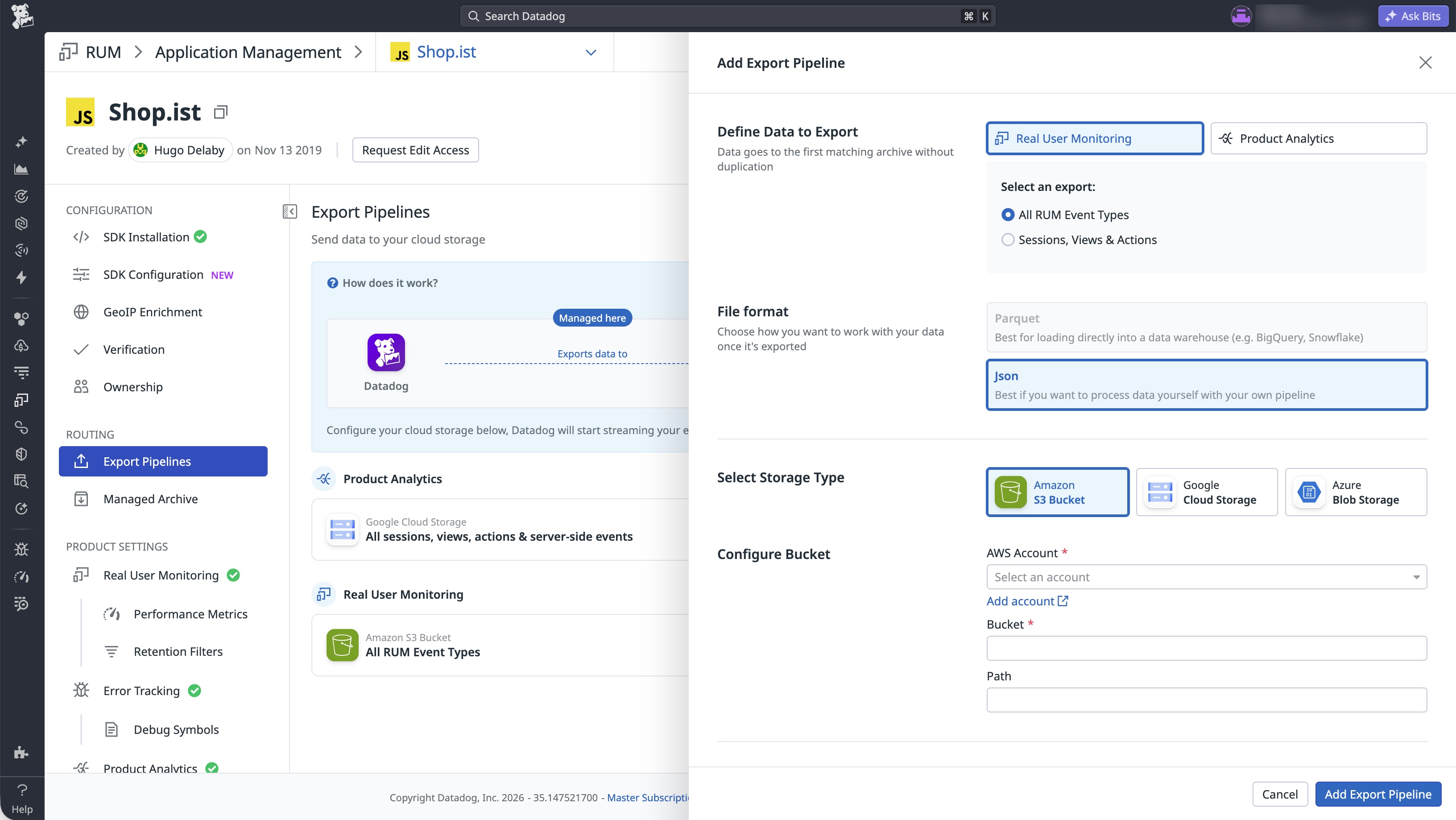
Managed Archive allows organisations to retain sessions in Datadog-managed storage and retrieve them when needed for customer support investigations or incident response.
The approach enables teams to archive session data without paying upfront to fully index and retain every session, according to the company. Archived sessions can subsequently be recovered on demand.
Datadog said the capability also extends access to session-level information beyond standard retention periods. This can support compliance, legal and regulated teams that need historical records for audits or investigations.
Continuous exports to customer-owned storage
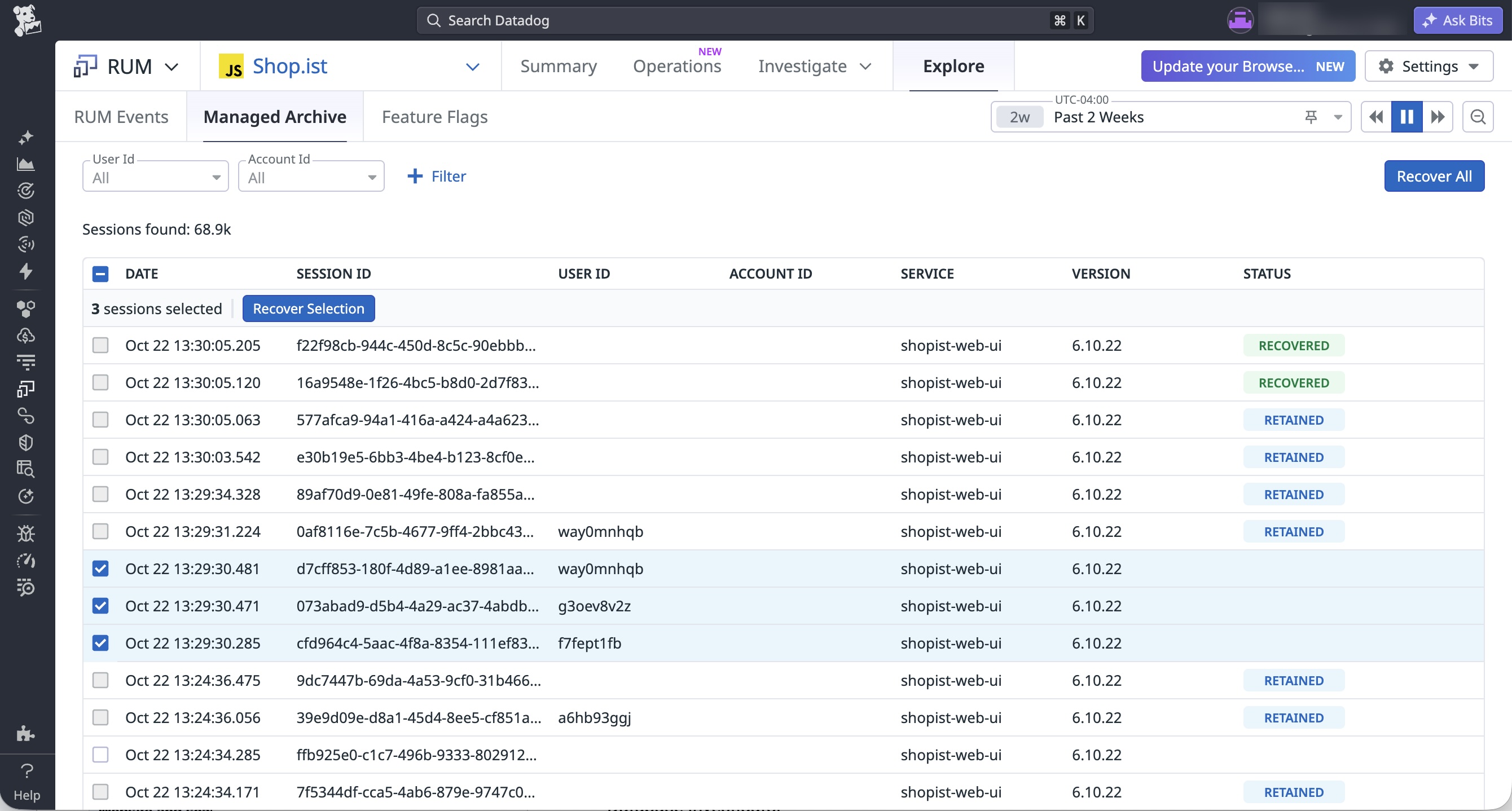
Export Pipelines enables teams to continuously send RUM and Product Analytics events to their own cloud storage, without building custom export scripts or carrying out manual transfers.
Organisations can retain the exported information according to their requirements and feed raw behavioural events into data warehouses or data lakes. Datadog said these datasets can support machine learning training and analysis combining information from multiple sources.
The three capabilities give teams additional options for diagnosing performance issues, managing retention and using monitoring data outside Datadog’s platform.
The company plans to discuss the additions at Datadog Summit Munich on November 12, where executives will also be available for media briefings.