
Artificial intelligence has become one of the most transformative technologies of the decade, but it has also created an unprecedented wave of cybercrime. According to recent industry estimates, deepfake-enabled AI scams caused nearly $893 million in losses last year, highlighting how generative AI is rapidly becoming a preferred weapon for cybercriminals.
Deepfakes have evolved far beyond manipulated videos. Today, attackers use AI-generated voices, synthetic identities, fake video calls, cloned documents, and realistic digital personas to deceive individuals, enterprises, financial institutions, and even government agencies. The combination of publicly available personal data and powerful generative AI tools allows fraudsters to impersonate CEOs, government officials, bankers, family members, and business partners with alarming accuracy.
The financial sector has emerged as one of the primary targets. Criminals are exploiting AI-generated identities to bypass Know Your Customer (KYC) processes, conduct fraudulent loan applications, initiate unauthorized fund transfers, and execute business email compromise (BEC) attacks. Video KYC platforms and remote onboarding systems have become attractive targets, forcing banks to invest heavily in AI-powered liveness detection and behavioral verification technologies.
Enterprises are also facing a growing threat from executive impersonation. AI-generated voice clones and realistic video deepfakes are increasingly being used to trick employees into transferring funds, sharing confidential information, or approving fraudulent transactions. Traditional authentication methods based on passwords, OTPs, or visual verification alone are proving inadequate against sophisticated synthetic media attacks.
The rise of deepfake fraud is creating a new cybersecurity challenge where identity becomes the primary attack surface. Organizations can no longer rely solely on perimeter security or endpoint protection. They must continuously verify whether a person, voice, image, or document is genuine before granting access or approving high-value transactions.
Governments worldwide are responding with stricter regulations around digital identity, AI governance, and data privacy. Financial regulators are strengthening KYC norms, while technology companies are developing watermarking standards and content authenticity frameworks to identify AI-generated media. However, regulation alone cannot keep pace with the rapid evolution of generative AI.
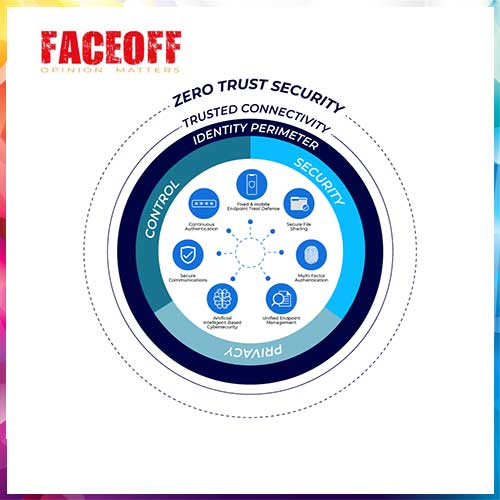
The next generation of cyber defense will require multimodal AI capable of simultaneously analyzing facial movements, voice characteristics, behavioral biometrics, device intelligence, contextual risk signals, and cryptographic identity. Organizations are increasingly adopting Zero Trust principles, continuous authentication, AI observability, and quantum-safe cryptography to defend against identity-based attacks.
For enterprises, the challenge is no longer detecting malware—it is distinguishing real humans from synthetic identities. As AI-generated fraud becomes faster, cheaper, and more convincing, trust itself is becoming a critical cybersecurity asset.
The $893 million lost to deepfake scams is more than a financial statistic—it is a warning. The future of cybersecurity will depend on securing digital identities, authenticating every interaction, and building resilient trust frameworks that can withstand the growing sophistication of AI-powered deception. Organizations that invest early in trusted identity technologies, deepfake detection, and adaptive AI security will be better positioned to protect their customers, employees, and digital ecosystems in the age of synthetic intelligence.

See What’s Next in Tech With the Fast Forward Newsletter








Tweets From @varindiamag
Nothing to see here - yet
When they Tweet, their Tweets will show up here.