A lot of things have been happening in the IT industry during the last 20 years starting from World Wide Web to now, from Facebook and everything which is available there and at the same time mobile systems have gone from GSM to 3G, 4G and different devices have moved from the basic phones to tablets and large screen smartphones.
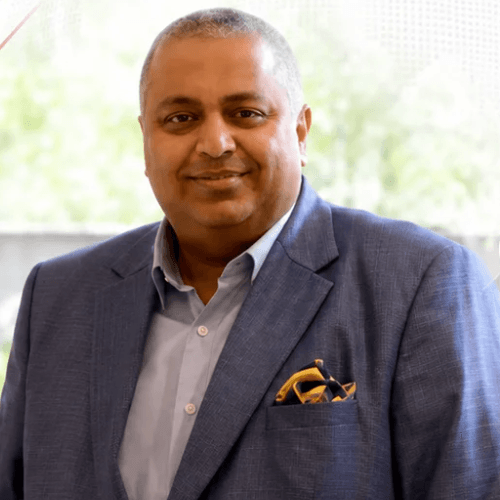
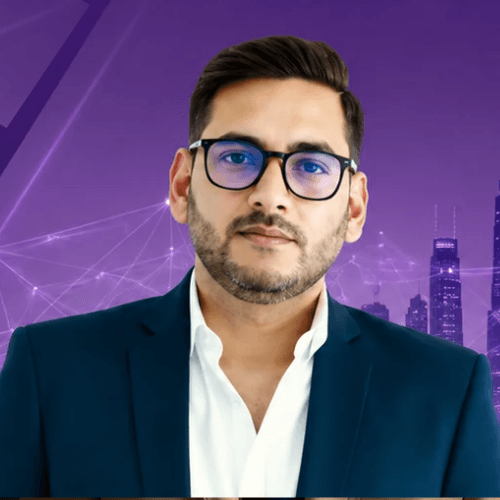
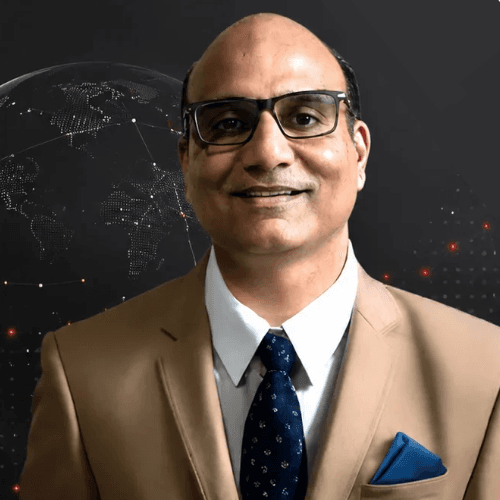
And now we have started asking ourselves so what will be the next? Obviously, nobody can predict what the exact devices people will opt to adapt. Nokia-Siemens Network’s vision is not really what the world will look in 2020, but the company highlights some requirements which, we believe, are needed by then and obviously what the network will look like in 2020. Lauri Oksanen, Vice-President – Research and Technology, and Amit Marwah, CTO (Chief Technology Officer), India Region, Nokia Siemens Network, recently interacted with VARINDIA and shared their views on the same.
In 2012, the mobile data in India grew by 92 per cent, which almost doubled and 3G (2G+3G data) grew by nearly 196%, close-to 0.3 times. Lauri Oksanen opines that the primary reason is that India doesn’t have 4G yet. It was also found that the data is not being properly used, there is only voice. However, thirst for mobile data is continuously growing exponentially, which significantly shows that there is a huge growth opportunity.
In India, the data traffic looks similar as it was in Europe maybe four years or five years ago. Even it has gone down a little bit, whereas in some countries it continues to grow twice a year. So in ten years, we will get 1,000 times fast data traffic. Here, it is necessary to mention that NSN wants to be able to support 1,000 times the capacity of the network so people can use 1,000 times more data and this will help to support the growing demand.
However, the data usage scenario in India is quite different from most of the other parts of the world as here the spectrum allocation is a bit slow.
Regarding the amount of spectrum, the telecom and mobile segments are actually using in India at present, Amit Marwah exerts, Currently, the actual usable spectrum is close-to 300MHz on the telecom segment, including 700, 900, 1800, 2100, 2300 bands. For instance, in the 1800 band, about 75MHz of spectrum is allocated right now, but the actual amount of spectrum which is about 150MHz and out of that 70–75 MHz spectrum is used. Similarly, in the 2100 band, the allocation is only 5MHz each for 3 operators for 3G. So, I think there is a need to make more spectrums available for users.
Let us take an example of how people use the spectrum data. For example, in a rock concert, people use their mobile device more for data uploading as they send pictures or video clips to their friends from the stadium, resulting in congestion. To overcome this problem, more data capacity needs to be created. NSN has developed a system in which they will put small “Super Cells” into the stadium which will help to take away the interference while processing is going on between users and they get up to 3x uplink throughput improvement in over-the-air demonstrations than the normal systems.
One thing which is important to note here is the placements of these intelligent super cells. If users will place the small cells too close to each other, it will result in interference. As a result, the quality of the data capacity degrades. This way NSN will achieve seamless interworking between different cell sizes, frequency layers and radio technologies with its innovative backhaul solutions.
Going further into the future, it is expected that 2G and 3G will be mostly there in many of the countries even after 2020. Presently, 2G is used for connecting with energy meter for getting readings in many countries. There are a couple of operators who want to close 2G before 2020. Most operators in Japan are about to close their 2G. Even in the USA, operators have chosen to close 2G and activate 3G and LP. However, 2G will still be there as a common network up to 3–5 years from now even in India.
The core area where NSN has the expertise is mobile networks and radio. Basically, 3G will be partially standardized for the radio, i.e. the forthcoming LP Broadband radio. This will help the M2M network to enhance user experience. NSN will basically support data up to 1,000 times more capacity, reinvent Telcos for the Cloud, teach networks to be self-aware, reduce latency to milliseconds and help personalizing network experience for every user with its latest services.