The spread of IT has led to the emergence of certain demands pertaining to the crucial areas of governmental functioning such as the right to information, transparency in functioning and speedier decisions.
It was in the not-so-distant past that the most marginalized sections of India’s population living in the villages were just inaccessible and did not avail of the new developments taking place in the urban parts of India. They had to go to the district headquarters for every small job. This resulted in the loss of time and money, which made a heavy dent in their earnings.
In the era of rapid industrialization, the IT sector plays an important role in increasing the revenue, productivity and efficiency of government services. An effective information dissemination system enhances the level of participation of the citizen in the government affairs.
Orissa, an eastern state of India facing the Bay of Bengal, is today poised to accelerate the use of information technology at the government level with a view to providing better and expeditious services to the citizens of the State. The Government of Orissa has taken many e-Governance initiatives by announcing its IT policy, which is very comprehensive and incorporates all the things that other states offer. Accordingly, an e-Governance roadmap has been drawn up by the Government.
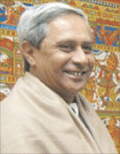
The e-Governance roadmap of Orissa was released on 14th June, 2006 by Chief Minister Navin Patnayak.
• It comprises the following:
– e-Governance vision
– e-Governance Strategy and Blueprint
– Capacity Building Roadmap
• It has identified 15 departments where MMPs are to be taken up for providing more than 200 services.
The roadmap lays down State-wide e-Governance architecture which includes core policies, infrastructure and applications and also lays down the institutional framework by way of a State eGovernance Council, State Information Technology Services Board, State eGovernance Mission Team (SeMT), Project eGovernance Mission Team (Mission Team (PeMT) and District Information Services Council (DISC).
e-Governance Vision of Orissa
“Establishing a networked Government for greater transparency and accountability in the delivery of public services to facilitate moral and material progress of all citizens.”
With a view to supporting and simplifying governance for government, citizens and business, the Government of Orissa has been trying to improve interaction between the Government and citizens and encourage their participation in governance, open up avenues for direct participation of women in the government policy-making process, reduce poverty and enhance democratization and citizen empowerment.
The Government of Orissa has drafted the IT Policy 2004 which aims at establishing a robust and futuristic IT architecture in the State to bring about ease in transactions between the Government and citizens, increased employment opportunities for the educated youth, higher economic growth in a definite time frame. The State has implemented a number of critical core ICT projects to establish the basic technological infrastructure.
Core ICT Projects of Orissa
GRAMSAT
Orissa is the first state in India to introduce computerization with VSAT at the block level under the Gramsat pilot project. A VSAT-based network which provides 128 kbps connectivity to all DRDAs/blocks and facilitates dissemination of government information, monitoring of schemes and fund utilization and bringing about transparency in various projects getting executed at the Panchayat/Block level.
It is very essential to have a single official portal for the entire state of Orissa, to act as a single repository for the services offered by the State. Through this portal, the State has offered all informative, transactional, interactive and collaborative services to the people and business.
The Orissa State Portal modelled on the guidelines of India Portal, the State Portal (www.orissa.gov.in) provides a host of information and interaction services to citizens. It is planned to deliver multiple citizen services through this portal. The portal contains features that enable all the departments of the State Government to transact and communicate with definite technology.
Secretariat LAN
Secretariat LAN connects various departments at the State Secretariat through a 1,000 Mbps Fiber Optics Network Backbone with 2 Mbps Network Connectivity. The offices of the Chief Minister, Cabinet Ministers, Secretaries, Additional Secretaries, Directors and all Department Computer Centres have been provided connectivity. This is being extended to cover the remaining officers and sections of all the departments in the Secretariat. All sections of all the departments in the Secretariat have been provided computers.
Secretariat Training Facility
A state-of-the-art training facility has been created in the Secretariat for providing basic as well as specialized training in IT to all levels of employees in the Secretariat. The training centre conducts courses throughout the year for different levels of employees, as per a pre-planned calendar of training programmes.
OCAC, the Technical Directorate of IT Department, is implementing the “Bhasha” project in association with Microsoft to provide Unicode Oriya support for developing ICT applications in Unicode Oriya.
The Directorate of Land Records & Surveys has taken up computerization of land records to optimize maintenance of records and to provide accurate copies of Records of Rights (ROR) to the landowners all across the State.
The Revenue Department is implementing (Registration Office Computerization) for computerized registration of deeds, endorsement of documents and issue of Encumbrance Certificates.
The State Government has already implemented some important e-Governance projects. A telemedicine network has been established (in collaboration with ISRO to connect PGI, Lucknow with the medical colleges in Cuttack, Berhampur and Burla through V-SAT Network for remote delivery of healthcare.
Nearing completion, Orissa Telemedicine Application Network aims at automation of various processes at District/Special Treasuries, including payment of bills, payment of pension bills, receipt of challans and other accounting activities.
Automation of various processes of Commercial Tax, such as disposal of Registration Application, providing information on Tax Collection, identification of defaulters, issue of Statutory Forms and VAT Administration has been under way.
A programme called the
“Transparency & Accountability Programme” has been initiated with the aim of enhancing transparency and accountability in the implementation of all citizen-centric schemes in nine departments across nine districts. Information related to utilization of funds, selection of beneficiaries, etc. are being put in the public domain.
The project for computerization for the issue of driving Licences (via Saarthi), issue of Registration & Permits for motor-vehicles (via Vaahan) and collection of Motor Vehicle Taxes (via Check Gate Computerization) has been implemented at major RTA offices and check gates and is being replicated at other offices.
e-Shishu Project
The Orissa Primary Education Programme Authority has implemented e-Shishu Project, the first of its kind in India. The project has two components – Child Tracking System (CTS) and Intervention Monitoring & Information System (IMIS). Under CTS, a comprehensive database of all the children below 14 years has been created which includes their socio-economic as well as demographic details. Under IMIS, all the 14 interventions under the Sarva Shiksha Aabhiyan are monitored online.
Recently, Orissa has won the five India-Tec
h Excellence Awards for being one of the most progressive state governments. Delhi, Gujarat, Madhya Pradesh, Orissa, Punjab and West Bengal were short-listed from all the case studies received across the country and on 16th September, 2006, these selected states were invited for final presentation.
The Government of Orissa presented Project e-Shishu as a case study to demonstrate the use of ICT and involvement of the state and district administration in delivering governance.
The Government of Orissa has unveiled Priasoft Web Based Application for monitoring Funds Flow in the Panchayati Raj Department. The application is being used by 30 DRDAs, 314 Blocks and 6234 Gram Panchayats. Ruralsoft is being used for monitoring the progress of projects/schemes under various Poverty Alleviation Programmes.
Pamis is another web-based desktop application for monitoring various accounts of the Panchayati Raj Department. It is being used by 30 DRDAs and 314 Blocks.
Orissa has initiated many e-Governance projects that are currently under implementation. One of them is e-Procurement, which is being implemented in four departments (IT, RD, Works & Water Resources) in the first phase with the support of NIC, New Delhi.
Web-based Scheme monitoring system is another comprehensive system which aims at covering all service-related matters of all employees of the Government of Orissa during their entire life-cycle.
A web-based system for creation and updation of databases of various schemes is under development. An RFID-based food grain monitoring system is currently under development. Pilot implementation is being done in Khurda and Koraput districts.
Finally…
Today, every government is using ICT to accelerate growth and economic disparity. However, for a state like Orissa, which is generally considered as a backward state, a proactive role of the State Government is essential. The Government has to provide IT infrastructure in the form of the availability of communication facility, air connectivity, dedicated IT Parks, suitable buildings as incubators and a regulatory framework to reduce the hassles of the IT entrepreneurs.
e-Governance Initiatives in Orissa : By - Navin Patnayak Chief Minister of Orissa