S. Mohini Ratna Editor, VARINDIA
The $3 trillion race to build AI infrastructure is transforming data centers into strategic national assets, redefining economic competitiveness, digital sovereignty, and the future of global intelligence.
The world is entering a defining technological era where artificial intelligence is no longer merely an innovation tool but a fundamental driver of economic power, national competitiveness, and industrial transformation. At the heart of this revolution lies an unprecedented global race to build the computing infrastructure that will power the intelligence economy.
THE $3 TRILLION INFRASTRUCTURE REVOLUTION
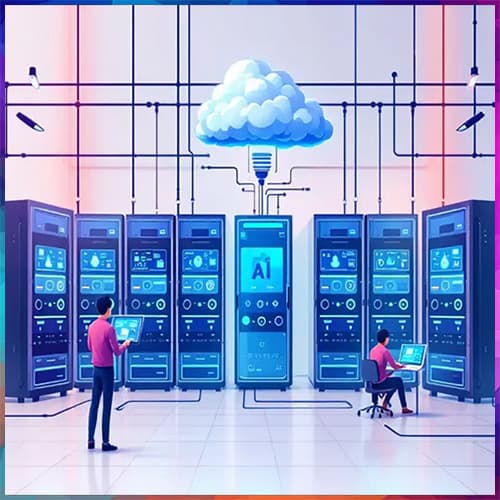
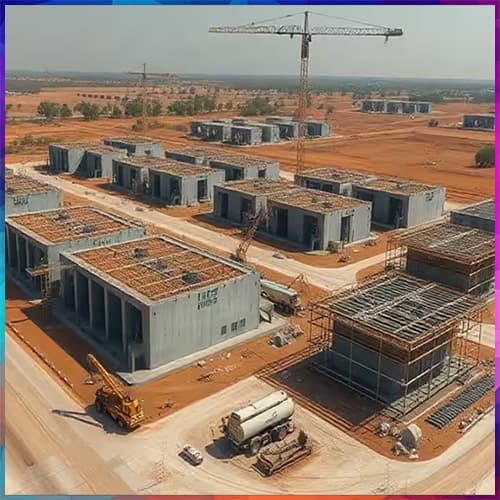
An estimated $3 trillion investment in AI data centers by 2029 is transforming global computing infrastructure. Traditional facilities are evolving into AI-native powerhouses equipped with advanced GPUs, high-speed networking, and liquid cooling. As the industry shifts from megawatt to gigawatt-scale campuses, demand for electricity, water, and infrastructure is surging, making computing capacity a strategic driver of economic competitiveness and technological leadership.
AMERICA LEADS THE GLOBAL COMPUTE RACE
The United States dominates global AI infrastructure, with Microsoft, Amazon, Google, Meta, and Oracle investing heavily in hyperscale data centers. Initiatives such as OpenAI's Stargate, CoreWeave, and xAI's Colossus are accelerating the AI computing race. However, future leadership will depend not just on computing capacity but also on affordable energy, advanced chips, skilled talent, and sustainable infrastructure.
THE MIDDLE EAST EMERGES AS AN AI POWERHOUSE
Saudi Arabia and the UAE are emerging as major AI infrastructure hubs, leveraging energy resources, strategic investments, and global technology partnerships. Saudi Arabia's Humain initiative and the UAE's proposed 5-gigawatt AI campus in Abu Dhabi highlight their ambitions to become global computing powerhouses. The Middle East is rapidly transitioning from an energy exporter to a potential leader in sovereign AI and digital infrastructure.
FROM H100 GPUS TO GB300-CLASS INFRASTRUCTURE
AI infrastructure is rapidly evolving from NVIDIA H100 and H200 GPUs to advanced GB200 and GB300 systems, delivering greater computing power and efficiency. This transition demands higher power capacity, liquid cooling, and advanced thermal management. Organizations must redesign data centers with integrated computing, networking, energy management, and intelligent orchestration to support next- generation AI workloads.Token Economics Will Determine AI Profitability
While infrastructure investment is accelerating, the next major industry challenge is monetization. Every AI interaction consumes computing power, increasing infrastructure costs and energy demand. As autonomous AI agents drive higher token consumption, optimizing inference efficiency, model routing, and workload management becomes critical for profitability. Organizations must also strengthen API security to prevent token abuse, unauthorized consumption, and agent-driven financial risks.
QUANTUM READINESS BECOMES A STRATEGIC PRIORITY
Tomorrow's data centers must also prepare for emerging quantum technologies.
Quantum-ready data centers must support future hybrid computing, secure connectivity, and post-quantum cybersecurity. While quantum computing is still emerging, organizations must invest in flexible infrastructure, post-quantum cryptography, and secure data exchange to ensure long-term resilience and protect sensitive information against evolving quantum threats.
INTELLIGENCE, TRUST AND AGENCY: THE NEW AI EDGE
The next competitive frontier will be defined by three interconnected forces: intelligence, trust, and agency. Intelligence determines how effectively organizations convert computing power into innovation and business value.
Trust establishes whether AI systems can operate securely, transparently, and responsibly across critical industries. Agency defines how humans and autonomous systems make decisions, execute tasks, and remain accountable for outcomes.
As AI agents gain greater operational independence, identity verification, authorization, continuous monitoring, and containment become indispensable. The challenge is no longer simply building intelligent systems. It is ensuring that intelligence operates within trusted boundaries.
INDIA'S OPPORTUNITY IN THE GLOBAL AI ECONOMY
India's AI infrastructure revolution presents significant opportunities in sovereign cloud, domestic computing, and secure digital services. However, success depends on reliable energy, advanced cooling, semiconductor access, connectivity, and skilled talent. India must move beyond data center hosting to build a self-reliant AI ecosystem driven by indigenous innovation, cybersecurity, and digital sovereignty.
THE FUTURE BELONGS TO TRUSTED COMPUTE
The global AI race is shifting toward scalable, cost-efficient, and trusted computing infrastructure. Leadership will depend on AI-native architecture, energy efficiency, digital sovereignty, and quantum readiness. Data centers are no longer just the backbone of the internet—they are becoming the engines of the intelligence economy, shaping the future of global technological leadership.
Looking ahead, as the Great Cyber Pandemic intensifies, cybersecurity and data protection will become critical corporate priorities. AI-native data centers powered by advanced GPUs must train intelligent security models to combat deepfakes, financial fraud, and cyberattacks. Real-time threat intelligence, predictive defense, and automated containment will be essential to building a secure and trusted digital ecosystem.