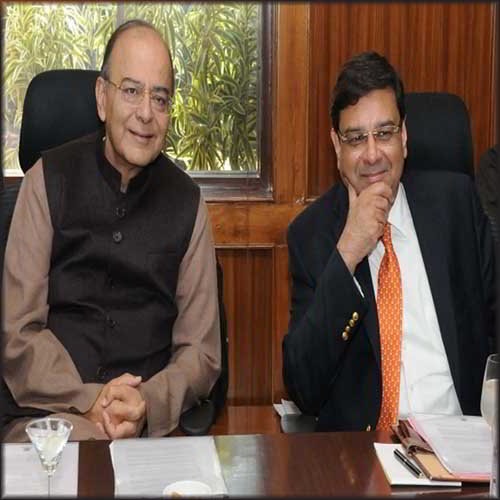
In a recently published report, finance ministry said that the autonomy of the RBI “is an essential” and both the government and the RBI have to be “guided by public interest and the requirements of the Indian economy”.
Congress president Rahul Gandhi Tuesday attacked Prime Minister Narendra Modi over a media report which claimed the government is seeking Rs 3.6 lakh crore from the Reserve Bank of India (RBI), alleging that he needs the amount to fix the "mess his genius economic theories" have created. Gandhi also urged Reserve Bank Governor Urjit Patel to "stand up" to the prime minister and "protect the nation".
The surplus of Rs 3.6 lakh crore sought by the government is more than a third of the central bank’s total reserves worth Rs 9.59 lakh crore. The Finance Ministry, in its proposal, suggested that the surplus can be jointly managed by the RBI and the government.
Sources have confirmed to the media, that the RBI views this attempt by the Government to dip into its reserves can adversely impact macro-economic stability. And so the RBI has not accepted the proposed changes, sources said.
The reason for invoking section 7 of the RBI act, could be government wants , there has to be a special window for non-banking finance companies (NBFCs), housing finance companies and mutual funds; lower risk weights for credit to micro, medium and small enterprises (MSMEs) and also a framework for restructuring of their loan accounts. The government had sought a facility for banks to raise up to $30 billion. The provision in the RBI Act empowers the government to issue directions to the RBI.
The government believes that, when compared with global central banks, the RBI holds much higher total capital as a percentage of its total assets (at about 28 per cent). Whereas, countries including the US, the UK, Argentina, France, Singapore maintain much lower capital as a percentage of total assets, while the same for countries including Malaysia, Norway and Russia are much higher than India.