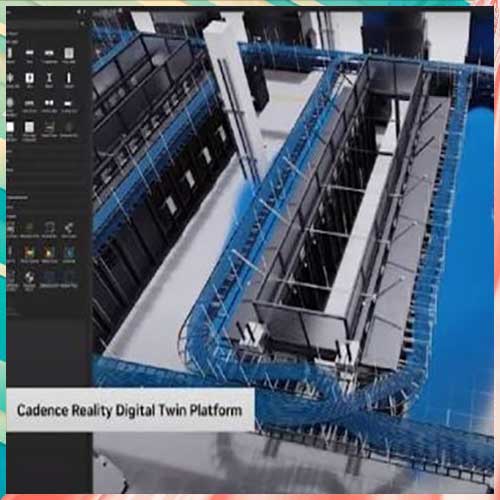
Developed with NVIDIA and Dell Technologies, the platform pairs AI agents with real-time digital twins to help facility teams cut false alarms, predict equipment faults and trim energy use across their existing systems.
Honeywell Technologies has introduced Forge Cognition, a self-contained agentic AI and simulation platform for facility operations, built with technology from NVIDIA and Dell Technologies. The company announced the launch from Bengaluru on October 15, 2026. The platform is meant for physical environments such as buildings, campuses and industrial operations.
Facility teams often have to sift through alarms and equipment data to spot problems, plan maintenance and manage energy use. Forge Cognition combines real-time digital twins with AI agents to help operators understand conditions, simulate operating scenarios and coordinate actions across supported existing systems.
Suresh Venkatarayalu, Chief Technology Officer at Honeywell Technologies, said: “The physical world demands more than a powerful AI model. It requires AI to understand how systems actually operate and interact—that is where the next breakthrough is happening. Forge Cognition combines AI with operational context and engineering expertise, opening a new era of intelligent operations where AI can analyze, recommend and act alongside people.”
Adding intelligence to existing systems
Forge Cognition connects to existing customer deployments and adds AI capabilities to Honeywell’s suite of solutions. It brings together the company’s domain expertise and asset and systems data in a structured knowledge base, allowing AI agents to discover, contextualise and analyse equipment behaviour and the relationships between systems.
The company listed three main applications. In alarm management, agents classify and verify building-management alarms so operators can prioritise events that need attention and see fewer false positives. For asset health, agents analyse real-time HVAC data to flag emerging equipment issues and guide maintenance before operations are disrupted. For energy, digital twin simulations help operators assess operating changes and find ways to cut energy use while maintaining occupant comfort.
Honeywell said the technology is designed to augment human expertise. Customers can run it in manual, semi-autonomous or autonomous modes, with operators setting the level of oversight and able to override it at any time.
NVIDIA and Dell provide the foundation
The platform has an open, interoperable architecture that converges IT and OT environments. NVIDIA Nemotron open models power the agents, including a True Alarm agent that classifies building-management alarms and improves through operator feedback. NVIDIA Omniverse libraries support physically accurate simulations, while NVIDIA Cosmos open models and the Metropolis VSS Blueprint let vision AI agents understand, search and summarise live or recorded sensor data. The platform runs on NVIDIA RTX PRO GPUs and is expanding to far-edge deployments with NVIDIA DGX Spark.
Dell Technologies supplies the infrastructure through the Dell AI Factory with NVIDIA, including PowerEdge XE servers, AI Data Platform engines, cyber resiliency solutions and Dell Services support.
Deepu Talla, vice president of robotics and edge AI at NVIDIA, said: “Physical AI is bringing new intelligence to the complex systems that run our buildings and industrial facilities. Honeywell Technologies is combining NVIDIA AI and simulation technologies with its deep industrial expertise to help customers anticipate equipment issues, improve reliability and energy efficiency across the infrastructure they already operate.”
John Roese, global chief technology and chief AI officer at Dell Technologies, said: “The next wave of AI innovation will be driven by intelligent systems that can reason, learn and act in the context of real-world operations. The Dell AI Factory provides the infrastructure and services that support Honeywell’s vision for intelligent physical operations.”
Pilots and early results
Honeywell is piloting Forge Cognition at NVIDIA’s Voyager campus, the Fairmont Hotel in Dubai, NEX Mall in Singapore, Vanderbilt University in the US, and its own campuses in Bangalore and Richardson, Texas. The company’s install base covers more than 300,000 sites.
At Voyager, the building at NVIDIA’s Santa Clara headquarters, the pilot reported:
· Alarm management: up to a 90% average reduction in unnecessary alerts.
· Predictive asset health: real-time HVAC monitoring that provides health predictions to help plan maintenance and reduce unplanned downtime.
· Energy: up to 10% potential reduction in energy and utility consumption.
· Comfort: a comfort score kept above 95%, measured as a weighted average of temperature, humidity and CO2 across zones.
Honeywell said customers can engage with the company now to identify and scope deployments, with capabilities expanding over time.