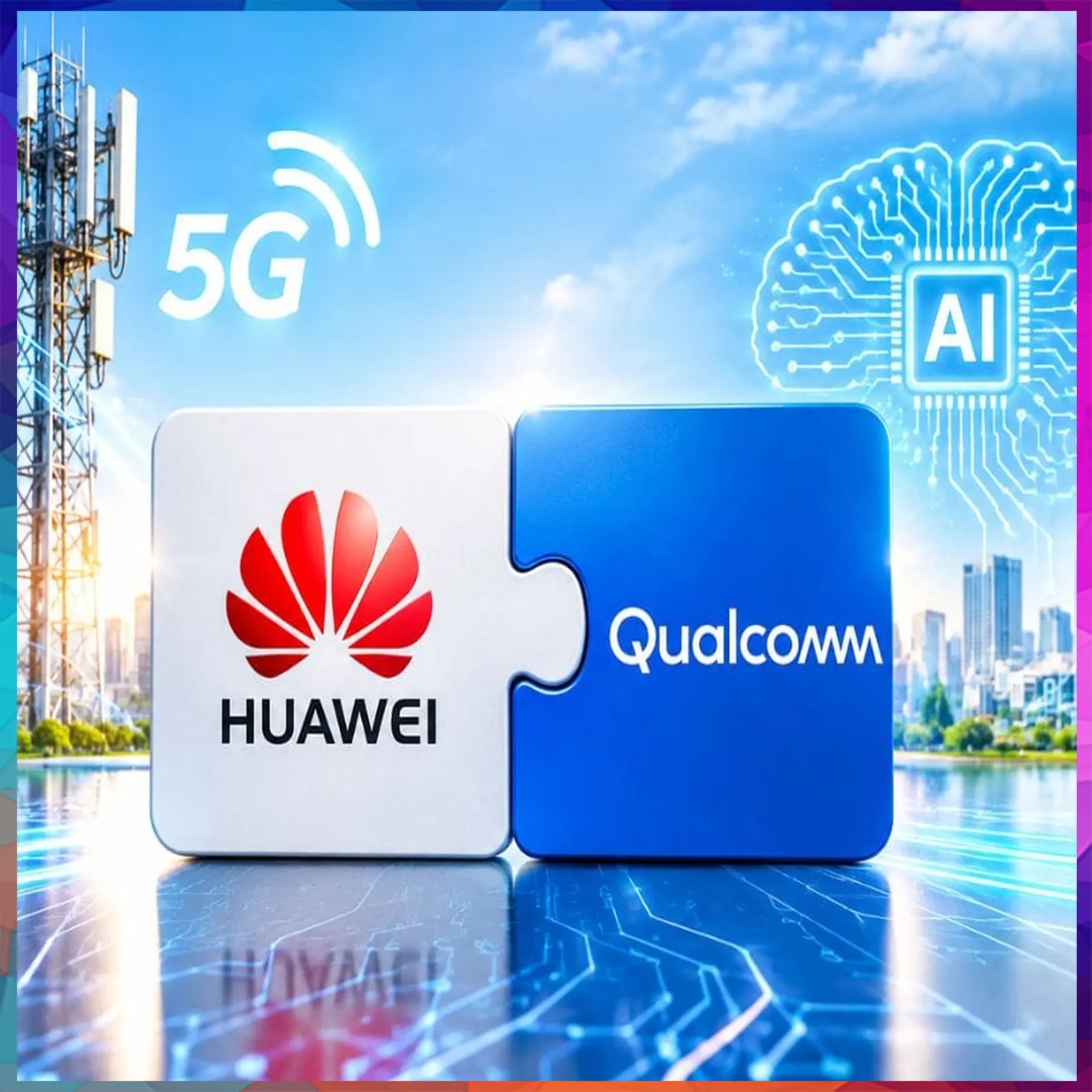
The multi-year pact covers 5G, artificial intelligence, computing and networking, and includes cross-licensing plus Qualcomm's purchase of Huawei's US patents, pushing the Chinese firm's cumulative licensing deals past $6.9 billion once regulatory approvals come through.
Huawei and Qualcomm have signed a multi-year patent licensing agreement spanning 5G, artificial intelligence, computing and networking. The deal brings the two technology rights holders together across a wider range of technologies, even as US curbs on the Chinese company continue.
Huawei announced on Monday that the two firms will license each other's patent portfolios. Qualcomm will also buy certain Huawei patents held in the United States that relate to computing, AI and networking. The transaction still needs regulatory clearance before it can be completed.
It is the first licensing agreement between the pair to include 5G, which makes it especially significant for Huawei. Once the deal closes, the company expects the total value of its patent licensing agreements to exceed $6.9 billion. The terms follow FRAND principles, a framework commonly applied to patents considered essential to industry standards.
Alan Fan, Huawei's chief intellectual property officer, said the company's contributions to 4G and 5G standards, including its polar-code signal transmission work, have established its leadership in mobile communications. He added that the deal also acknowledges Qualcomm's foundational role in modern communications. John Han, executive vice president and general manager of Qualcomm Technology Licensing, said the agreement reaffirms industry recognition of Qualcomm's 5G leadership and reflects its regard for Huawei's continuing innovation.
Patents gain weight amid US curbs
The announcement comes after years in which Huawei has had limited access to advanced foreign technology. US export controls introduced in 2019 restrict its ability to obtain leading-edge chips and key software, prompting the company to spend more on research and build capabilities in-house. Its patent holdings have grown in importance as a result. Huawei says its licensing business has been profitable since 2021.
Huawei first paid Qualcomm licensing fees in 2001 and earned its first licensing income a decade later, from Motorola, according to Reuters. The Qualcomm pact follows a licensing agreement with HP announced in August, adding to a string of deals through which the company monetises its intellectual property.
How such agreements work
Companies that develop technologies built into industry standards can collect royalties from others who use them. Cross-licensing, meanwhile, can lower the risk of disputes by giving each side defined rights to use parts of the other's portfolio. The Qualcomm deal blends both elements, pairing mutual licences with a patent purchase.
Huawei has become one of the largest contributors to telecom standards, especially in 4G and 5G. With restrictions limiting its access to overseas technology, domestic research and intellectual property carry greater weight for the business, and the agreement adds another revenue stream. It also highlights the breadth of patents held by both firms, spanning the technologies behind smartphones, AI, computing infrastructure and communications networks.