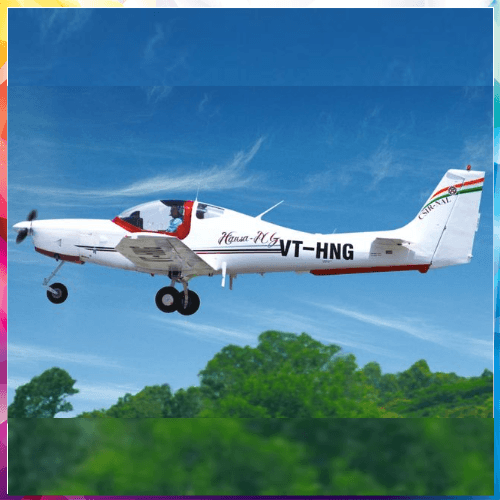
E-Hansa is part of India’s push for green aviation and self-reliant pilot training.
In a major stride towards sustainable aviation and indigenous innovation, India has begun development of the E-Hansa, a two-seater battery-powered trainer aircraft designed for pilot training and powered by electric propulsion systems. Spearheaded by the Council of Scientific and Industrial Research – National Aerospace Laboratories (CSIR-NAL), the E-Hansa is positioned as a cost-effective solution in the burgeoning space of electric aircraft in India, with an estimated price tag of just ₹2 crore—nearly half the cost of imported equivalents.
The development was announced by Union Science Minister Dr. Jitendra Singh during a high-level review meeting in New Delhi. He highlighted that E-Hansa is not just a technological leap but also a strategic initiative to promote green energy aviation projects and reduce India’s dependency on foreign aviation technologies.
A Leap Forward in India's Electric Aviation Progress
The E-Hansa project signifies a critical milestone in India’s electric aviation progress. It is part of a broader initiative to commercialize indigenous green aviation technologies, boost self-reliance in pilot training infrastructure, and support India’s long-term climate goals by reducing carbon emissions in the aviation sector.
Electric trainer aircraft like the E-Hansa are ideal for flight schools, offering significantly lower operational costs, quieter performance, and reduced environmental impact. As CSIR-NAL aircraft projects gain momentum, India’s potential to emerge as a global hub for cost-effective and sustainable aviation technology becomes more tangible.
Public-Private Partnerships and AI-Driven Expansion
Dr. Singh emphasized the importance of public-private partnerships (PPPs) and AI-powered platforms in driving the commercialization and widespread adoption of green technologies. By deploying hub-and-spoke models, the government aims to connect major R&D hubs with regional stakeholders, encouraging private investment and technology transfer across the country.
The initiative is aligned with India's larger goals under the “Make in India” and “Atmanirbhar Bharat” missions, aimed at positioning the country as a leader in clean energy solutions across sectors—including aviation.
With the development of the E-Hansa electric aircraft, India is taking a bold step towards shaping the future of green aviation. The success of this project could pave the way for similar innovations in electric propulsion systems for planes, advancing India’s position in the global shift toward sustainable flight.
As the country continues to invest in electric aircraft and green energy aviation projects, CSIR-NAL’s efforts could become a blueprint for other developing economies aiming to balance cost, innovation, and environmental responsibility in aviation.
Breaking News
India Begins Development of E-Hansa, a Low-Cost Electric Trainer Aircraft for Green Aviation