
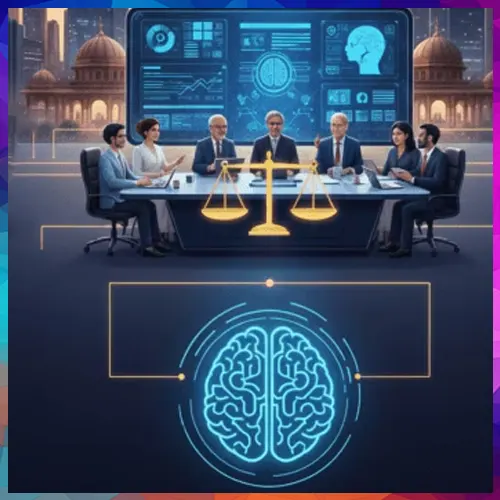
The proposed AI framework seeks to formalise royalty payments for training datasets, creating a unified system intended to safeguard creators’ rights while reducing compliance burdens for developers using copyrighted material.
India has proposed one of the world’s most far-reaching frameworks for regulating how artificial intelligence companies train their models on copyrighted content. The Department for Promotion of Industry and Internal Trade (DPIIT) on Tuesday released a draft system that would mandate royalty payments from AI developers in exchange for automatic access to all copyrighted works. The royalties would be collected through a central body representing rights holders and redistributed to creators.
The proposal argues that a “mandatory blanket licence” would both lower compliance costs for AI firms and ensure that authors, musicians, artists and other creators are compensated when their work is used to train commercial models. Indian officials say the approach could prevent years of litigation and offer clarity in a sector where global courts are still debating the legality of using copyrighted material for AI training.
The eight-member committee behind the draft, constituted in April, said the system would act as a single-window mechanism, allowing AI companies to avoid individual negotiations while guaranteeing fair compensation for registered and unregistered creators alike.
Global legal concerns form backdrop to Indian proposal
India’s move comes at a time when companies such as OpenAI, Google and other AI developers are facing lawsuits worldwide over their training practices. In India, news agency ANI has sued OpenAI in the Delhi High Court, arguing its content was used without consent — a case that could determine whether AI training qualifies as reproduction or falls under “fair dealing.” Similar cases in the U.S. and Europe have intensified demands for regulatory clarity.
The draft also highlights India’s growing role in the global AI market. Citing OpenAI CEO Sam Altman’s comment that India is the company’s second-largest market, the committee argues that creators should receive a share of the value generated by AI firms operating in the country.
Industry groups warn of innovation risks
The proposal has triggered resistance from major technology bodies. Nasscom submitted a formal dissent, urging India to adopt a broad text-and-data-mining (TDM) exception that would allow training on lawfully accessed material without mandatory licensing. It warned that compulsory payments could slow innovation and argued for an opt-out model for rights holders.
The Business Software Alliance echoed these concerns, arguing that limiting AI models to licensed datasets could reduce model quality and amplify biases. It said a clear TDM exception would better balance innovation and creator rights.
The committee rejected both opt-out and broad TDM exceptions, calling them either unenforceable or insufficiently protective. The draft is now open for 30 days of public consultation before the government finalises its regulatory approach.

See What’s Next in Tech With the Fast Forward Newsletter





Tweets From @varindiamag
Nothing to see here - yet
When they Tweet, their Tweets will show up here.