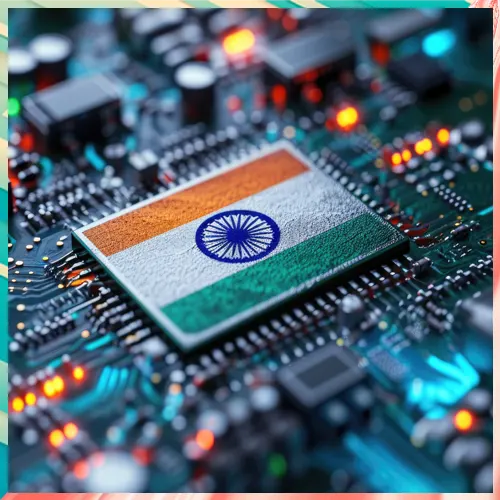
With inter-ministerial consultations underway and final approval pending, the initiative is expected to reshape India’s semiconductor ecosystem by fostering deeper industry participation and accelerating domestic innovation across the value chain.
The government is preparing to roll out an expanded version of the India Semiconductor Mission (ISM 2.0) by May, with a proposed financial outlay estimated between Rs 1 lakh crore and Rs 1.2 lakh crore, according to reports. The move signals a major step-up from the initial Rs 76,000 crore allocation under the first phase of the programme.
Discussions between key ministries are currently underway, with the Ministry of Electronics and Information Technology (MeitY) leading consultations while awaiting final clearance from the Finance Ministry. Officials reportedly indicate that the enhanced funding reflects the government’s intent to accelerate India’s semiconductor ambitions amid a rapidly evolving global technology landscape.
Expanding beyond fabrication
Unlike its predecessor, ISM 2.0 is expected to widen its scope beyond chip fabrication and design. The revamped framework aims to include support for critical components of the semiconductor ecosystem such as capital equipment, raw materials, and essential manufacturing inputs.
This broader approach comes at a time when global semiconductor supply chains continue to face disruptions due to geopolitical tensions and shifting trade dynamics. By strengthening domestic capabilities across the value chain, the government aims to build a more resilient and self-reliant ecosystem.
Industry stakeholders, including gas suppliers, specialty chemical manufacturers, MSMEs, and other ancillary players, are expected to play a more integrated role in the new phase. The inclusion of these segments is seen as crucial for creating a robust support infrastructure for semiconductor manufacturing in the country.
Focus on design and innovation
A key highlight of ISM 2.0 is the proposed revamp of the Design-Linked Incentive (DLI) scheme. The updated framework is expected to enable foreign companies to collaborate with Indian firms on semiconductor research and development conducted within the country.
The initiative is aimed at boosting innovation and nurturing a new generation of domestic semiconductor design companies. Government officials estimate that the programme could support the emergence of nearly 50 deep-tech firms in the coming years.
Aligned with India’s long-term technology strategy, ISM 2.0 seeks to reduce dependence on imported semiconductors while positioning the country as a competitive player in global supply chains. The government aims to develop sufficient domestic capabilities to meet up to 75% of India’s semiconductor demand by 2030, marking a significant shift towards technological self-sufficiency.