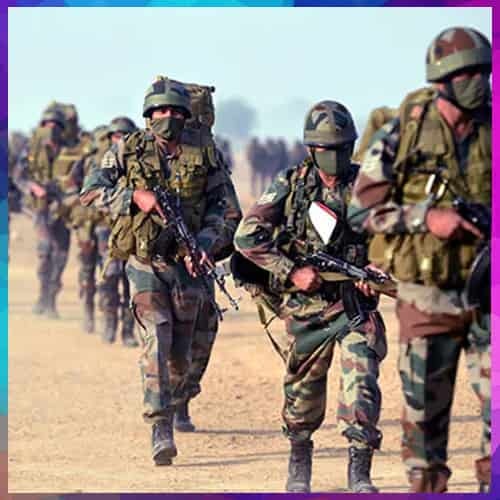
The latest round of talks between Indian and Chinese military commanders over the standoff in Ladakh broke down, the Indian Army said, adding that that the Chinese side was not "agreeable" and "could not provide any forward-looking proposals".
The talks took place over two months after the last round of negotiations that resulted in the disengagement of troops from Gogra (Patrol Point-17A).
An army statement said, "During the meeting, the Indian side [...] made constructive suggestions for resolving the remaining areas but the Chinese side was not agreeable and also could not provide any forward-looking proposals. The meeting thus did not result in resolution of the remaining areas. The two sides have agreed to maintain communications and also to maintain stability on the ground. It is our expectation that the Chinese side will take into account the overall perspective of bilateral relations and will work towards early resolution of the remaining issues while fully abiding by bilateral agreements and protocols.”
China also indicated the talks had failed, with a statement from the Chinese military's Western Theater Command saying, "India insists on unreasonable and unrealistic demands, adding difficulties to the negotiations". China has made "tremendous efforts to ease and cool down the border situation and fully demonstrated its sincerity", it added.
India had pressed for an early disengagement of troops in the remaining friction points in eastern Ladakh at the 13th round of military talks with China that lasted for around eight-and-half hours on Sunday.
A major focus of the Corps Commander-level talks on the Chinese side of the Chushul-Moldo border point in eastern Ladakh was to complete the stalled disengagement at Hot Springs area known as Patrolling Point 15 (PP-15). The resolution in Gogra had marked India and China backing down in four of the six flashpoints - the others being Galwan and North and South banks of the Pangong Lake. The standoffs in Depsang and Hot Springs continue.