
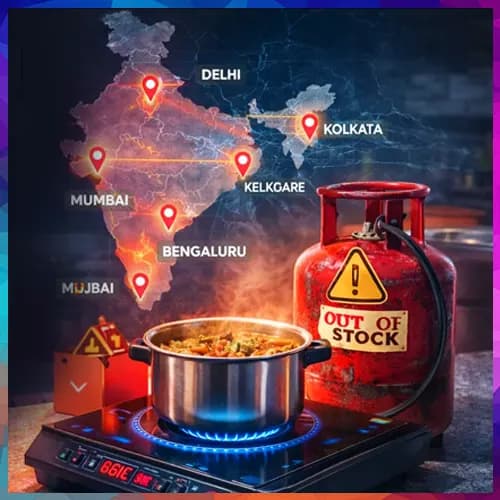
Concerns over LPG cylinder availability linked to tensions in West Asia are driving households and businesses across India to explore electric cooking options, leading to a sharp rise in demand for induction stoves.
A growing number of households across India are turning to induction stoves as uncertainty around LPG supplies begins to surface. The shift comes amid rising geopolitical tensions in West Asia, particularly around the strategically important Strait of Hormuz, a key corridor for global energy shipments. The developments have raised concerns about potential disruptions in LPG supply chains, prompting consumers to seek reliable alternatives for everyday cooking.
Reports of delayed LPG cylinder deliveries have surfaced from several urban centres, including New Delhi, Chennai and Bengaluru. Consumers in many neighbourhoods are facing long queues at refill points and uncertain delivery timelines. As a precaution, families are increasingly purchasing induction cooktops and compatible utensils to ensure they can continue cooking without interruptions.
India relies heavily on LPG for domestic cooking, with nearly 87 percent of households depending on the fuel. Any disruption in supply therefore has a widespread impact, affecting both residential and commercial users. Restaurants, small eateries and catering businesses have also reported challenges in securing regular LPG supplies.

Demand for electric cooking appliances rises
Retailers and appliance manufacturers say the recent uncertainty has triggered a surge in demand for induction cooktops, particularly through online sales channels. Many consumers are purchasing electric cooking appliances as a backup option, anticipating possible delays in LPG cylinder deliveries.
The growing demand has also led to a spike in enquiries and bulk purchases of induction stoves, electric kettles and compatible cookware in several markets. Some retailers say supply chains are already under pressure as vendors try to replenish stocks to meet the sudden demand.
Government steps in to manage supply
To stabilise the situation, authorities have taken steps to regulate LPG distribution. The government has invoked the Essential Commodities Act to ensure priority supply for domestic consumers and to prevent hoarding or black marketing of cylinders.
In addition, the refill booking interval for LPG cylinders has been extended from 21 days to 25 days in an effort to discourage panic buying. The price of non-subsidised LPG cylinders has also been increased by ₹60 to help moderate demand.
Public institutions are also preparing contingency plans. The Indian Railway Catering and Tourism Corporation has advised catering units at railway stations to shift to electric cooking equipment such as induction cooktops and microwave ovens while keeping ready-to-eat food supplies available.
Experts believe that the current situation could accelerate India’s gradual transition towards electric cooking solutions, which aligns with the country’s broader push toward cleaner and more sustainable energy usage.