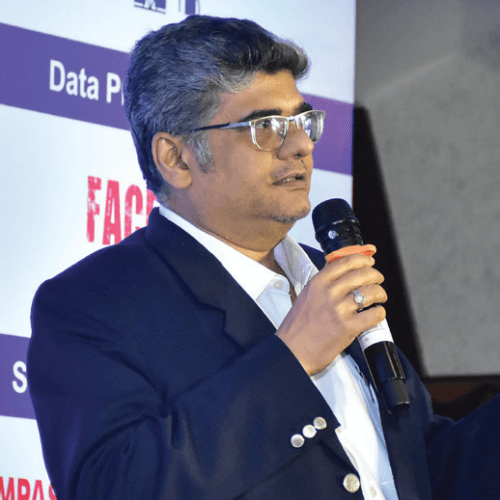
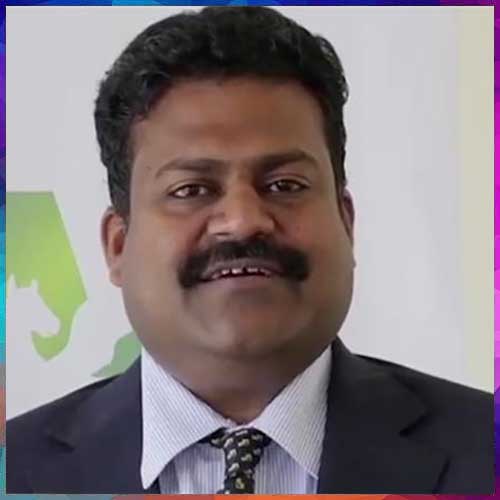
Abhijit Bhattacharjee,
CEO,
Luna Ergonomics Pvt.Ltd.
What kind of mobile innovations are you planning to meet the Indian mobile user's needs?
India has over 500 million mobile users. But only about 90 million people know how to type in English. The rest are unable to type on the phone because regional languages are not supported by majority of the phones. Hence, they cannot send a text message, they cannot store an address book and eventually it leaves them out of every VAS, 3G/4G opportunity.
Luna Ergonomics (LE) felt the need for developing a more user-friendly and innovative usability technology, to enable them to type in their regional languages without even using a printed keypad. Therefore, we came up with two virtual keypads - the Panini keypad and Clevertexting which enable people to type in 11 Indian languages and 9 global languages. Furthermore, our statistical predictive technology uses dynamic allocation of keys which lead to an ergonomic experience for the user.
What is your SMS compression technology?
As a standard norm, all SMSs carry 140 byte of data. It can carry 160 characters of English alphabet but can only carry 70 characters of other languages. But given the complex nature of the languages, we have developed a technology that allows a user to send 210 characters of text within those 140 bytes of SMS. This is supported within our products and one can enjoy secure compressed communication between two mobile phones with already installed applications. This is the world's first on phone SMS compression. The technology was released in January 2009.
Has it reached the Indian mobile user?
Our keypads are available for downloads from our websites, PaniniKeypad.com and CleverTexting.com. We are getting over 1,500 downloads per day for our products. Indian masses are already experiencing this new usability to type in all the regional languages of India from their mobile phones. Our main focus is on creating awareness among the people and also communicating the benefits offered by this technology.
How are you planning to take it to the market - through handset manufacturers or SPs?
We intend to take the product to the market in several ways. By providing licences to the handset manufacturers on a royalty per handset basis. The application can be included as a Java application on the phone - perhaps with a short cut from the menu. Our next strategy is to work closely with the telecom operators. As they are the biggest beneficiary of an improved usability to type on the phone and also the support of languages, because it results in more SMSs, more VASs, 3G/4G adoption and increased use of related data traffic-based services.
In a fiercely competitive market, telecom operators could use this as a critical diffrentiator in their service offerings. Moreover, the improved usability makes it easier for seniors to send an SMS. This will eventually result in expanded market of data services which is right now only restricted to young people who can multitap.