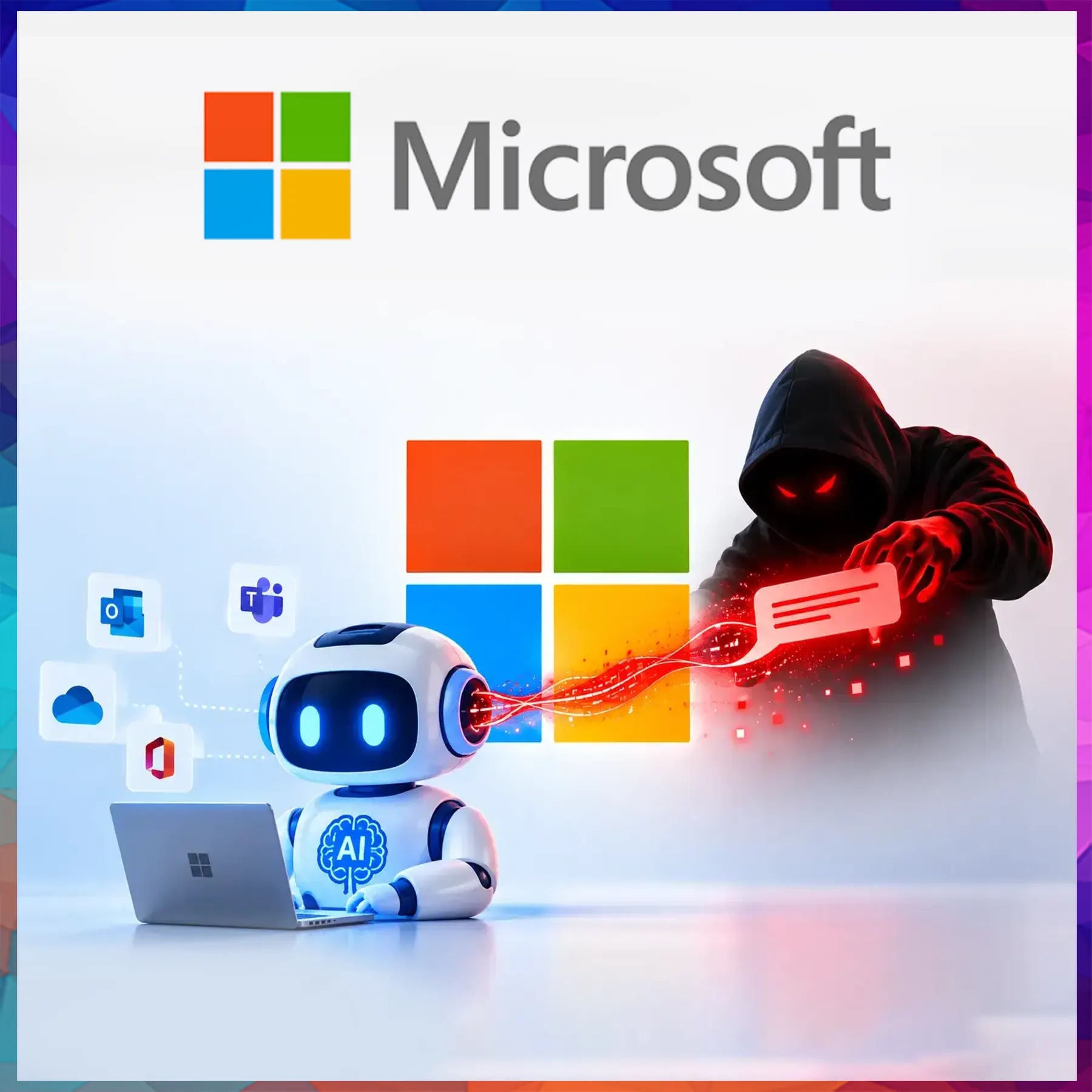
Microsoft has warned that artificial intelligence (AI) agents deployed within enterprises could introduce significant internal security risks even without being compromised by cybercriminals. As organisations increasingly adopt autonomous AI systems, the company has called for continuous monitoring of these systems.
In a blog post titled “Securing the Agentic Insider,” Hayete Gallot, Executive Vice President of Microsoft Security, said organisations have traditionally prioritised external cyber threats while implicitly trusting AI agents operating within their internal systems.
"Agents are unpredictable. They will adapt as the context changes, may not behave as intended and will collaborate and collude with other agents to reach their objectives, without needing to be compromised," Gallot stated.
Microsoft noted that AI agents are gaining access to sensitive corporate data, business tools and critical systems, enabling them to make decisions and execute actions across important business processes. The company has described these autonomous systems as “agentic insiders,” highlighting the security challenges associated with their expanding role within enterprises.
"These agents are frequently overprivileged, have access to data, tools and systems and can take actions and make decisions in critical processes. They have become active participants in the enterprise," Gallot said.
The warning comes as businesses increasingly deploy AI agents to automate workflows, manage operations and support decision-making. Their ability to act independently has raised concerns about maintaining appropriate oversight and controlling the risks associated with autonomous actions.
Microsoft stressed that securing AI agents requires continuous supervision across multiple layers of the enterprise environment, including identity management, access permissions, data, networks, cloud infrastructure and operating systems.
"Monitoring and securing those agents must become continuous. We need to understand in real time what the agents are doing and what risks those actions create, and we need to adjust their ability to act accordingly," Gallot stated.
To mitigate these risks, Microsoft highlighted its Project Perception initiative, announced in July, which uses AI-powered security capabilities to help organisations identify and respond to cyber threats.
The company said the underlying technology could also support the supervision of internal AI agents through Guardian Agents. These systems are designed to monitor agent activities and intervene when their actions present elevated risks.
Microsoft also emphasised the need for greater transparency into how AI models make decisions, arguing that security systems must understand not only what agents are doing but also why they are taking particular actions.
"Model transparency will not replace containment. It will make containment smarter and stronger," Gallot said.